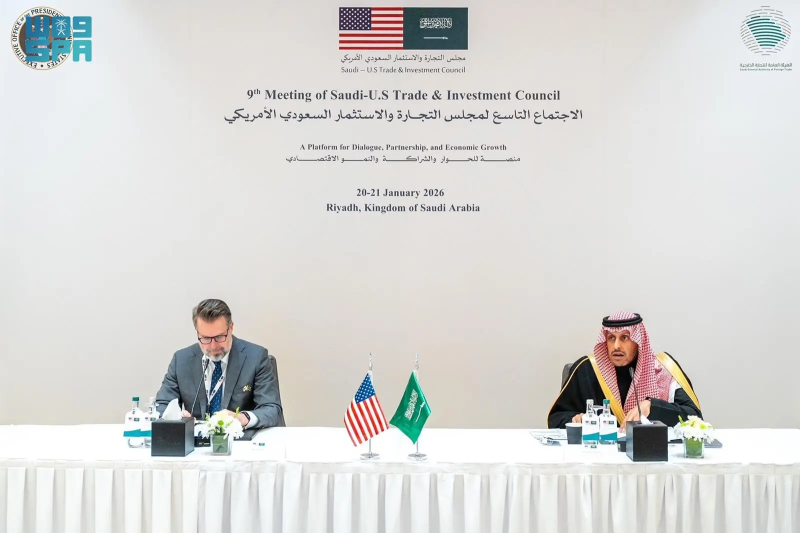

RIYADH — The Saudi-US Trade and Investment Council concluded its ninth meeting in Riyadh on Wednesday, focusing on bolstering trade relations between the two nations and accelerating Saudi Arabia’s economic diversification goals outlined in Vision 2030. The meeting, attended by representatives from 20 entities across both countries, reviewed progress on a range of joint initiatives designed to increase investment and streamline commerce. Discussions centered on removing obstacles and fostering collaboration in key sectors.
The two-day event, held in the Saudi capital, involved a comprehensive review of 31 ongoing projects and national programs. These initiatives span multiple industries, including health, agriculture, intellectual property, and the rapidly evolving digital economy. The council’s aim is to create a more favorable environment for businesses operating in both Saudi Arabia and the United States.
Strengthening Saudi-US Trade and Investment
The Saudi-US Trade and Investment Council was established to enhance economic ties and facilitate greater cooperation between the two countries. This latest meeting underscores a continued commitment to these goals, particularly as Saudi Arabia pursues ambitious economic reforms under its Vision 2030 plan. The plan aims to reduce the Kingdom’s reliance on oil and develop a more diversified, sustainable economy.
A key area of focus during the Riyadh meeting was the review of existing trade policies and identification of potential improvements. According to a statement released following the meeting, participants sought to address challenges hindering the flow of goods and services, and to promote a more predictable and transparent regulatory landscape. This includes efforts to harmonize standards and reduce bureaucratic hurdles.
Focus on Key Sectors
Several specific sectors received particular attention during the council’s deliberations. Collaboration in the health sector is expected to lead to increased access to innovative medical technologies and pharmaceuticals. Discussions also covered the importance of plant health regulations to facilitate agricultural trade.
Protecting intellectual property rights was another prominent theme. Both Saudi Arabia and the United States recognize the crucial role strong IP protection plays in encouraging innovation and attracting foreign investment. The council explored ways to enhance enforcement mechanisms and raise awareness of IP issues.
The rapid growth of the digital economy also featured heavily in the agenda. Participants discussed strategies to promote digital trade, foster innovation in emerging technologies like artificial intelligence and fintech, and bridge the digital divide. This aligns with Saudi Arabia’s broader efforts to become a regional hub for technology and entrepreneurship.
However, challenges remain in fully realizing the potential of Saudi-US economic cooperation. Differing regulatory approaches and logistical complexities can sometimes impede trade flows. The council acknowledged these issues and pledged to continue working towards practical solutions.
Additionally, geopolitical factors can influence economic relationships. While both countries share a strategic partnership, regional instability and global economic trends can create uncertainties. The council’s ongoing dialogue is intended to mitigate these risks and ensure a stable foundation for future growth.
Meanwhile, the United States remains a significant investor in Saudi Arabia, with substantial interests in sectors such as energy, infrastructure, and defense. Saudi Arabia, in turn, is increasing its investments in the US economy, diversifying its portfolio beyond traditional energy assets. This reciprocal investment is a hallmark of the strong economic partnership.
In contrast to some global trade tensions, the Saudi-US relationship has generally remained robust. Both countries recognize the mutual benefits of close economic ties and are committed to strengthening them further. This commitment is reflected in the continued high-level engagement through the Trade and Investment Council.
The meeting also addressed the importance of streamlining customs procedures and improving supply chain efficiency. These measures are intended to reduce costs for businesses and facilitate faster delivery of goods. The council emphasized the need for greater coordination between relevant government agencies in both countries.
The Saudi Ministry of Investment has been actively promoting the Kingdom as an attractive destination for foreign investment, highlighting its strategic location, growing economy, and business-friendly reforms. These efforts are supported by the Trade and Investment Council, which serves as a platform for addressing investor concerns and fostering a more conducive investment climate.
The report indicates that progress has been made on several fronts, including the development of new standards for agricultural products and the implementation of initiatives to combat counterfeiting. However, further work is needed to fully implement all of the agreed-upon actions.
Looking ahead, the Saudi-US Trade and Investment Council is expected to convene again in the United States in the coming year. The next meeting will likely focus on reviewing the implementation of the initiatives discussed in Riyadh and identifying new areas for collaboration. Monitoring the progress of these initiatives and any potential shifts in the global economic landscape will be crucial in assessing the future trajectory of Saudi-US trade relations. The council will also be watching for developments related to the Kingdom’s broader economic diversification efforts under Vision 2030 and the impact of these changes on the bilateral investment landscape.
The success of these efforts will depend on continued commitment from both governments and the active participation of the private sector. Further analysis of the specific outcomes of the Riyadh meeting will be necessary to fully understand the implications for businesses and investors in both countries.