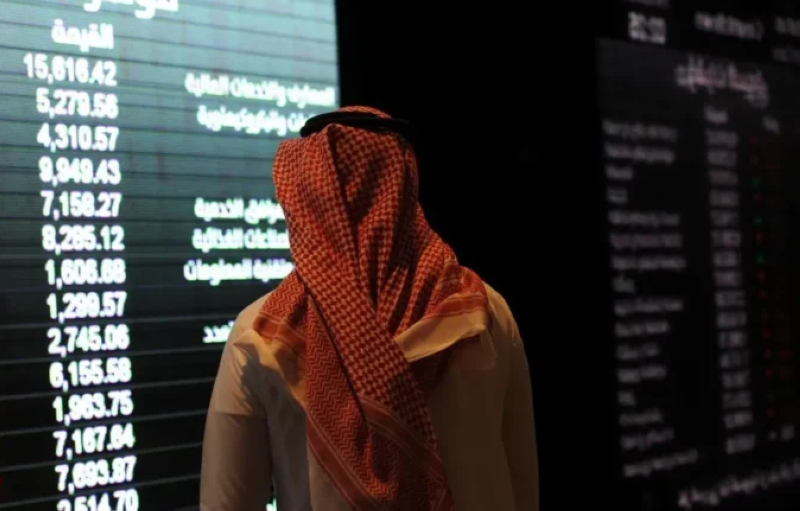

Riyadh – The Saudi Stock Exchange (Tadawul) experienced a significant surge in trading activity on Wednesday, with early transactions exceeding SR1.5 billion. This increase in volume was largely driven by strong demand across key sectors like banking, telecommunications, and healthcare, and is directly linked to the Capital Market Authority’s (CMA) recent announcement regarding expanded foreign investment access. The benchmark index rose sharply in the opening session.
The CMA revealed that, beginning February 1, 2026, all categories of international investors will be permitted to directly invest in the Tadawul’s Main Market. This landmark decision removes previous restrictions and is anticipated to substantially increase liquidity and diversify the Saudi stock market’s investor base. The move signals a continued opening of the Saudi economy to global capital.
Impact of Expanded Foreign Investment on Tadawul
The Tadawul All Share Index climbed 1.24% in early trading, reaching 10,418.06 points, a clear indication of investor confidence following the CMA’s announcement. This positive reaction suggests the market views the increased accessibility as a catalyst for growth. The surge in trading volume further supports this assessment.
Currently, international investment in the Saudi capital market stands at approximately SR590 billion as of the end of the third quarter of 2025, according to CMA data. Within that total, investments in the Main Market reached SR519 billion, representing an increase from SR498 billion in the previous year. This upward trend demonstrates existing international interest, which the CMA expects to accelerate with the new regulations.
Rationale Behind the Changes
The CMA stated the primary goal of these amendments is to broaden and diversify the investor base participating in the Saudi stock market. A more diverse investor pool is generally considered to enhance market stability and resilience. Additionally, increased participation is expected to improve overall market liquidity, making it easier for investors to buy and sell shares.
Previously, international investors were required to operate under the Qualified Foreign Investor (QFI) framework, which involved specific qualification requirements and often necessitated the use of swap agreements. The elimination of this framework streamlines the investment process and reduces associated costs. This simplification is a key component of the CMA’s strategy to attract a wider range of global investors.
Sector-Specific Reactions
The initial market response highlighted particular strength in the banking, telecommunications, and healthcare sectors. Banking stocks often benefit from increased economic activity and capital inflows, while telecommunications and healthcare are viewed as relatively stable, long-term investments. These sectors are considered attractive to both institutional and retail investors.
However, analysts caution that the full impact of the changes will not be immediately apparent. The February 1, 2026, implementation date allows time for investors to adjust their strategies and for the market to absorb the new regulations. Monitoring sector performance in the coming months will be crucial to understanding the evolving dynamics.
Broader Economic Context
This move to open up the Tadawul aligns with Saudi Arabia’s broader “Vision 2030” plan, which aims to diversify the economy away from its reliance on oil. Attracting international capital is a central pillar of this vision, as it provides funding for new industries and infrastructure projects. The CMA’s decision is therefore a significant step towards achieving the goals of Vision 2030.
The Saudi government has been actively pursuing reforms to improve the investment climate, including strengthening corporate governance standards and enhancing regulatory transparency. These efforts are designed to build trust among international investors and encourage long-term commitment to the Saudi market. The Kingdom is also actively promoting itself as a regional hub for finance and investment.
The changes also come at a time of increasing global interest in emerging markets. While geopolitical risks and economic uncertainties remain, many investors are seeking higher returns than those available in developed economies. Saudi Arabia, with its relatively stable political environment and strong economic growth potential, is well-positioned to benefit from this trend. The increased market access is expected to draw significant attention.
Furthermore, the inclusion of Saudi Arabia in major global equity indices, such as MSCI and FTSE Russell, has already increased demand for Saudi stocks. The CMA’s latest announcement is expected to further accelerate this process, leading to even greater integration of the Tadawul into the global financial system. This integration is a key indicator of the market’s maturing sophistication.
Looking ahead, the focus will be on the CMA’s implementation of the new regulations and the response from international investors. The market will be closely watching for any further clarifications or adjustments to the rules. The actual inflow of capital will be a key metric to assess the success of the initiative, and analysts will be tracking trading volumes and ownership patterns in the months leading up to and following the February 2026 deadline. The long-term effects on the Saudi economy and the Tadawul’s position as a global financial center remain to be seen.