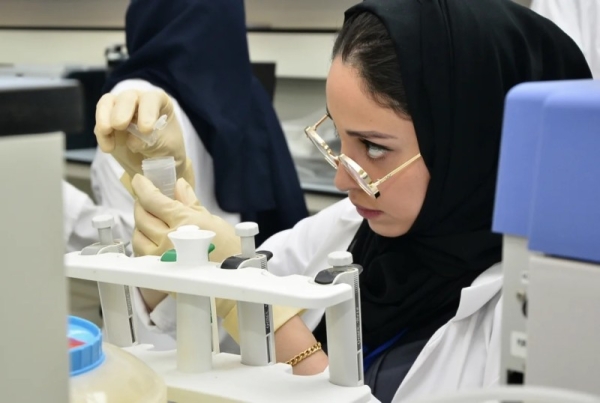

Saudi Arabia’s research and development (R&D) spending surged to SR29.48 billion in 2024, marking a 30.4 percent increase from the previous year, according to the General Authority for Statistics (GASTAT). The data, released on Thursday, highlights the growing investment in the sector.
The business sector led the charge, accounting for 40.3 percent of total R&D spending, followed closely by the government sector at 40.2 percent, and the higher education sector at 19.5 percent. The number of employees working in R&D rose by 14.7 percent, reaching 56,593.
Breakdown of Research and Development Spending
The government sector was the primary funder of R&D activities, providing SR15.69 billion, or 53.2 percent of total funding. The business sector contributed SR12.1 billion, or 41.1 percent, while the higher education sector accounted for 5.7 percent with SR1.69 billion. This diverse funding base indicates a collaborative approach to promoting innovation.
However, the higher education sector employed the majority of R&D personnel, with over 40,000 employees, representing 71.3 percent of the total workforce. The business sector followed with over 12,000 employees, or 22 percent, and the government sector had approximately 4,000 employees, or 6.7 percent.
Research and Development Workforce
Researchers in the higher education sector comprised 83.4 percent of the total number of researchers, with over 34,000 individuals. Of these, 72.6 percent were male and 27.4 percent were female. The business sector employed 4,800 researchers, or 11.6 percent, with a male-to-female ratio of 73.1 to 26.9 percent. The government sector accounted for five percent of researchers, with over 2,000 individuals, and a relatively more balanced gender distribution of 59 percent male and 41 percent female.
Implications for Innovation and Competitiveness
The R&D statistics released by GASTAT serve as a key indicator of the Kingdom’s innovation landscape. The data provide insights into the volume of spending, number of workers, and researchers in the field, supporting national policies aimed at promoting innovation and competitiveness. According to GASTAT, the annual report is a reliable reference for stakeholders.
Meanwhile, the growth in R&D spending and personnel suggests a positive trend for Saudi Arabia’s innovation ecosystem. As the Kingdom continues to invest in R&D, it is likely to drive technological advancements and economic diversification. The next R&D statistics report is expected to be released in 2025, providing further insights into the sector’s progress.
In the coming months, stakeholders will be watching for further developments in the R&D sector, including potential policy initiatives and investments. The report indicates that the Kingdom is on track to achieve its goals in promoting innovation and competitiveness, but the pace of progress remains to be seen.