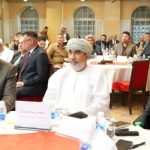

Vienna, Austria – Saudi Arabia recently participated in the inaugural meeting of the Board of Governors of the International Atomic Energy Agency (IAEA) held in Vienna from November 17th to 21st. This participation marks the Kingdom’s formal entry onto the board for the 2025–2027 period, signifying its growing influence in global nuclear energy governance. The meeting focused on agency oversight and future strategies in the atomic field.
Dr. Abdullah bin Khaled Toula, Saudi Arabia’s Ambassador to Austria and Permanent Representative to the United Nations and international organizations in Vienna, led the Saudi delegation. The IAEA Board of Governors, comprised of representatives from 35 member states, convened to address key issues related to the peaceful application of atomic technology and safeguards against proliferation. The meetings are a critical component of the IAEA’s annual cycle.
Saudi Arabia’s Role in International Nuclear Governance
Saudi Arabia’s election to the IAEA Board of Governors is widely viewed as a demonstration of the Kingdom’s commitment to responsible nuclear energy development. This commitment is particularly relevant as Saudi Arabia pursues its own ambitious plans for diversifying its energy sources, including a significant investment in nuclear power. The position allows Saudi Arabia to actively shape the agency’s agenda and contribute to international safety and security standards.
The Kingdom has publicly stated its intentions to use its board membership to advocate for greater access to peaceful nuclear technologies for developing nations. This aligns with broader international efforts to ensure equitable energy access and mitigate climate change. However, Saudi Arabia also emphasizes the importance of stringent safeguards to prevent the diversion of nuclear materials for non-peaceful purposes.
Focus on Peaceful Applications
Saudi Arabia’s interest in nuclear technology extends beyond energy production. Possible applications include advancements in medical isotopes, agricultural practices, and water desalination, all areas where atomic technologies can deliver substantial benefits. The country’s national vision, known as Vision 2030, prioritizes sustainable development and diversification in its economy and technology sectors.
According to the Saudi Ministry of Energy, the Kingdom is committed to adhering to the highest standards of nuclear safety and security. This commitment is evidenced by its collaboration with the IAEA on various technical projects and its active participation in international conventions related to nuclear materials control. The government insists transparency will be a core tenet of its involvement.
The IAEA Board of Governors serves as a policy-making body, responsible for overseeing the agency’s activities and ensuring that it remains effective in fulfilling its mandate. This includes the review of the IAEA’s program and budget, as well as the approval of safety standards and guidelines. The board evaluates reports from the IAEA Director General, Rafael Mariano Grossi, on various nuclear-related events around the world.
The board’s authority is substantial, enabling it to request on-site inspections of nuclear facilities to verify compliance with safeguards agreements. These inspections are a cornerstone of the IAEA’s verification activities. The agency plays a critical role in promoting a secure global nuclear security landscape.
Some analysts suggest Saudi Arabia’s board membership could also influence discussions surrounding the implementation of safeguards in the Middle East. The region has been a focal point of international concern regarding nuclear proliferation risks, and the IAEA’s role in verification is particularly crucial. The Iranian nuclear program, in particular, remains a point of contention.
The dynamics within the IAEA Board of Governors are often complex, reflecting the diverse interests and priorities of its member states. Decisions are typically made by consensus, although votes can be called if a consensus cannot be reached. Saudi Arabia’s position on the board allows it to engage directly with other influential members and contribute to shaping the agency’s responses to emerging challenges. This role is made more prominent by heightened global concern over nuclear proliferation.
While Saudi Arabia’s focus during its term is expected to be on promoting peaceful applications of nuclear technology, it’s also likely to advocate for a more equitable and transparent approach to international nuclear governance. The kingdom’s growing economic and geopolitical influence positions it as an increasingly important stakeholder in this field.
The next major event for the IAEA will be the submission of the Director General’s budget proposal for 2025 in early 2024. The Board of Governors will then review and approve the budget, setting the stage for the agency’s key priorities for the year. Further developments concerning Saudi Arabia’s specific initiatives within the board will be closely watched by industry observers and policymakers.
Continued monitoring of the IAEA’s discussions and Saudi Arabia’s actions will be important to understand the evolving landscape of international nuclear cooperation. The country’s long-term vision for nuclear energy and its role in promoting nuclear safeguards will undoubtedly influence the agency’s work in the coming years.