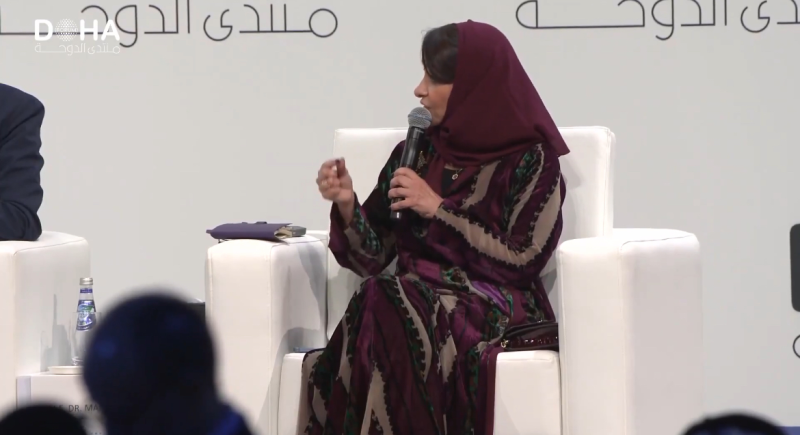

Saudi Arabia is urging comprehensive reforms for lasting peace between Israel and Palestine, specifically emphasizing the need for changes within the Israeli government. Speaking at the Doha Forum on Saturday, Dr. Manal Radwan, Saudi Arabia’s Minister Plenipotentiary at the Ministry of Foreign Affairs, stated that a viable two-state solution is impossible without a shift in Israeli leadership and a commitment to Palestinian self-determination. This comes as international efforts to implement a U.S.-backed peace plan gain momentum.
Dr. Radwan’s remarks signal a strong Saudi position that addressing the root causes of the conflict requires not only a ceasefire in Gaza but also a fundamental reassessment of the political landscape in Israel. She warned against attempts to derail or redefine the existing framework for peace, emphasizing the importance of adhering to previously agreed-upon principles. The comments were made during a panel discussion focused on the ongoing crisis and potential pathways to resolution.
The Push for a Two-State Solution and Necessary Reforms
According to Dr. Radwan, the current Israeli government “opposes the two-state solution” and fosters an environment of hostility towards Palestinians. She argued that without a partner genuinely committed to peace, a sustainable resolution remains unattainable. This stance underscores Saudi Arabia’s belief that a lasting peace must be built on mutual recognition and respect for Palestinian rights.
Saudi Arabia is a key player in the newly formed Global Alliance for the Implementation of the Two-State Solution, alongside Norway and the European Union. Dr. Radwan clarified that this alliance is focused on concrete action, moving beyond mere declarations of support for a two-state outcome. The alliance aims to translate international consensus into tangible progress on the ground.
Alliance Focus: Implementation, Not Just Discussion
The formation of the Global Alliance follows extensive diplomatic efforts, with Spain having laid important groundwork. Dr. Radwan highlighted the alliance’s commitment to implementing the 20-point peace plan, which she believes offers a “hopeful” path forward due to the direct commitment of the U.S. President. She emphasized the value of “leader-driven diplomacy” in achieving breakthroughs.
However, Dr. Radwan issued a firm warning against any attempts to dilute or renegotiate the core tenets of the 20-point plan. She stressed the need to uphold the agreed-upon definitions of critical elements such as ceasefire, disarmament, and the Palestinian-led governance of Gaza. Any deviation from these principles, she argued, would undermine the entire peace process.
Gaza as Part of a Larger Conflict
Dr. Radwan cautioned against isolating the situation in Gaza from the broader Israeli-Palestinian conflict. She asserted that Gaza is not a standalone case, but rather an integral part of the overall struggle for Palestinian self-determination and security. Addressing the humanitarian crisis in Gaza, she stated, must be linked to the pursuit of a comprehensive and lasting peace agreement.
She further explained that security for all parties – Israelis and Palestinians alike – is inextricably linked to the realization of a viable Palestinian state. Without addressing the political aspirations of the Palestinians, she argued, lasting security for anyone in the region is impossible. This perspective highlights the interconnectedness of security and political issues in the conflict.
Dr. Radwan also expressed concern about the cyclical nature of violence in Gaza, characterized by escalations, international engagement, humanitarian appeals, and eventual relapse into conflict. She believes that breaking this cycle requires a commitment to implementing a pathway that provides both security and political fulfillment for Palestinians. This is a critical point, as repeated cycles of violence have eroded trust and hindered progress towards peace.
The Role of Palestinian Reform
Addressing the question of reforms, Dr. Radwan acknowledged the ongoing efforts within the Palestinian Authority, noting President Mahmoud Abbas’s commitment to a “robust reform plan.” She affirmed Saudi Arabia’s daily support for these Palestinian-led initiatives. However, she reiterated that the most pressing need for reform lies with the Israeli government, given its current opposition to a two-state solution.
The focus on Israeli government reform represents a significant shift in the conversation, placing the onus on the party perceived as the primary obstacle to peace. This stance is likely to be met with resistance from some quarters, but it reflects Saudi Arabia’s determination to address the underlying political issues that fuel the conflict. The broader context of regional stability is also a key consideration for Saudi Arabia.
Looking ahead, the Global Alliance for the Implementation of the Two-State Solution is expected to present a detailed plan of action in the coming weeks. The success of this initiative will depend on the willingness of all parties – including Israel – to engage constructively and adhere to the principles of the 20-point plan. The international community will be closely watching for signs of progress, as well as any attempts to undermine the peace process. The ongoing diplomatic efforts and the evolving political dynamics in the region will continue to shape the prospects for a lasting resolution to the Israeli-Palestinian conflict, and the implementation of a peace agreement remains a complex and uncertain undertaking.