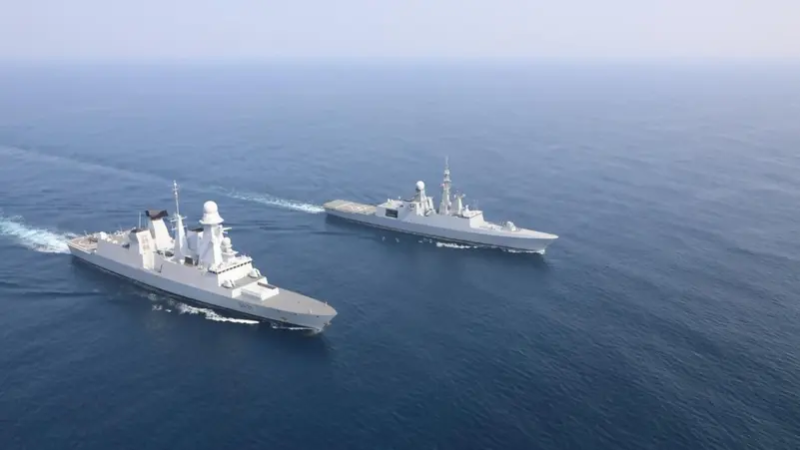

Riyadh, Saudi Arabia – The Royal Saudi Naval Forces have completed a deployment to the Arabian Sea focused on bolstering maritime security and countering smuggling operations, the Arab Coalition supporting Yemen’s government announced. This increased naval presence aims to disrupt illicit trade, particularly the flow of weapons, amid ongoing conflict in Yemen. The deployment underscores Saudi Arabia’s commitment to regional stability and international efforts to combat illegal maritime activity, with a recent focus on narcotics interdiction.
The move follows a period of heightened interdiction operations in the Arabian Sea, including a significant drug seizure led by Combined Task Force 150 (CTF-150), currently under Saudi command. The deployment is intended to enhance the Kingdom’s ability to monitor and control key sea lanes and address evolving security challenges in the region. Details regarding the size and specific composition of the deployed forces have not been publicly released.
Strengthening Maritime Security in the Arabian Sea
Saudi Arabia maintains two primary naval fleets: the Eastern Fleet, operating in the Arabian Gulf, and the Western Fleet, responsible for the Red Sea. These fleets comprise a diverse range of assets, including combat vessels, logistical support units, naval aviation, marine forces, and specialized maritime security teams. The recent deployment to the Arabian Sea represents a strategic extension of these capabilities, allowing for a more focused response to threats emanating from the Yemeni conflict and broader regional instability.
According to the Arab Coalition, the primary objective of the deployment is to prevent the smuggling of weapons and other illicit materials that could exacerbate the conflict in Yemen. The ongoing war has created a permissive environment for criminal activity, including arms trafficking, drug smuggling, and piracy. This has raised concerns among regional and international stakeholders about the potential for these activities to destabilize the wider region.
Recent Interdiction Operations
The Royal Saudi Naval Forces, leading CTF-150, recently concluded “Operation Al-Masmik,” a focused mission targeting narcotics trafficking. This operation resulted in the seizure of a substantial quantity of illicit drugs, demonstrating the effectiveness of international cooperation in combating maritime crime. CTF-150 is a multinational naval task force dedicated to disrupting criminal and terrorist activities in the Middle East.
Additionally, the Coalition has emphasized the importance of coordinating with international partners to enhance maritime domain awareness and share intelligence. This collaborative approach is seen as crucial for effectively addressing the complex security challenges in the Arabian Sea. The United States Navy and other allied forces routinely participate in joint exercises and patrols with the Saudi Naval Forces.
However, challenges remain in effectively policing the vast expanse of the Arabian Sea. The region’s complex geopolitical landscape and the presence of non-state actors complicate efforts to counter smuggling and maintain maritime security. The ongoing conflict in Yemen continues to be a major driver of instability, creating opportunities for illicit activities to flourish.
Broader Regional Implications
The increased Saudi naval presence in the Arabian Sea aligns with broader regional security initiatives aimed at protecting vital shipping lanes and ensuring the free flow of commerce. The Arabian Sea is a critical artery for global trade, and disruptions to maritime traffic could have significant economic consequences. The Bab-el-Mandeb Strait, located at the southern entrance to the Red Sea, is a particularly important chokepoint.
Meanwhile, the deployment also reflects Saudi Arabia’s growing assertiveness in regional security affairs. The Kingdom has been actively seeking to play a more prominent role in addressing security challenges in the Middle East, including those related to maritime security. This is part of a broader effort to project power and influence in the region. The Kingdom’s naval modernization program, which includes the acquisition of advanced warships and technologies, is further enhancing its capabilities.
In contrast to previous deployments, this operation specifically highlights the focus on disrupting non-state actor funding streams through the interdiction of illicit goods. The Coalition believes that cutting off these financial resources will weaken groups involved in the Yemeni conflict and contribute to a more stable security environment. This strategy represents a shift towards a more comprehensive approach to counterterrorism and regional security.
The report indicates that the Saudi naval forces are working closely with other regional and international partners to share information and coordinate efforts. This collaboration is essential for effectively addressing the complex security challenges in the Arabian Sea and ensuring the safety and security of maritime traffic. The success of these efforts will depend on sustained cooperation and a commitment to upholding international law.
Looking ahead, the Arab Coalition has not specified a definitive end date for the deployment. The duration of the operation will likely depend on the evolving security situation in Yemen and the broader region. Observers will be watching for any escalation in tensions or changes in the operational tempo of the Saudi naval forces. Continued monitoring of maritime activity and intelligence gathering will be crucial for assessing the effectiveness of the deployment and adapting to emerging threats.