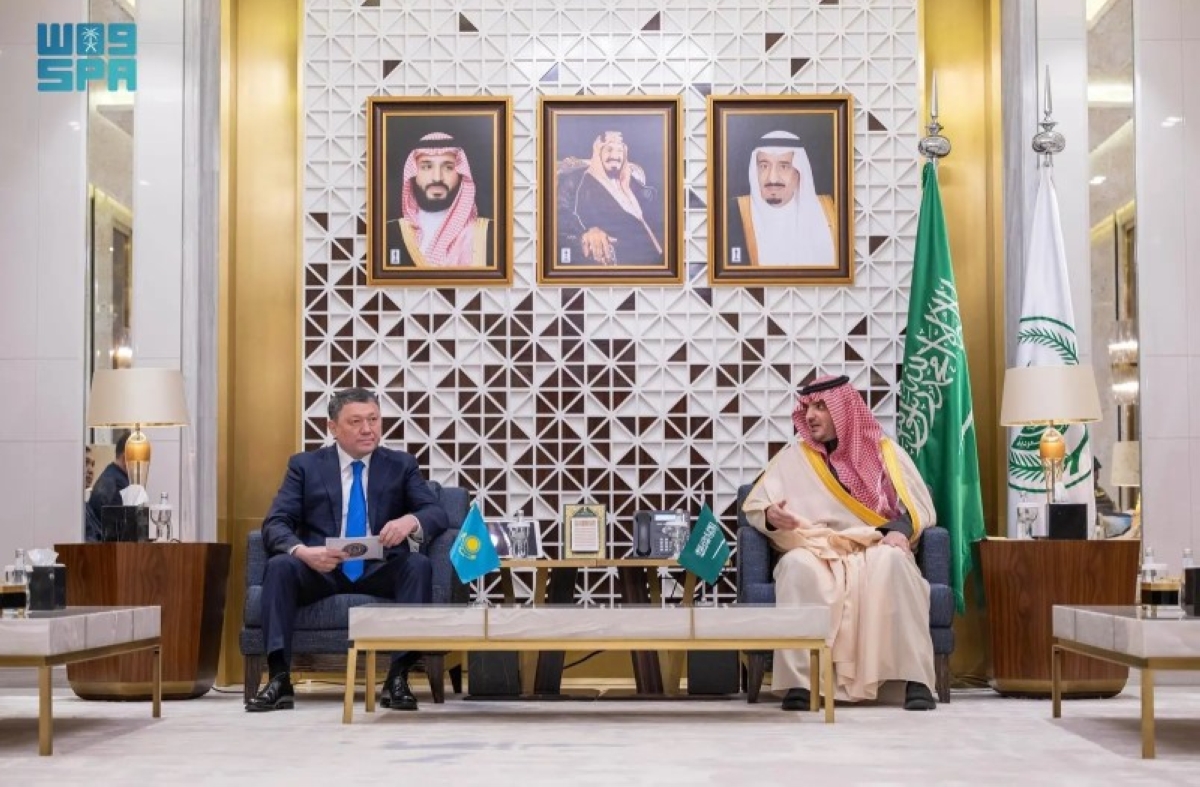

RIYADH – Saudi Arabia and Kazakhstan are strengthening their security cooperation following a meeting between Saudi Minister of Interior Prince Abdulaziz bin Saud bin Naif and Kazakhstan’s Minister of Internal Affairs Yerzhan Sadenov in Riyadh on Thursday. Discussions centered on enhancing collaboration in matters of internal security and addressing shared concerns. This meeting underscores the growing strategic partnership between the two nations, particularly within the realm of counterterrorism and regional stability.
The meeting, held at the Ministry of Interior headquarters in Riyadh, involved a comprehensive review of bilateral ties and potential avenues for improved collaboration. Both ministers stressed the importance of continued dialogue and joint initiatives to combat evolving security challenges. The specifics of any agreements reached were not immediately disclosed by either ministry, but focus areas were broadly indicated.
Boosting Security Cooperation Between Saudi Arabia and Kazakhstan
The push for increased security cooperation reflects a broader trend of Gulf states seeking to deepen relationships with Central Asian countries. This is driven by shared strategic interests, including managing regional security risks and fostering economic ties. Kazakhstan, a key player in Central Asia, often aligns with Saudi Arabia on international matters.
According to official statements, the discussions covered a range of topics relevant to both nations’ internal affairs. These likely included exchange of expertise in areas such as cybersecurity, border management, and combating organized crime. The ministers also touched upon issues of mutual interest, hinting at potential collaboration beyond traditional law enforcement.
Shared Security Concerns and Regional Dynamics
Both Saudi Arabia and Kazakhstan share concerns about extremist ideologies and the potential for transnational criminal activity. The rise of groups in neighboring regions has prompted both countries to prioritize internal security measures and preventative strategies. Kazakhstan has actively worked to prevent the return of citizens who fought with extremist groups in Syria and Iraq, a challenge also faced by Saudi Arabia.
Additionally, the two nations are navigating the complex geopolitical landscape of Eurasia. Russia’s ongoing war in Ukraine and its impact on regional stability are likely factors influencing their security dialogues. Kazakhstan, balancing relationships with both Russia and the West, may see increased cooperation with Saudi Arabia as a way to diversify its security partnerships.
Economic Ties and Their Impact on Security
The strengthening of security cooperation isn’t occurring in a vacuum; it’s bolstered by expanding economic ties between the two countries. Saudi investment in Kazakhstan’s energy sector and infrastructure projects is growing. This increased economic interdependence creates a stronger incentive for maintaining a stable and secure environment.
The increased flow of people and goods linked to trade and investment also necessitates enhanced coordination on security matters. Streamlining border procedures and improving information sharing can help mitigate potential risks associated with cross-border movement. International trade facilitation often requires robust security protocols.
However, some analysts suggest that the practical implementation of such security agreements often faces bureaucratic hurdles. The specifics of data sharing protocols and the logistical challenges of joint training exercises can slow down progress. Further details are typically needed for a full assessment of impact.
Meanwhile, both Saudi Arabia and Kazakhstan are members of the Shanghai Cooperation Organisation (SCO), a regional security bloc. This provides another platform for them to coordinate their efforts on counterterrorism and regional security. This membership facilitates dialogue and joint planning on common threats.
In contrast to some Western approaches to security cooperation, Saudi Arabia and Kazakhstan tend to prioritize bilateral agreements and non-interference in internal affairs. This approach has fostered a level of trust that has allowed them to collaborate on sensitive security issues. The emphasis on mutual respect is a defining factor in their partnership.
The meeting between the two ministers comes as Saudi Arabia continues to position itself as a key regional security partner. The Kingdom has been actively involved in de-escalation efforts in Yemen and is working to foster greater stability in the broader Middle East. Its strengthening ties with Kazakhstan reflect a desire to broaden its security influence beyond its immediate neighbors.
The Kazakh Ministry of Internal Affairs has also been undergoing modernization efforts in recent years, with a focus on improving its capabilities in areas such as digital forensics and crime analysis. Collaboration with Saudi Arabia could accelerate these efforts and provide Kazakhstan with access to cutting-edge technologies and expertise. This transfer of knowledge is central to enhancing national internal security.
Looking ahead, the two ministries are expected to establish working groups to develop specific action plans for implementing the agreements discussed during the meeting. The timeline for these plans remains unclear, and their success will depend on overcoming any logistical or political obstacles. Observers will be watching for concrete evidence of enhanced collaboration in areas such as intelligence sharing and joint training exercises. Further announcements regarding cooperative ventures related to counterterrorism are anticipated in the coming months.
The long-term implications of this strengthened security partnership are still unfolding. However, it represents a significant step towards greater regional stability and reflects the growing importance of Saudi Arabia and Kazakhstan as key players in Eurasian security dynamics.