


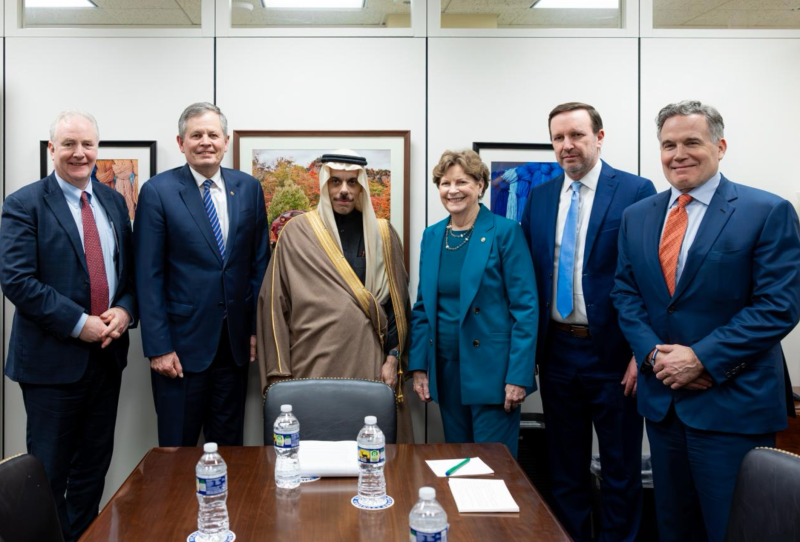

Saudi Arabian Foreign Minister Prince Faisal bin Farhan Al Saud held discussions with U.S. Senator Jeanne Shaheen in Washington D.C. on Wednesday, focusing on strengthening bilateral ties and addressing pressing regional issues. The meeting underscored the ongoing Saudi Arabia US relations and covered topics ranging from the future of Syria to the conflicts in Yemen, Sudan, Gaza, and Lebanon. This visit signals continued diplomatic efforts between the two nations amidst a complex geopolitical landscape.
The meeting took place as part of Prince Faisal’s official visit to the United States, with Princess Reema bint Bandar bin Sultan, the Saudi Ambassador to the U.S., and Mohammed Al-Yahya, an advisor to the minister, also in attendance. Senator Shaheen, as vice chair of the Senate Foreign Relations Committee, plays a key role in shaping U.S. foreign policy, making this engagement particularly significant. The U.S. Senate Foreign Relations Committee confirmed the discussion points via a post on X (formerly Twitter).
Strengthening Saudi Arabia US Relations Through Dialogue
The discussions between Prince Faisal and Senator Shaheen represent a continuation of frequent high-level engagements between Saudi Arabia and the United States. These meetings are crucial for maintaining open communication channels and coordinating strategies on shared security and economic interests. Both countries have a long history of cooperation, particularly in areas of counterterrorism and energy security, but navigating differing perspectives on regional conflicts remains a key challenge.
Focus on Regional Stability
A significant portion of the conversation centered on the ongoing conflicts and humanitarian crises across the Middle East. The situation in Syria, marked by years of civil war and a complex web of international actors, was a key topic. According to the Senate Foreign Relations Committee, the two officials explored “a new future for Syria,” suggesting a potential for renewed diplomatic efforts to find a lasting political solution.
Additionally, the meeting addressed the escalating humanitarian crisis in Gaza. The U.S. and Saudi Arabia have both expressed concern over the civilian casualties and the need for increased humanitarian aid. While their approaches to resolving the Israeli-Palestinian conflict may differ, both nations share an interest in de-escalation and preventing further regional instability.
The conflicts in Yemen and Sudan also received attention. Saudi Arabia has been actively involved in mediation efforts in Yemen, seeking to end the civil war and alleviate the humanitarian suffering. The situation in Sudan, following the outbreak of fighting between the army and paramilitary forces, presents a new challenge to regional stability, and the U.S. and Saudi Arabia are likely coordinating their responses.
Lebanon’s Political and Economic Challenges
Lebanon’s ongoing political and economic crisis was another point of discussion. The country has been grappling with a severe economic downturn, political paralysis, and a fragile security situation. Saudi Arabia has historically played a role in supporting Lebanon, and the meeting likely explored ways to assist the country in overcoming its challenges. The U.S. has also provided significant economic assistance to Lebanon, and continued cooperation between the two countries is essential.
However, the relationship between Saudi Arabia and Lebanon has experienced periods of strain in recent years, largely due to the influence of Hezbollah. The discussions likely touched upon the need for Lebanon to distance itself from regional conflicts and implement necessary economic reforms. The broader context of Middle East policy influences these bilateral discussions.
Meanwhile, the visit occurs as the Biden administration continues to reassess its approach to the region, balancing security interests with concerns about human rights and democratic values. The U.S. is seeking to strengthen its partnerships with key allies like Saudi Arabia while also pursuing diplomatic solutions to regional conflicts. This balancing act requires careful calibration and ongoing dialogue.
In contrast to some previous periods, the current administration has prioritized engagement with Saudi Arabia, recognizing its importance as a regional power and a major oil producer. This shift in approach has led to increased diplomatic activity and a renewed focus on cooperation in areas of mutual interest. The ongoing diplomatic efforts are intended to foster a more stable and secure Middle East.
The Saudi-U.S. strategic partnership extends beyond security and political issues to include economic cooperation. Trade and investment between the two countries are substantial, and there is potential for further growth in areas such as renewable energy and technology. The discussions may have also touched upon opportunities to expand economic ties and promote mutual prosperity. The US foreign policy towards Saudi Arabia is multifaceted.
Looking ahead, further discussions are expected to take place between U.S. and Saudi officials in the coming weeks and months. The implementation of any agreements or initiatives resulting from these talks will require sustained commitment and coordination. The evolving situation in the Middle East, particularly the conflicts in Gaza and Yemen, will continue to shape the agenda for future engagements. Monitoring the progress of these diplomatic efforts and the broader regional context will be crucial for understanding the future of Saudi Arabia US relations.