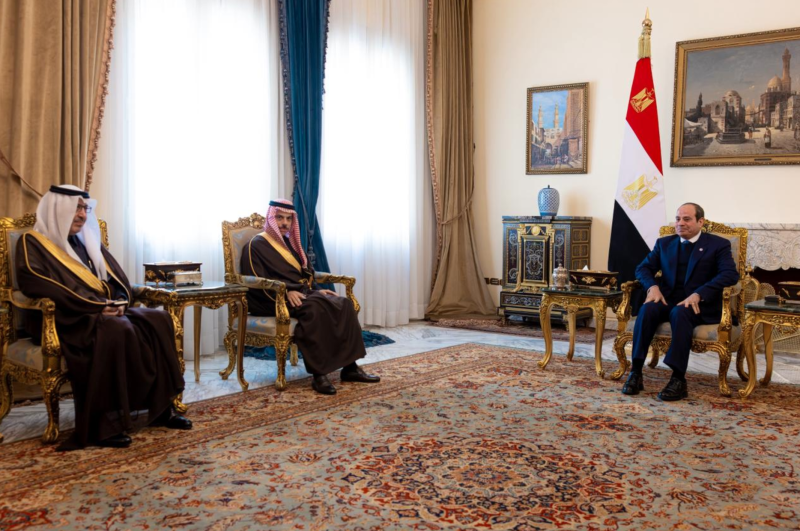

Saudi Foreign Minister Prince Faisal bin Farhan met with Egyptian President Abdel Fattah El-Sisi in Cairo on Monday, signaling continued close diplomatic ties between the two nations. The visit centers on discussions regarding Saudi-Egyptian relations and pressing regional issues, including ongoing conflicts and economic collaboration. This meeting underscores the importance both countries place on coordinated foreign policy within the Arab world.
The official visit began with the reception by President El-Sisi, and is expected to include detailed talks with Egyptian Foreign Minister Badr Abdel Aati. These discussions are anticipated to cover a broad spectrum of bilateral concerns and opportunities for increased cooperation. The meeting’s timing is notable, coming amid heightened instability in several neighboring countries and evolving global power dynamics.
Strengthening Saudi-Egyptian Relations: A Key Regional Partnership
Saudi Arabia and Egypt have maintained a strong alliance for decades, based on shared security interests and economic interdependence. This partnership is considered crucial for stability in the Middle East and North Africa, according to regional analysts. Both countries play a significant role in organizations like the Arab League and often coordinate their positions on major international matters.
The economic dimension of Saudi-Egyptian relations is particularly significant. Saudi Arabia is a major investor in Egypt, with substantial holdings in real estate, infrastructure, and energy projects. Recent economic challenges in Egypt have increased the importance of this investment.
Areas of Economic Cooperation
Investment flows between the two countries are focused on several key sectors. These include:
Tourism is experiencing a boost with increased Saudi investment in Egyptian resorts. The energy sector remains central, with Saudi companies involved in oil and gas exploration and infrastructure development. Finally, real estate is a major area, particularly in new administrative capital projects.
However, the relationship isn’t without complexities. Divergent perspectives on certain regional conflicts – such as those in Yemen and Libya – have occasionally created tension. The current visit is seen as an opportunity to bridge these differences and reaffirm a united front.
The agenda also includes a review of efforts to promote regional security, particularly in the Red Sea area. Both countries share concerns about maritime security and the potential for external interference in the region. Discussions are likely to revolve around joint initiatives to safeguard their shared interests. Furthermore, the countries will probably discuss the ongoing situation in Sudan and the potential for a collaborative diplomatic solution.
This visit builds on previous high-level engagements. In October 2023, President El-Sisi attended the Joint Arab-Islamic Extraordinary Summit in Riyadh, addressing the conflict in Gaza. The Saudi government played a pivotal role in convening the summit, demonstrating its leadership on regional issues. The two leaders have met on numerous other occasions, solidifying personal relationships that underpin the broader strategic partnership.
Egypt’s geopolitical importance is also a factor driving the strengthening of Saudi-Egyptian relations. Controlling the Suez Canal, a vital waterway for global trade, makes Egypt a crucial partner for Saudi Arabia, which relies on the canal for a significant portion of its imports and exports. The Suez Canal’s stability is a key component of Saudi Arabia’s national security interests.
The international context also shapes the relationship. Both Saudi Arabia and Egypt are seeking to diversify their partnerships and reduce reliance on traditional allies. They are both engaging with a wider range of countries, including China and Russia, while still maintaining close ties with the United States. This desire for strategic autonomy is driving closer cooperation between Riyadh and Cairo. Information from the Egyptian Ministry of Foreign Affairs suggests a desire to present a unified front at international forums.
Looking ahead, the outcome of the discussions between Prince Faisal and Egyptian officials will likely influence the trajectory of regional diplomacy. A joint statement is expected to be released following the meetings, outlining specific areas of agreement and future cooperation. The extent to which the two sides can reconcile differing viewpoints on sensitive issues, like the ongoing regional conflicts, will be a key indicator of the visit’s success.
Further developments to watch include the implementation of any new economic agreements reached during the visit. The timeline for these projects and the level of Saudi investment will be closely monitored. External factors, such as shifts in the global economic landscape and evolving security threats, also present potential challenges and opportunities for the bilateral ties between these two influential Arab nations.