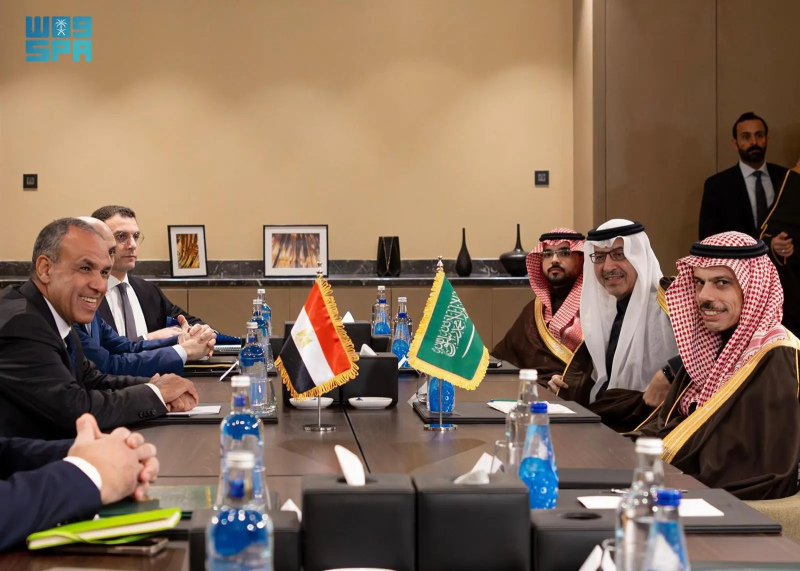

RIYADH – Saudi Arabian and Egyptian foreign ministers convened in Cairo on Monday to discuss strengthening bilateral ties and address pressing regional conflicts. Prince Faisal bin Farhan, Saudi Minister of Foreign Affairs, met with Dr. Badr Abdel-Aty, Egypt’s Minister of Foreign Affairs, Immigration, and Expatriates Affairs, focusing on collaborative efforts and shared security concerns, particularly regarding the ongoing situation in Gaza. This Saudi Arabia Egypt relations meeting underscores the continued importance of the two nations’ strategic partnership.
The discussions, held at the Egyptian Ministry of Foreign Affairs, covered a broad spectrum of issues, including developments in Yemen, Sudan, and Somalia, alongside broader international matters. Saudi Ambassador to Egypt, Saleh Al-Hussaini, and Director General of the Minister’s Office, Waleed Al-Smaeel, were also present during the talks. The meeting signals a coordinated approach to regional stability from two of the Arab world’s most influential powers.
Strengthening Saudi Arabia Egypt Relations Through Dialogue
The relationship between Saudi Arabia and Egypt is a cornerstone of Arab security and economic cooperation. Both nations share a commitment to countering extremism and promoting stability in the Middle East and Africa. This latest meeting builds upon decades of close collaboration, including significant economic investments by Saudi Arabia in Egypt and joint military exercises.
According to sources familiar with the discussions, a key objective of the meeting was to identify new avenues for economic partnership. Egypt is currently undertaking significant economic reforms, and Saudi investment is seen as crucial to its success. Discussions likely included potential projects in infrastructure, renewable energy, and tourism, areas where Saudi Arabia has substantial expertise and capital.
Focus on Regional Conflicts
The situation in the Gaza Strip dominated a significant portion of the conversation. Both ministers reportedly expressed deep concern over the escalating violence and the humanitarian crisis facing Palestinian civilians. They likely discussed potential diplomatic efforts to achieve a ceasefire and facilitate the delivery of aid.
Beyond Gaza, the ministers addressed the ongoing conflicts in Yemen and Sudan. Saudi Arabia has been actively involved in peace negotiations in Yemen, while Egypt has been working to mediate a resolution to the conflict in Sudan. The meeting provided an opportunity to coordinate these efforts and explore ways to de-escalate tensions in both countries. The ministers also touched upon the situation in Somalia, where both nations have a shared interest in combating terrorism and promoting stability.
However, the complexities of these regional conflicts present significant challenges to any diplomatic solution. The involvement of multiple actors with competing interests makes it difficult to achieve a lasting peace. The ministers likely acknowledged these challenges and emphasized the need for a comprehensive and inclusive approach.
Additionally, the meeting addressed broader issues of regional security, including the threat posed by non-state actors and the need to counter Iranian influence. Both Saudi Arabia and Egypt view Iran as a destabilizing force in the region and have expressed concerns over its support for proxy groups. This shared perspective likely informed their discussions on regional security challenges.
Meanwhile, the issue of expatriate affairs was also on the agenda, reflecting Egypt’s large diaspora in Saudi Arabia. Dr. Abdel-Aty highlighted the importance of protecting the rights and welfare of Egyptian workers in Saudi Arabia, and both ministers discussed ways to facilitate their contributions to the Saudi economy. This is a significant aspect of bilateral cooperation, given the substantial number of Egyptians working in the Kingdom.
In contrast to some recent diplomatic shifts in the region, the Saudi-Egyptian partnership remains remarkably consistent. Despite differing approaches to certain issues, the two countries consistently find common ground on matters of core national interest. This stability is a key factor in the overall security landscape of the Middle East.
The meeting also comes at a time of increased global uncertainty, with the war in Ukraine and rising geopolitical tensions impacting the region. This context likely underscored the importance of strengthening regional alliances and coordinating responses to shared challenges. The need for a unified Arab front on issues such as energy security and food security was likely discussed.
The ministers’ discussion of regional diplomacy also likely included an assessment of the Abraham Accords and their potential impact on the broader Arab-Israeli conflict. While both Saudi Arabia and Egypt maintain a commitment to a two-state solution, they also recognize the changing dynamics in the region and the need to adapt their strategies accordingly.
Looking ahead, further consultations between Saudi and Egyptian officials are expected in the coming weeks. These discussions will likely focus on developing concrete plans to address the issues raised during the Cairo meeting. The timing and scope of any follow-up meetings will depend on developments on the ground in the various conflict zones. The success of these efforts will be a key indicator of the strength and resilience of the Arab alliance.
While no immediate breakthroughs were announced, the meeting itself is a positive sign. It demonstrates a continued commitment to dialogue and cooperation between two vital regional players. The ongoing situation in Gaza, and the broader regional landscape, will continue to demand close coordination between Riyadh and Cairo. The next steps will be closely monitored by international observers seeking to understand the evolving dynamics of the Middle East.