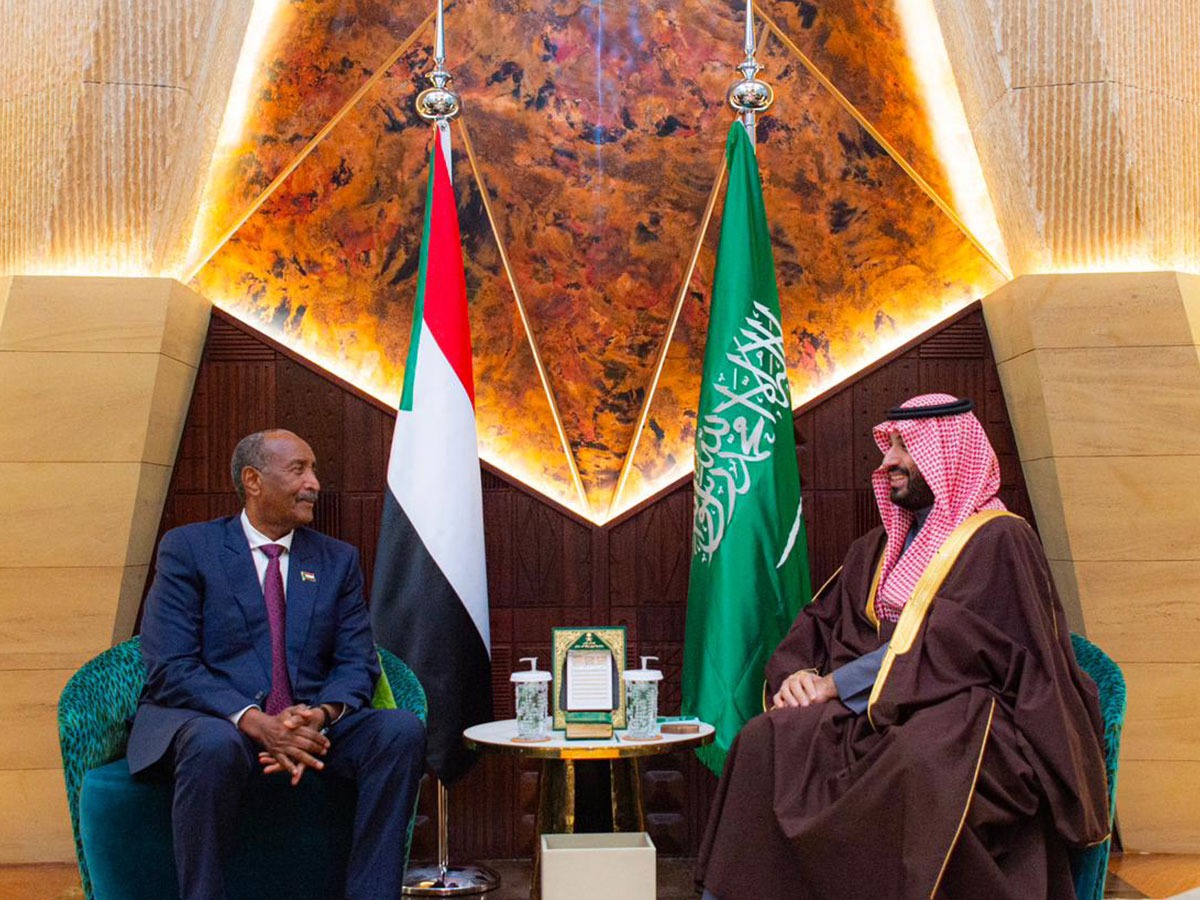

Riyadh hosted talks on Monday between Saudi Crown Prince Mohammed bin Salman and Sudanese General Abdel Fattah Al Burhan, Chairman of the Transitional Sovereignty Council of Sudan, as the ongoing conflict in Sudan continues to destabilize the region. The meeting focused on the escalating crisis and potential pathways toward a ceasefire and lasting political resolution. Discussions centered on the humanitarian impact of the fighting and the urgent need for security and stability in the country.
The meeting took place in Riyadh, Saudi Arabia, on December 15, 2023, according to the Saudi Press Agency. Al Burhan’s visit comes amid intensified international efforts to mediate an end to the clashes between the Sudanese Armed Forces (SAF) and the paramilitary Rapid Support Forces (RSF), which erupted in April 2023. The Saudi Crown Prince reaffirmed the Kingdom’s commitment to supporting Sudan’s stability.
The Situation in Sudan and Saudi Arabia’s Role
The conflict in Sudan began as a power struggle between SAF leader Al Burhan and RSF commander Mohamed Hamdan Dagalo, commonly known as Hemedti. The fighting has since expanded, drawing in various factions and causing a severe humanitarian crisis. Millions have been displaced, both internally and as refugees in neighboring countries, and access to essential services like healthcare and food is severely limited.
Saudi Arabia has been actively involved in mediation efforts since the start of the conflict, hosting multiple rounds of talks between the warring parties. The Kingdom, along with the United States, co-leads the mediation process under the auspices of the Jeddah Platform. However, these previous attempts at brokering a durable ceasefire have largely failed to yield significant results.
Recent Developments and Challenges
Recent weeks have seen a surge in violence, particularly in the Darfur region, raising concerns about potential ethnic cleansing. The United Nations has repeatedly warned of the deteriorating humanitarian situation and the risk of widespread famine. The report indicates that the conflict has also disrupted Sudan’s already fragile economy, exacerbating existing challenges.
The meeting between Prince Mohammed bin Salman and General Al Burhan is seen as a crucial step in reviving the stalled peace process. Saudi Arabia’s influence in the region and its close ties with both sides of the conflict position it as a key mediator. The challenge lies in convincing both the SAF and the RSF to prioritize a political solution over military gains.
Additionally, regional dynamics are complicating the situation. External actors are accused of providing support to different factions, fueling the conflict and hindering mediation efforts. The involvement of these external forces adds another layer of complexity to the already challenging situation in Sudan.
The international community has largely condemned the violence and called for a ceasefire. The United States has imposed sanctions on individuals and entities linked to the conflict, while the European Union has suspended financial assistance to Sudan. These measures are intended to pressure the warring parties to return to the negotiating table, but their effectiveness remains to be seen.
The ongoing instability in Sudan also poses a threat to regional security. The conflict could potentially spill over into neighboring countries, further destabilizing the region. The flow of refugees and the disruption of trade routes are already having a significant impact on Sudan’s neighbors. The situation requires a coordinated regional response to prevent further escalation.
The discussions in Riyadh likely addressed the need for a comprehensive political framework that addresses the root causes of the conflict. This framework would need to include provisions for power-sharing, security sector reform, and transitional justice. Finding a consensus on these issues will be a major hurdle in the peace process. The political crisis in Sudan is deeply entrenched.
The Saudi government has emphasized the importance of preserving Sudan’s territorial integrity and sovereignty. They have also reiterated their commitment to supporting a civilian-led transition to democracy. However, the path to a stable and democratic Sudan remains uncertain, given the current level of violence and distrust between the warring parties. The future of governance in Sudan is at stake.
Following the meeting, no immediate breakthroughs were announced. However, both sides reportedly expressed a willingness to continue negotiations. Further talks are expected to take place in the coming weeks, potentially under the continued auspices of the Jeddah Platform. The success of these talks will depend on the willingness of both the SAF and the RSF to compromise and prioritize the interests of the Sudanese people. The next critical step is a commitment to a verifiable ceasefire, but achieving this remains a significant challenge given the current lack of trust and ongoing military operations.
The situation in Sudan remains highly volatile and unpredictable. Continued monitoring of the security and political developments, as well as the humanitarian situation, is crucial. The international community will need to maintain its engagement and provide sustained support to Sudan to help it navigate this difficult period and achieve a lasting peace. The humanitarian situation in Sudan is a major concern.
Reuters provides additional coverage of the meeting and the ongoing conflict.
Al Jazeera also reports on the discussions in Riyadh.
The Peninsula offers further details on the visit.