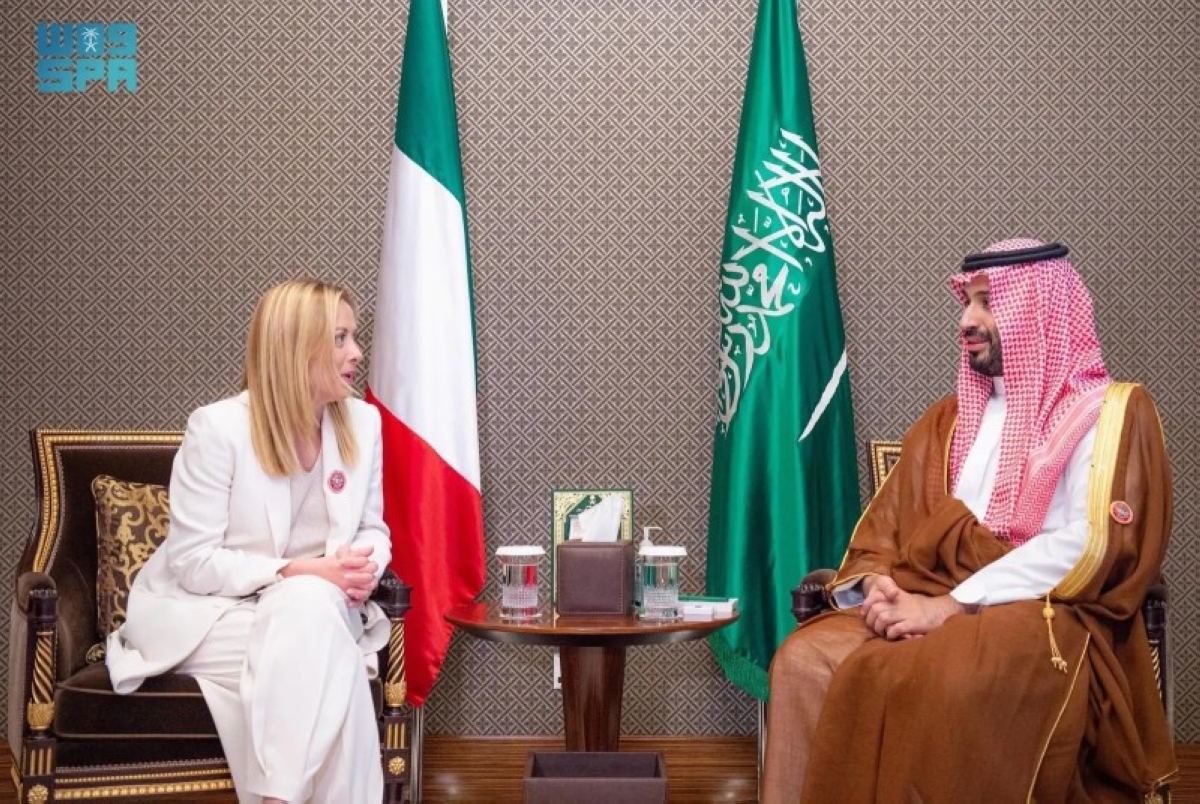

Manama, Bahrain – Saudi Crown Prince and Prime Minister Mohammed bin Salman engaged in extensive discussions with Italian Prime Minister Giorgia Meloni on Wednesday, addressing bilateral cooperation and critical regional concerns. The meeting took place on the sidelines of the 46th session of the Gulf Cooperation Council (GCC) Supreme Council, highlighting the strategic importance of both nations within the broader geopolitical landscape. Discussions focused on strengthening ties between Saudi Arabia and Italy across multiple sectors.
The leaders met in Manama, Bahrain, on February 7, 2024, during a key GCC summit. Saudi state news reported the talks covered a wide range of issues, including economic partnerships, security challenges, and diplomatic efforts towards stability in the Middle East. High-ranking Saudi officials accompanied the Crown Prince, underscoring the seriousness and focus of the dialogue.
Strengthening Saudi-Italian Cooperation
The primary focus of the meeting was reportedly to fortify existing cooperation between Saudi Arabia and Italy. Both countries have been working to diversify their economies, and Wednesday’s talks likely aimed to identify new avenues for investment and joint ventures. This aligns with Saudi Arabia’s “Vision 2030” plan, a strategic framework to reduce its dependence on oil and develop public service sectors such as health, education, infrastructure, recreation, and tourism.
Economic Ties and Investment
Italy is a significant trading partner for Saudi Arabia within the European Union, and the relationship encompasses various sectors, from energy to defense. According to data from the Italian Ministry of Foreign Affairs, bilateral trade reached several billion euros in recent years. The leaders likely discussed further increasing Italian investment in Saudi projects related to infrastructure and renewable energy, key components of Vision 2030.
Regional Security Discussions
Beyond economic matters, the escalating instability throughout the region also appeared on the agenda. Addressing shared concerns around maritime security in the Red Sea and the ongoing conflict in Yemen were likely key topics. Italy shares interest in a stable Red Sea, vital for global trade, following recent attacks on commercial vessels.
The discussions also extended to broader international developments, including the war in Ukraine and its impact on global energy markets. Italy has been a consistent voice advocating for de-escalation and diplomatic solutions to the conflict, and it is likely this position was shared with the Saudi delegation. The importance of maintaining energy security and stability was reportedly emphasized.
Attendees from the Saudi side included Prince Abdulaziz bin Salman, the Minister of Energy; Prince Khalid bin Salman, the Minister of Defense; Prince Faisal bin Farhan, the Minister of Foreign Affairs; Musaed Al-Aiban, Minister of State, Cabinet Member, and National Security Advisor; and Khalid Al-Falih, the Minister of Investment. This high-level representation demonstrates the breadth of Saudi interests in deepening its relationship with Italy.
The meeting occurred as the GCC summit addressed internal unity and external relations. The GCC, comprised of Saudi Arabia, Kuwait, Oman, Qatar, Bahrain, and the United Arab Emirates, plays a crucial role in regional diplomacy and security. Italy’s engagement with the GCC, through bilateral talks with Saudi Arabia, signals a broader European effort to foster stronger ties with the Gulf states.
Meanwhile, Italy’s growing focus on the Mediterranean and North Africa impacts its approach to regional security. The country views stability in the wider Middle East as intrinsically linked to its own security interests, further incentivizing constructive dialogue with key players like Saudi Arabia. This engages discussions of potential collaboration on counter-terrorism efforts.
In contrast, historical ties between Saudi Arabia and other global powers, such as the United States, also continue to be significant. While maintaining these long-standing partnerships, Saudi Arabia is actively pursuing greater diversification in its international relations, and Italy is keen to play a bigger role. This deliberate diversification strategy appears to be a cornerstone of current Saudi foreign policy.
The encounter underscores Italy’s proactive role in strengthening dialogue with influential nations in the Middle East. Prime Minister Meloni’s government has signaled a desire to increase Italy’s relevance in international affairs, particularly within the context of evolving energy and security dynamics. This approach is driven by the circumstances created by geopolitical shifts and the need for reliable energy sources.
Looking ahead, the impact of these discussions will be observed in follow-up actions and announcements regarding specific agreements or initiatives. The details of any concrete commitments will likely emerge in the coming weeks. It remains to be seen how these conversations will translate into tangible outcomes regarding investment, defense partnerships, and cooperation on regional issues and broader diplomacy. Further statements from the Italian and Saudi governments are anticipated.
Analysts suggest that continued engagement between Rome and Riyadh is likely, especially given the shared interests in maintaining regional stability and facilitating economic growth. The success of this strengthened cooperation will depend on navigating complex geopolitical challenges and building mutual trust, creating a foundation for deeper, long-term ties.