


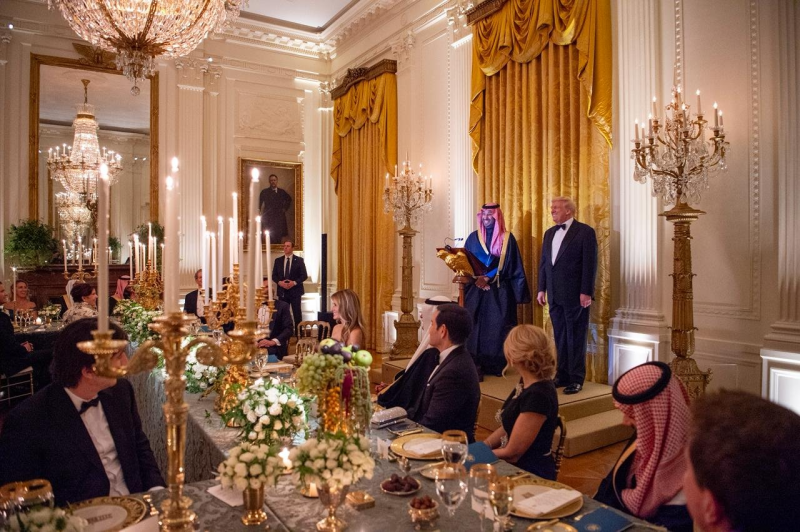

Washington D.C. – The United States and Saudi Arabia announced a significant strengthening of their strategic partnership Tuesday, with President Trump formally designating Saudi Arabia as a major non-NATO ally. The announcement followed a White House dinner hosted for Saudi Crown Prince and Prime Minister Mohammed bin Salman, and signals a deepening of ties between the two nations amidst ongoing geopolitical tensions in the Middle East. This move regarding U.S.-Saudi relations is expected to have notable implications for regional security and energy policy.
The dinner, attended by President Trump and First Lady Melania Trump, underscored the renewed focus on strengthening bilateral cooperation. The meeting comes eight decades after a landmark meeting between King Abdulaziz and President Franklin D. Roosevelt, establishing a foundation for a long-term alliance. Both leaders expressed optimism about future collaboration, particularly in light of evolving regional dynamics.
Elevating the Partnership: A Major Non-NATO Ally Designation
The designation of Saudi Arabia as a major non-NATO ally is a symbolic and practical step, granting the Kingdom preferential access to U.S. military equipment, training, and intelligence sharing. This status is typically conferred on close strategic partners outside of the North Atlantic Treaty Organization, demonstrating a high level of trust and cooperation. According to the State Department, the designation facilitates closer collaboration on defense and security matters.
Implications for Regional Security
Experts suggest this move is intended to bolster stability in the Middle East, especially given ongoing conflicts and concerns about Iranian influence. The partnership could lead to increased joint military exercises and collaborative efforts to counter terrorism and regional threats. The White House has consistently characterized Saudi Arabia as a vital partner in containing extremist groups and maintaining regional order.
However, the decision has drawn criticism from some advocacy groups concerned about Saudi Arabia’s human rights record. These organizations argue that closer military ties may undermine U.S. efforts to promote democratic values and human rights abroad. The Biden administration had previously signaled a reassessment of U.S. foreign policy towards Saudi Arabia, but this recent move reflects a shift back towards prioritizing strategic alignment.
Meanwhile, the designation is also seen as a signal of strong U.S. support for Saudi Arabia’s economic diversification plans, including Vision 2030. This ambitious program aims to reduce the Kingdom’s reliance on oil revenue and invest in new industries. The U.S. is a key partner in providing technology and investment for these efforts, strengthening economic ties between the two countries.
President Trump stated that U.S.-Saudi relations are at their strongest point in history, emphasizing a shared commitment to counterterrorism and regional stability. The Crown Prince echoed these sentiments, highlighting the long-standing bond between the two nations and expressing optimism for deeper cooperation in the years to come. He noted the potential for expanding economic opportunities and addressing shared interests.
The elevation of Saudi Arabia’s status also reflects the ongoing negotiations surrounding oil production and global energy markets. Saudi Arabia is a leading oil producer and a critical player in stabilizing global energy prices, a key priority for the U.S. administration. Stable energy security remains a cornerstone of the bilateral relationship.
In contrast to some previous periods of strained relations, characterized by disagreements over human rights and regional policies, this announcement indicates a concerted effort to prioritize strategic alignment. The move also demonstrates the Trump administration’s willingness to prioritize security partnerships that advance its geopolitical interests.
Additionally, the move aligns with a broader U.S. strategy of building stronger alliances in the Middle East to counterbalance the growing influence of other global powers. It’s believed that a robust partnership with Saudi Arabia is essential to maintaining U.S. presence and influence in the region.
Looking ahead, the implementation of this new status will be closely watched, particularly regarding the specifics of military cooperation and intelligence sharing. It remains to be seen how the partnership will evolve under potential future administrations, especially if there is a change in leadership in either country. The next steps will likely involve detailed negotiations on specific areas of cooperation, with a focus on addressing shared security concerns and promoting economic growth. The timeline for finalizing these agreements is currently unclear, however, officials anticipate initial steps within the next six months.