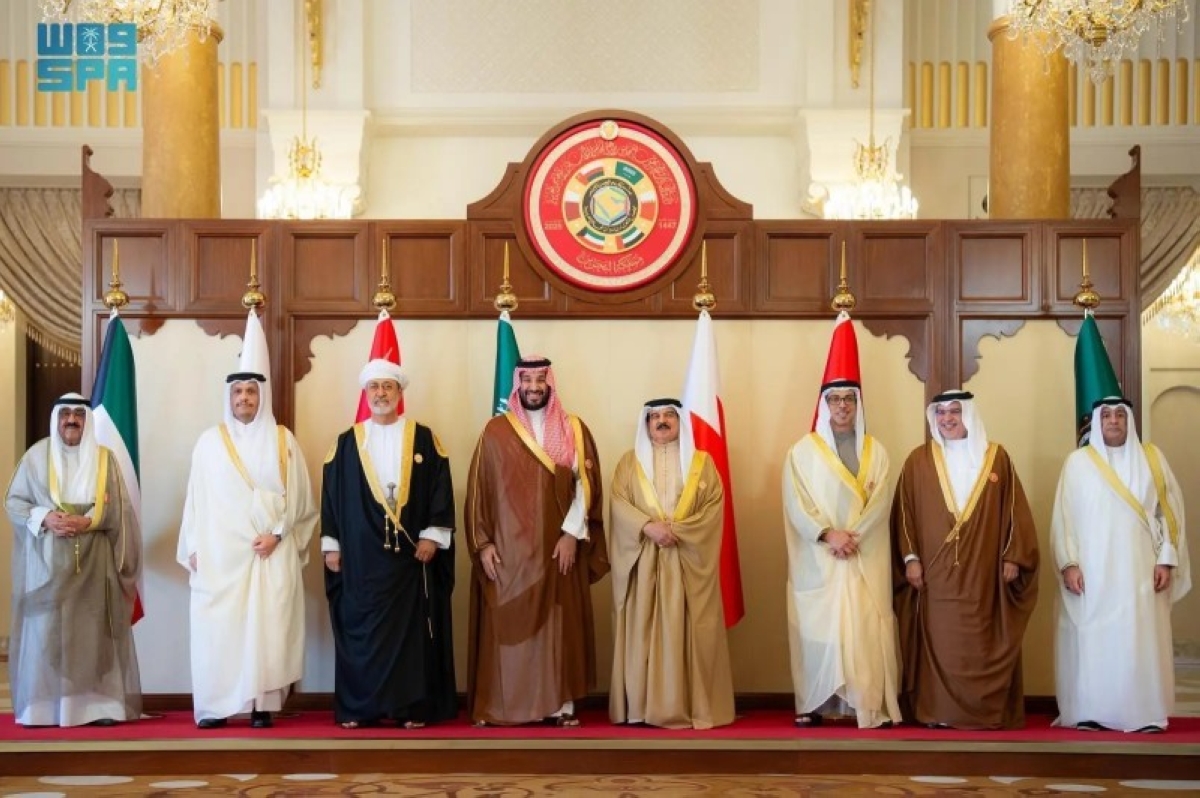

Manama, Bahrain – Saudi Crown Prince Mohammed bin Salman is currently in Bahrain attending the 46th Session of the Supreme Council of the Gulf Cooperation Council (GCC). The summit, which commenced on Wednesday, focuses on regional security and economic integration among member states. Alongside the GCC meetings, the Crown Prince will also co-chair the fourth session of the Saudi-Bahraini Coordination Council, signaling a continued strengthening of bilateral ties between the two nations.
The Crown Prince arrived at the King Fahd Causeway from Al-Khobar and was greeted by Bahrain’s Crown Prince and Prime Minister, Prince Salman bin Hamad Al Khalifa. An official motorcade then transported the Saudi delegation to Al Sakhir Palace, where the summit is being held. The presence of key Saudi ministers underscores the importance Riyadh places on the GCC framework.
Strengthening GCC Ties and Saudi-Bahraini Cooperation
The GCC summit provides a crucial platform for addressing shared challenges facing the Gulf region, including geopolitical tensions and economic diversification. Established in 1981, the GCC aims to foster cooperation in areas such as defense, security, and economic development among its six member states: Saudi Arabia, Bahrain, Kuwait, Oman, Qatar, and the United Arab Emirates. This year’s session is particularly significant given ongoing regional instability and the evolving global economic landscape.
The Saudi delegation accompanying the Crown Prince includes prominent figures such as Prince Abdullah bin Bandar, Minister of National Guard, and Prince Khalid bin Salman, Minister of Defense. Also present are Prince Faisal bin Farhan, Minister of Foreign Affairs, Dr. Majed Al-Qasabi, Minister of Commerce, Prince Turki bin Mohammed, Minister of State, and Dr. Musaed Al-Aiban, Minister of State and National Security Advisor. This high-level representation demonstrates Saudi Arabia’s commitment to active participation in GCC affairs.
Focus on Regional Security
Analysts suggest that regional security, particularly concerning Iran’s nuclear program and its influence in the region, will be a central topic of discussion. The GCC nations have consistently called for a peaceful resolution to regional conflicts and have expressed concerns about the potential for escalation. Discussions are expected to cover collaborative defense strategies and diplomatic efforts to de-escalate tensions.
Yemen’s ongoing conflict will also likely feature prominently on the agenda. Saudi Arabia has been a key player in the Yemeni civil war and is seeking a comprehensive political solution, with the GCC playing a potential mediating role. The humanitarian situation in Yemen continues to be a major concern for regional and international actors.
Economic Integration and Diversification
Beyond security concerns, the GCC summit is expected to address economic integration initiatives, including the pursuit of a common market and the implementation of value-added tax (VAT). These efforts aim to boost intra-GCC trade and attract foreign investment. Developing a unified approach to economic diversification, lessening reliance on oil revenues, is a critical objective for all member states.
The focus on economic cooperation comes as global energy markets undergo significant changes. Saudi Arabia, the world’s largest oil exporter, is heavily invested in its “Vision 2030” plan, which seeks to diversify the kingdom’s economy and reduce its dependence on hydrocarbons. Coordination with other GCC members on similar economic reforms will be crucial for long-term stability and prosperity.
The concurrent Saudi-Bahraini Coordination Council meeting highlights the deepening partnership between Riyadh and Manama. Officials anticipate discussions on joint projects in various sectors, including infrastructure, energy, and security. This council serves as a mechanism for streamlining cooperation and addressing bilateral issues efficiently. The relationship between Saudi Arabia and Bahrain has been particularly close in recent years, with Bahrain consistently supporting Saudi Arabia’s regional policies.
However, the relationship between Saudi Arabia and Qatar remains complex. While diplomatic ties have been restored following a period of strained relations, underlying issues persist. The GCC has historically struggled to present a unified front on all issues due to differing national interests and foreign policy orientations. The summit will be closely watched for any signs of progress in resolving these internal divisions.
The GCC has also been exploring potential free trade agreements with other nations and blocs, including China and the European Union. These agreements are seen as vital for enhancing the region’s economic competitiveness and attracting new markets. The success of these negotiations will depend on the ability of the GCC member states to align their trade policies and priorities.
Meanwhile, the broader geopolitical context, including the ongoing war in Ukraine and its impact on global energy prices, will undoubtedly influence the discussions. The GCC nations are keen to maintain stability in energy markets and to ensure a reliable supply of oil and gas to international consumers.
Following the conclusion of the summit, a joint statement outlining the key outcomes and decisions is expected to be released. The statement will likely address regional security concerns, economic cooperation initiatives, and the GCC’s future direction. Observers will be looking for concrete commitments and timelines for the implementation of these decisions. The long-term implications of the summit’s outcomes for the stability and prosperity of the Gulf region remain to be seen, and will likely be shaped by evolving geopolitical dynamics and internal GCC dynamics.