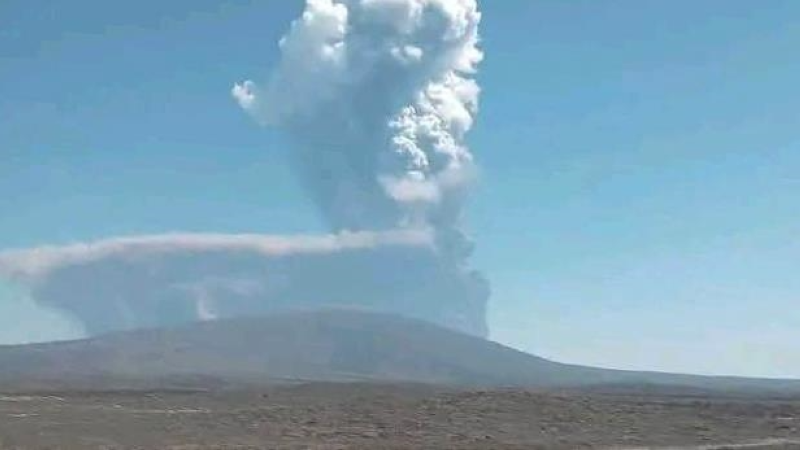

Recent social media speculation regarding the potential for radioactive fallout from the Haile Gobi volcanic eruption in Ethiopia has been dismissed by Saudi Arabia’s Nuclear and Radiological Regulatory Commission. The commission addressed public concerns, confirming that while volcanic ash may contain naturally occurring radioactive materials, these levels pose no threat to the health of residents or the environment within the Kingdom. This announcement follows widespread discussion online about the eruption’s possible impact on air quality and safety.
The eruption, which began Sunday morning in Ethiopia’s Afar region, prompted inquiries about potential hazards reaching Saudi Arabia. Both the Nuclear and Radiological Regulatory Commission and the National Center for Meteorology (NCM) have issued statements to reassure the public. These statements emphasize ongoing monitoring and a lack of anticipated impact on the Kingdom’s atmosphere.
Understanding the Concerns About Volcanic Ash
Volcanic ash consists of tiny rock fragments and glass particles ejected during an eruption. While generally not a significant health risk to those not directly exposed, it can cause irritation to the eyes, skin, and respiratory system. A key concern raised by some reports centered on the possibility of radioactive elements within the ash, prompting the Saudi government’s response.
According to the Nuclear and Radiological Regulatory Commission, volcanic material often contains naturally occurring radioactive materials (NORM) present in the Earth’s crust. However, the commission explicitly stated that the concentrations detected in this volcanic ash are not high enough to constitute a radiological risk to public safety or the environment. This is a common characteristic of volcanic eruptions, and the levels are typically comparable to background radiation found in soil and dust.
NCM Monitoring and Forecasts
The National Center for Meteorology (NCM) has been actively tracking the movement of the ash plume since the eruption began. NCM spokesperson Hussein Al-Qahtani confirmed that current data does not indicate any trajectory of the volcanic ash towards Saudi Arabian airspace.
The NCM is utilizing advanced national systems for continuous monitoring of cloud movement and broader weather patterns. Al-Qahtani stated the center will maintain this vigilance and issue alerts or updates should the situation change. This proactive approach aims to provide timely information to the public and relevant authorities.
Details of the Haile Gobi Eruption
The Haile Gobi volcano, situated within the East African Rift Valley, had remained dormant for thousands of years before its recent activity. The Afar region is known for its geological activity and is a site of ongoing volcanic and seismic monitoring.
Satellite imagery has revealed a substantial ash plume rising over 10 kilometers into the atmosphere. This plume is visible on regional monitoring platforms, allowing scientists to track its dispersion. The eruption itself is being closely observed by international volcanological organizations, including the Smithsonian Institution’s Global Volcanism Program.
The eruption’s impact is currently most significant within Ethiopia, where authorities are assessing potential disruptions to air travel and local communities. The immediate area surrounding the volcano is experiencing ashfall, and residents have been advised to take precautions to protect their health. The long-term effects of the eruption on the regional climate and environment are still being evaluated.
While the Saudi authorities have downplayed the risk of direct impact, the event highlights the interconnectedness of global atmospheric systems. Volcanic eruptions can release large quantities of gases and particles into the stratosphere, potentially affecting weather patterns and air quality across vast distances. The monitoring efforts by the NCM are therefore crucial, even if the immediate threat appears low.
The situation is further complicated by prevailing wind patterns and the potential for the ash plume to interact with existing weather systems. Changes in these conditions could alter the trajectory of the ash, although current models suggest this is unlikely. Related concerns about air quality, particularly particulate matter, are also being considered by environmental agencies.
The Saudi government’s swift response to address public concerns demonstrates a commitment to transparency and proactive risk management. The collaboration between the Nuclear and Radiological Regulatory Commission and the National Center for Meteorology underscores a coordinated approach to monitoring and mitigating potential environmental hazards.
Looking ahead, the NCM will continue its 24/7 monitoring of the situation. The primary focus will remain on tracking the ash plume’s movement and assessing any potential for it to enter Saudi Arabian airspace. Further updates will be provided as new data becomes available, and the authorities will remain prepared to implement necessary measures to protect public health and the environment. The duration of the eruption and its subsequent impact on regional air quality remain key uncertainties to watch in the coming days and weeks.