
RIYADH — Saudi Arabia’s international trade experienced robust growth in October 2025, reaching SR184.1 billion. This figure marks the second-highest monthly trade volume of the year, demonstrating a continued positive trend in the Kingdom’s global economic engagement. The data, released by the General Authority for Statistics (GASTAT), reveals an 8.4 percent year-over-year increase, adding over SR14 billion to the SR169.8 billion recorded in October 2024.
The growth in international trade is primarily driven by both merchandise exports and a significant surge in re-exports. A substantial trade surplus of SR23.9 billion was also reported for October, a 47.4 percent annual increase. This positive performance underscores Saudi Arabia’s strengthening position in global commerce amid a fluctuating economic landscape.
Saudi Arabia’s Expanding International Trade in 2025
The October 2025 figures contribute to a broader pattern of economic diversification and increased non-oil revenue generation, key goals of Saudi Arabia’s Vision 2030 plan. According to GASTAT, merchandise exports accounted for the majority of trade, reaching SR103.9 billion. Imports stood at SR80.1 billion, representing roughly 43.5 percent of the total trade volume.
July 2025 saw the highest trade volume, exceeding SR185 billion, highlighting seasonal or commodity-driven fluctuations in Saudi Arabia’s trade activity. The substantial trade surplus suggests a healthy demand for Saudi products internationally and efficient management of import costs. This contributes positively to the nation’s financial stability.
Growth in Key Export Sectors
Non-oil national exports, excluding re-exports, registered approximately SR20.1 billion, representing 19.3 percent of total merchandise exports and a 2.4 percent annual increase. This indicates a gradual but consistent expansion in the diversification of Saudi exports. Petroleum exports remained dominant, reaching SR70.1 billion and constituting 67.4 percent of total exports.
A particularly noteworthy development was the considerable growth in re-exports, which surged by 130.7 percent to around SR13.8 billion. This represents 13.2 percent of total merchandise exports, a significant jump from the SR5.9 billion seen in October 2024. This increase may reflect Saudi Arabia’s growing role as a regional logistics hub.
Regional Trade Patterns and Key Partners
Asian countries continue to be the primary destination for Saudi exports, accounting for 73.1 percent (SR76.1 billion) of the total. European nations followed with 12.2 percent (SR12.7 billion), then African countries with 7.4 percent (SR7.7 billion), and the Americas representing 7.1 percent (SR7.4 billion). These figures demonstrate the Kingdom’s broad reach across major global markets.
China maintains its position as the leading importer of Saudi exports, with a 14.1 percent share (SR14.7 billion). The United Arab Emirates and India follow closely behind, representing 10.9 percent (SR11.4 billion) and 9.9 percent (SR10.3 billion) respectively. These ongoing strong relationships with key trade partners are vital to sustaining the growth momentum. Trade relations with these countries are likely to remain central to Saudi Arabia’s economic strategy.
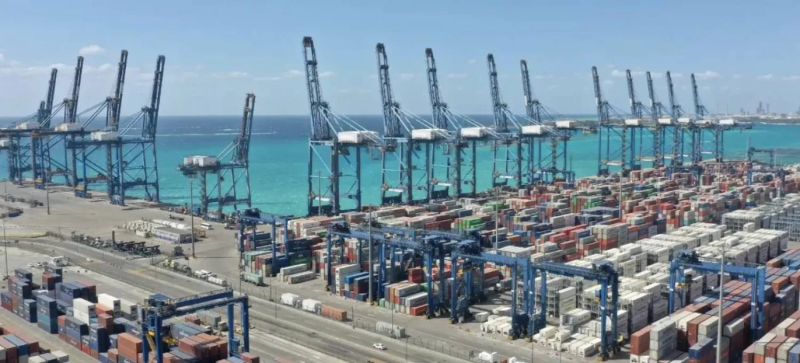
The movement of non-oil exports, which included re-exports, occurred through 31 different land, sea, and air customs ports, reaching a total of SR33.9 billion. King Abdulaziz International Airport in Jeddah handled the largest volume at SR4.6 billion, closely followed by Jeddah Islamic Port, processing SR3.8 billion. Efficient port infrastructure is essential to facilitating continued trade growth.
The recent performance data suggests continued investment in logistics and infrastructure is bearing fruit, supporting the expansion of re-export activities. A sustained increase in non-oil exports is also a positive sign for diversifying the Saudi economy, reducing reliance on crude oil. Economic development remains a key priority.
Looking ahead, the stability of global energy markets and ongoing geopolitical factors will heavily influence Saudi Arabia’s trade performance. Further data releases from GASTAT in the coming months will be crucial in assessing whether the October 2025 momentum continues. Analysts will be closely watching for any shifts in key trading partner contributions and the continued growth of the non-oil export sector against the backdrop of evolving global import/export dynamics.