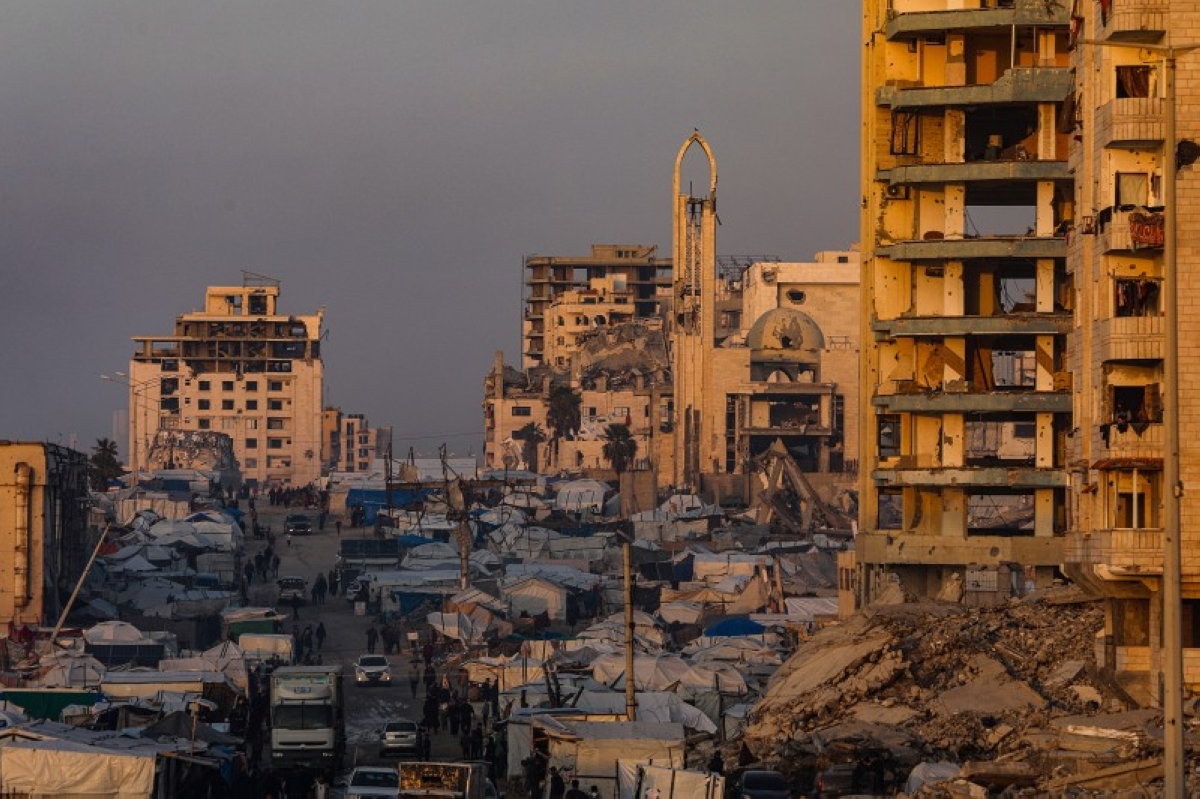

Riyadh – The Saudi Ministry of Foreign Affairs has expressed support for the unfolding developments aimed at establishing a pathway to peace in Gaza, specifically welcoming the initiation of the second phase of a comprehensive peace plan and the formation of a Palestinian National Committee to administer the region. This move follows United Nations Security Council Resolution 2803 and signals a potential shift towards a more stable future for the territory. The ministry’s statement underscores the importance of a unified Palestinian approach and the need for sustained humanitarian aid to the region, focusing on the long-term goal of a Gaza peace process.
The announcement comes after a period of intense diplomatic efforts involving multiple nations, including the United States, Qatar, Egypt, and Turkey. The ministry specifically acknowledged and appreciated the leadership of U.S. President Donald Trump in facilitating these developments, citing his commitment to the withdrawal of Israeli forces and preventing further annexation of West Bank territories. This support is seen as crucial for advancing a sustainable peace in the region, according to the Saudi statement.
The New Palestinian National Committee and the Gaza Peace Process
The newly formed Palestinian National Committee is designated as a temporary transitional body, tasked with managing the daily affairs of the Gaza population. This committee’s establishment is a direct result of UN Security Council Resolution 2803, which aims to create a framework for governance in the aftermath of the recent conflict. The Saudi Ministry of Foreign Affairs emphasized the importance of supporting the committee’s work as it navigates the complex challenges of administering Gaza.
A key concern highlighted by the ministry is maintaining the institutional and geographic connection between the West Bank and the Gaza Strip. This is viewed as essential for preserving Palestinian unity and preventing any attempts to divide the territory. Such division, the ministry implied, would undermine the prospects for a lasting and comprehensive peace agreement.
Ceasefire Consolidation and Humanitarian Aid
While the formation of the committee represents a step forward, the Saudi Ministry stressed the immediate need to solidify the existing ceasefire. This includes halting all violations and ensuring the uninterrupted flow of humanitarian aid into Gaza. The scale of the humanitarian crisis in Gaza remains significant, and access for aid organizations is critical for alleviating the suffering of the civilian population.
The ministry also called for the swift launch of early recovery and reconstruction efforts across the territory. Years of conflict and blockade have left Gaza’s infrastructure severely damaged, hindering economic development and impacting the quality of life for its residents. Reconstruction is seen as vital for creating a more stable and sustainable environment.
The role of mediation by Qatar, Egypt, and Turkey was specifically commended by the Saudi Foreign Ministry. These nations have played a pivotal role in negotiating ceasefires and facilitating dialogue between the involved parties. Their continued involvement is considered essential for maintaining momentum in the Gaza peace process.
Long-Term Goals and Regional Implications
The ultimate objective, as articulated by the Saudi Ministry, is to pave the way for the return of the Palestinian National Authority to fully assume its responsibilities in Gaza. This would represent a significant step towards ending the Israeli occupation of all Palestinian territories, including both Gaza and the West Bank. The ministry’s statement aligns with the broader Arab consensus on the need for a two-state solution.
The envisioned outcome is the realization of an independent Palestinian state, based on the principles outlined in United Nations resolutions and the Arab Peace Initiative. This initiative, first proposed in 2002, calls for a comprehensive settlement of the Israeli-Palestinian conflict based on the two-state solution, with Israel withdrawing to its 1967 borders. The Saudi statement reaffirms the Kingdom’s commitment to these principles.
The situation in Gaza has broader regional implications, impacting stability and security throughout the Middle East. A lasting resolution to the conflict is seen as crucial for fostering greater cooperation and addressing other pressing challenges in the region, including counter-terrorism and economic development. The international community has a vested interest in supporting a peaceful and just outcome.
The recent developments also touch upon the issue of Palestinian statehood and self-determination, a key element of the ongoing Israeli-Palestinian conflict. The formation of the committee, while temporary, represents a step towards empowering Palestinians to manage their own affairs. However, the long-term viability of this approach depends on the willingness of all parties to engage in constructive dialogue and compromise.
Furthermore, the focus on reconstruction and humanitarian aid highlights the urgent need for international financial assistance. The scale of the damage in Gaza is immense, and rebuilding will require significant investment from donor countries and organizations. The success of the Gaza peace process will be inextricably linked to the availability of adequate resources.
Looking ahead, the next critical step will be the effective functioning of the Palestinian National Committee and its ability to establish a stable and accountable governance structure in Gaza. The committee will face numerous challenges, including security concerns, economic hardship, and political divisions. The international community will be closely monitoring its progress. A key deadline to watch is the anticipated review of the situation by the UN Security Council in the coming months, where the committee’s performance and the overall progress of the peace plan will likely be assessed. The continued commitment of all stakeholders, and the avoidance of escalatory actions, remain uncertain but are vital for sustaining the current momentum.
The broader Middle East peace landscape will also influence the trajectory of the situation in Gaza.