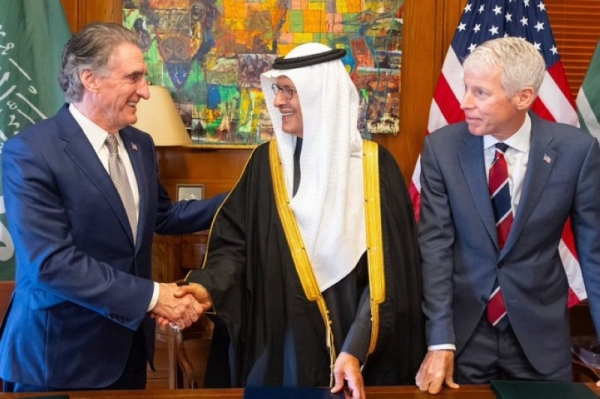

Washington D.C. – The United States and Saudi Arabia have formalized a strategic partnership to bolster global supply chains for crucial minerals, including uranium, rare earth elements, and materials used in permanent magnets. The agreement, signed on [Date – research if not present in source, otherwise omit], aims to leverage both nations’ strengths to secure these vital resources amid growing geopolitical competition and increasing demand for clean energy technologies. This collaboration signifies a deepening economic relationship between the two countries.
The signing took place with Prince Abdulaziz bin Salman, Saudi Arabia’s Minister of Energy and Chairman of the Saudi-American Strategic Economic Partnership Committee, representing the Kingdom, and Secretary of the Interior Doug Burgum leading the U.S. delegation. The framework focuses on building resilient and diversified sources for critical minerals, a priority for both administrations.
Securing Critical Mineral Supply Chains: A US-Saudi Partnership
The push to secure supply chains comes as both the U.S. and Saudi Arabia recognize the strategic importance of these resources. These minerals are foundational to numerous industries, ranging from electric vehicles and renewable energy to defense and consumer electronics. Currently, a significant portion of the global supply for many critical minerals is concentrated in a limited number of countries, creating vulnerabilities to disruption.
According to Secretary Burgum, the agreement will “boost investment & production of rare earth elements,” ultimately strengthening U.S. mineral independence. The US government has increasingly emphasized the need to onshore and friend-shore critical mineral production to reduce reliance on potentially adversarial nations like China, which currently dominates the rare earth market.
Saudi Arabia’s Role as a Regional Hub
A core component of the initiative is to develop Saudi Arabia into a regional processing hub for rare earth minerals. The Kingdom possesses substantial mineral reserves and is actively investing in its mining sector as part of its broader economic diversification efforts. The U.S. will contribute expertise in processing, refinement, and manufacturing to help accelerate this development.
This development directly supports Saudi Arabia’s Vision 2030, a strategic framework aimed at reducing the nation’s dependence on oil revenues and fostering a more sustainable and diversified economy. The plan identifies the development of advanced manufacturing and resource processing as key pillars of its economic transformation.
Impact on Key Industries
The agreement is expected to have a positive impact on several key industries within both countries. In Saudi Arabia, the initiative aims to strengthen supply chains for components vital to the energy sector and other emerging industries. The Kingdom is investing heavily in renewable energy projects and will require secure access to the minerals needed for these technologies.
The U.S. stands to benefit from a more stable and diversified supply of critical minerals, reducing its vulnerability to price fluctuations and geopolitical risks. This enhanced access is especially crucial for the growing electric vehicle (EV) industry, which relies heavily on lithium, nickel, cobalt, and other specialized materials. Additionally, the increased availability of these resources could support the continued development of the defense industrial base.
The collaboration isn’t limited to rare earth elements. The framework also encompasses uranium and other crucial metals, suggesting a broad approach to mineral security as part of the overall critical materials strategy. The details of specific projects and investment commitments are expected to be released in the coming months.
Alongside this framework, a broader range of agreements were signed during the Crown Prince’s recent visit, reinforcing the growing bilateral ties. This includes potential collaborations in areas like infrastructure, technology, and energy. The agreements signal a renewed commitment to strategic cooperation across a spectrum of vital sectors.
However, realizing the full potential of this partnership will require significant investment and overcoming logistical challenges. Developing the necessary infrastructure for mining and processing in Saudi Arabia will be a complex undertaking. Moreover, the environmental impact of mining operations will need careful consideration and mitigation.
Looking ahead, the next step involves establishing joint working groups to develop specific project proposals and implementation plans based on this framework. The timeline for these initiatives remains uncertain, and it will be important to monitor progress on investment commitments and regulatory changes necessary to facilitate the development of Saudi Arabia’s mineral processing capabilities. Further details regarding financial contributions and specific resource allocations are anticipated to be announced in the coming quarters.