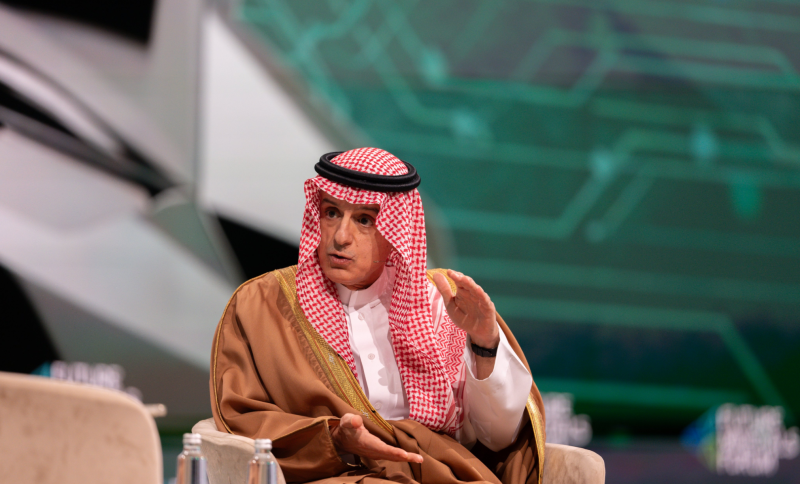

Riyadh – Saudi Arabia emphasized its commitment to regional stability on Tuesday, as concerns mount over escalating tensions with Iran and the potential for military conflict. Minister of State for Foreign Affairs Adel Al-Jubeir stated the Kingdom prioritizes de-escalation and peaceful resolution of disputes, acknowledging the significant human and economic costs of prolonged unrest in the Middle East. The comments come amid heightened international scrutiny following recent protests and reported casualties within Iran.
Saudi Arabia Prioritizes Regional Stability Amid Iran Concerns
Al-Jubeir addressed questions regarding the situation in Iran and the possibility of external intervention during an industrial event in Riyadh. He firmly stated that Saudi Arabia does not interfere in the internal affairs of other nations, asserting that the future governance of Iran is a matter for the Iranian people to determine. This position reflects a long-held principle of Saudi foreign policy, even as the Kingdom views Iran’s regional actions with deep concern.
The Minister’s remarks followed warnings from U.S. President Donald Trump that military action against Iran remains an option, particularly in response to attacks on oil tankers and other incidents in the Persian Gulf. These statements have increased anxieties about a potential wider conflict in a region already grappling with multiple crises. According to analysts at the Council on Foreign Relations, a military confrontation could quickly escalate, drawing in other regional and global powers.
The Human Cost of Middle East Instability
Al-Jubeir highlighted the devastating impact of ongoing conflicts across the Middle East, citing examples in Syria, Lebanon, Gaza, Sudan, Yemen, Somalia, Iraq, and Afghanistan. He noted that decades of instability have hindered development and caused immense suffering for civilian populations. The Saudi government believes that a focus on diplomacy and peaceful solutions is essential to address these challenges.
He pointed to Saudi Arabia’s consistent efforts to mediate and de-escalate conflicts, referencing past engagement in Syria and Lebanon. Currently, the Kingdom is working with the international community on efforts to alleviate the humanitarian crisis in Gaza. Additionally, Saudi Arabia continues to pursue mediation initiatives in Yemen and Sudan, seeking to bring an end to the ongoing civil wars in those countries.
The Kingdom’s approach to regional security differs from some other actors. While acknowledging the need to address destabilizing activities, Saudi Arabia consistently advocates for dialogue and negotiation as the primary means of resolving disputes. This stance is often contrasted with more hawkish positions that favor military intervention or increased sanctions.
Economic Implications and Development Goals
Al-Jubeir stressed that instability directly undermines economic development prospects throughout the region. He argued that a secure and predictable environment is crucial for attracting investment, fostering trade, and improving the lives of citizens. Saudi Arabia’s “Vision 2030” plan, a comprehensive economic diversification strategy, relies heavily on regional peace and security to achieve its ambitious goals.
The ongoing tensions with Iran also impact global energy markets. Disruptions to oil supplies in the Persian Gulf could lead to significant price increases, affecting economies worldwide. The International Energy Agency (IEA) has warned of the potential for a supply shock in the event of a military conflict, urging all parties to exercise restraint.
The Minister acknowledged the international community’s close observation of the situation in Iran, expressing hope for a peaceful resolution that minimizes damage. He reiterated the Kingdom’s belief in the importance of dialogue and finding common ground to address disagreements. This emphasis on diplomacy is a key element of Saudi Arabia’s foreign policy, particularly in its interactions with regional rivals.
While Al-Jubeir did not offer specific details on potential negotiations or mediation efforts, he signaled a willingness to engage in constructive dialogue whenever opportunities arise. He emphasized that Saudi Arabia’s ultimate objective is to promote calm and stability across the region, allowing countries to focus on addressing their internal challenges and building a brighter future for their people. The pursuit of regional security remains a top priority for the Kingdom.
Looking ahead, the situation in Iran remains highly volatile and unpredictable. The international community will be closely monitoring the Iranian government’s response to ongoing protests and the potential for further escalation. The next few weeks will be critical in determining whether a diplomatic solution can be found or if the region is headed towards a more dangerous confrontation. Any significant policy shifts from the U.S. or Iran will also be key indicators to watch.