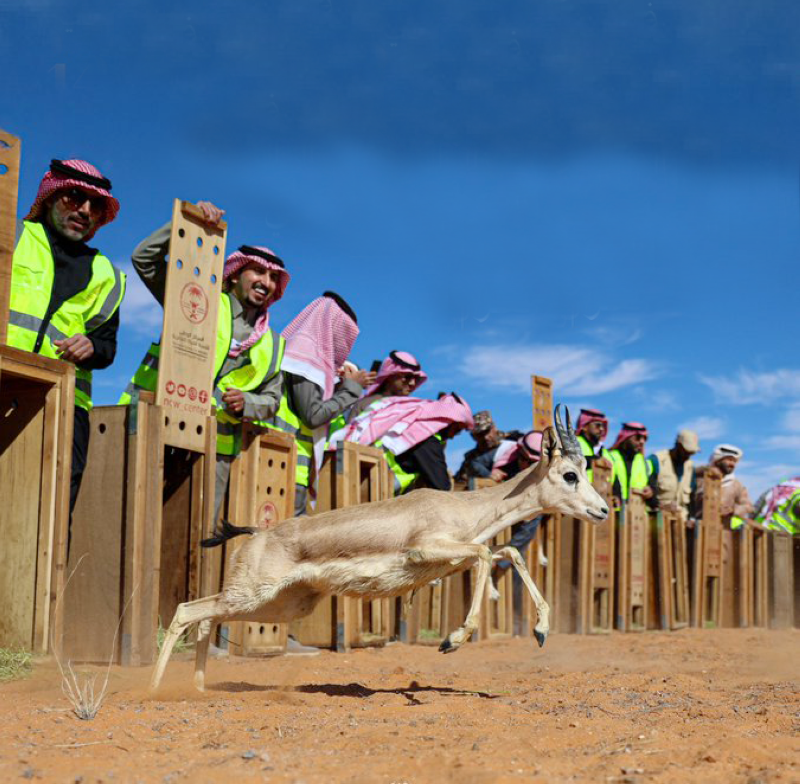

Saudi Arabia is actively bolstering its commitment to environmental conservation with the recent release of 124 endangered animals into the Imam Turki bin Abdullah Royal Reserve. This significant undertaking, a collaborative effort between the National Center for Wildlife (NCW) and the Imam Turki bin Abdullah Royal Reserve Development Authority, focuses on wildlife restoration and aims to re-establish populations of species facing extinction within the Kingdom. The released animals represent three critically important groups: rhim gazelles, idmi gazelles, and Arabian oryx.
The release took place in Riyadh, with the animals originating from NCW’s breeding and reintroduction programs. This infusion of species, announced this week, is part of a larger, ongoing initiative to address habitat loss and the impact of historical overexploitation that have threatened the nation’s native fauna. Officials hope the reintroduced animals will thrive and contribute to a healthier, more resilient ecosystem.
The Importance of Wildlife Restoration in Saudi Arabia
Saudi Arabia’s protected areas are facing increasing pressures from climate change and human activity. This latest release speaks to a growing global recognition of the importance of proactive species conservation, moving beyond simply protecting remaining habitats to actively rebuilding populations. The Kingdom has identified biodiversity as a key area for improvement as it diversifies its economy and seeks to enhance environmental sustainability.
The NCW identified the rhim gazelle, idmi gazelle, and Arabian oryx as priority species for reintroduction due to their historical prevalence within the Saudi landscape and their vulnerability. All three species have suffered significant population declines, impacting the broader ecological balance. Successful reintroduction requires carefully managed breeding programs and meticulous preparation of the release site.
Species Breakdown and Conservation Status
Rhim gazelles, numbering 100 in this release, are considered vulnerable by the International Union for Conservation of Nature (IUCN). The IUCN assessment notes that their numbers have dwindled due to hunting and habitat degradation. Idmi gazelles, fewer in number at 10, also face a vulnerable status, with populations fragmented and declining.
The Arabian oryx, of which 14 individuals were released, presents a success story, albeit one requiring continued vigilance. Once extinct in the wild, the Arabian oryx was reintroduced successfully in Oman and other areas. The species remains endangered, and maintaining viable populations requires continuous monitoring and protection from poaching. These reintroduction programs are critical for preventing further species extinction.
According to Mohammed Qurban, CEO of the NCW, the initiative is a continuation of the center’s longstanding commitment to restoring endangered species to their native range. He emphasized the role of these efforts in supporting broader ecological stability within the Kingdom’s diverse environments.
This initiative directly supports the goals outlined in the Saudi Green Initiative and Vision 2030. The Saudi Green Initiative, launched in 2021, aims to reduce carbon emissions, preserve natural resources, and increase the amount of protected land. Vision 2030, a strategic framework for the Kingdom, seeks to diversify the economy and improve overall quality of life, with environmental sustainability as a key pillar.
The selection of the Imam Turki bin Abdullah Royal Reserve as the release location is strategic. The reserve, established in 2018, provides a suitable habitat for these grazing animals, offering access to resources and a reduced risk of human-wildlife conflict. However, maintaining the reserve’s integrity and ongoing management are essential for the long-term success of the reintroduction program.
Future plans for biodiversity conservation in Saudi Arabia include the reintroduction of the red-necked ostrich in 2025 into the Prince Mohammed bin Salman Royal Reserve. This ambitious undertaking represents a novel approach to ecological restoration. The red-necked ostrich, referred to historically as the “camel bird,” is being introduced to fill the ecological niche left by the now-extinct Arabian ostrich.
This approach, known as ecological replacement, is gaining traction among conservationists facing the irreversible loss of native species. It aims to restore ecosystem functions by introducing species that share similar ecological roles, even if they are not historically native to the area. The success of this red-necked ostrich reintroduction will be closely watched by conservation scientists globally.
Beyond these flagship programs, the NCW is also involved in a range of other species reintroduction efforts, including programs focused on Arabian leopards and other threatened mammals and birds. These programs often involve collaboration with international conservation organizations and research institutions.
Monitoring the reintroduced populations will be crucial to assess the long-term viability of the program. This will involve tracking animal movements, assessing reproductive rates, and monitoring habitat use. Adaptations to the reintroduction strategy may be needed based on the data collected. Successful environmental conservation relies on adaptive management.
The next major step in these initiatives will be assessing the initial adaptation of the released gazelles and oryx in the Imam Turki bin Abdullah Royal Reserve over the coming months. Further reintroduction efforts are anticipated later in the year, contingent on favorable monitoring results. The details of those future releases, including target locations and species, are expected to be announced in the fourth quarter of 2024.