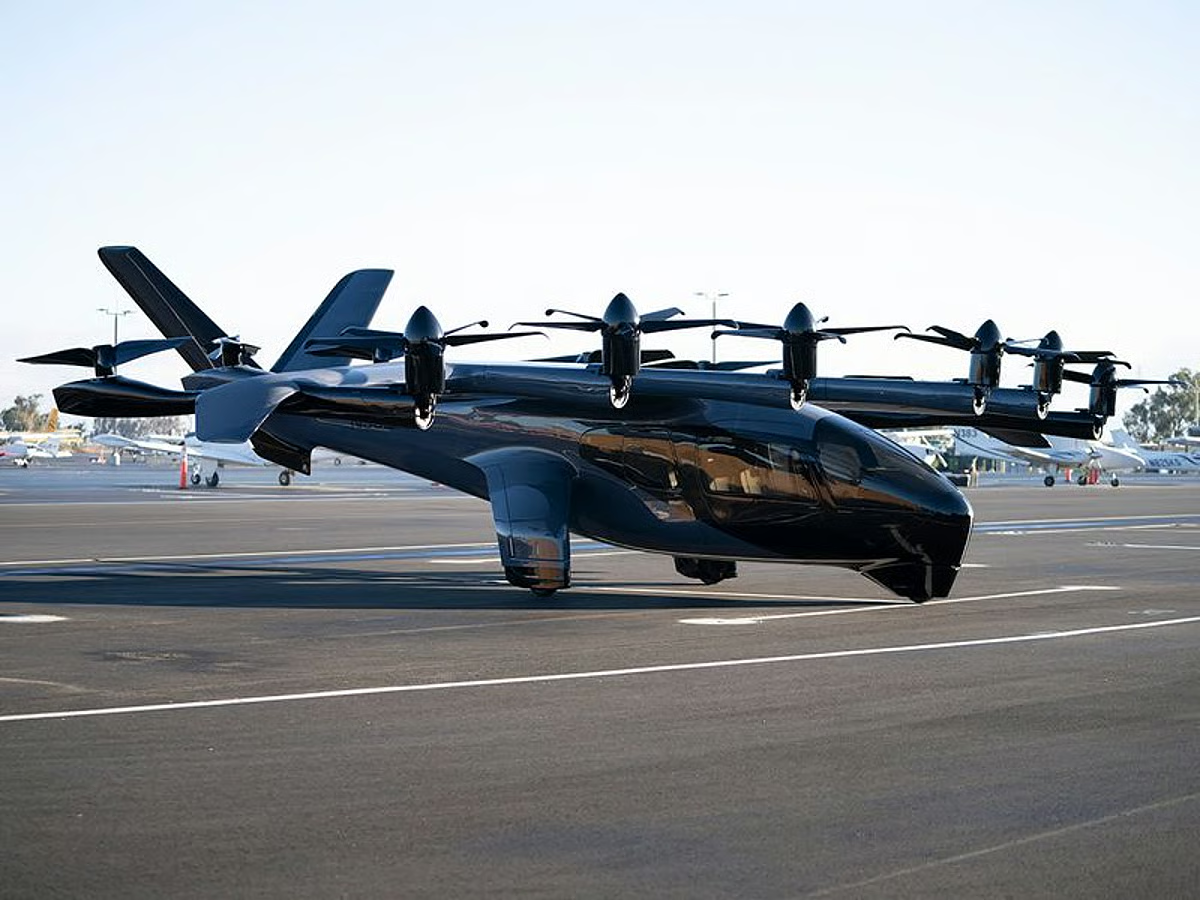

Saudi Arabia is partnering with Archer Aviation to lay the groundwork for commercial eVTOL (electric Vertical Takeoff and Landing) aircraft operations within the Kingdom. The agreement, announced this week, focuses on developing a comprehensive regulatory framework and infrastructure to support the future deployment of these advanced air mobility solutions. Initial efforts will center around aligning safety standards with the U.S. Federal Aviation Administration (FAA) and conducting pilot programs.
The collaboration, formalized through a memorandum of understanding, will involve joint work between Archer and Saudi aviation authorities. This includes pilot training, infrastructure assessments to determine suitable vertiport locations, and public outreach to build acceptance of this new transportation technology. The partnership aims for a phased rollout of eVTOL services, beginning with test flights and progressing towards commercial availability.
The Path to eVTOL Operations in Saudi Arabia
Saudi Arabia’s interest in eVTOL technology aligns with its broader Vision 2030 plan, a strategic framework aimed at diversifying the nation’s economy and investing in future technologies. The Kingdom is actively seeking to become a global hub for innovation, and advanced air mobility is viewed as a key component of a modern, sustainable transportation system. According to the Ministry of Transport and Logistic Services, this partnership represents a significant step towards realizing that vision.
Regulatory Framework Development
A primary focus of the partnership is establishing a robust regulatory environment for eVTOL operations. This is a complex undertaking, as current aviation regulations were not designed for these novel aircraft. The collaboration will prioritize harmonizing Saudi aviation standards with those of the FAA, a globally recognized authority in aviation safety.
This alignment is expected to streamline the certification process for Archer’s aircraft and facilitate the safe integration of eVTOLs into Saudi airspace. The Ministry has indicated that the framework will address critical areas such as pilot licensing, air traffic management, and maintenance procedures. However, the specific timeline for completing the regulatory framework remains unclear.
Infrastructure and Pilot Programs
Beyond regulation, the partnership will address the practical requirements for eVTOL deployment. This includes identifying and developing vertiports – dedicated landing and takeoff facilities for these aircraft – in key urban areas. Assessments will consider factors such as population density, accessibility, and integration with existing transportation networks.
Archer will also work with Saudi authorities to conduct pilot test flights, gathering data on aircraft performance and operational feasibility in the local environment. These flights will be crucial for refining operational procedures and demonstrating the safety and reliability of eVTOL technology. Additionally, the partnership will focus on training Saudi pilots to operate and maintain these advanced aircraft.
Public Acceptance and Awareness
Successful integration of eVTOL technology requires public acceptance. The partnership recognizes this and plans to launch public awareness campaigns to educate citizens about the benefits of advanced air mobility. These campaigns will address concerns related to noise, safety, and environmental impact.
Meanwhile, Archer is not the only company pursuing opportunities in the region. Several other urban air mobility companies are exploring potential partnerships and investments in Saudi Arabia, recognizing the Kingdom’s strategic importance and ambitious vision. This competition could accelerate the development of the advanced air mobility ecosystem within the country.
In contrast to traditional helicopter services, eVTOL aircraft are designed to be significantly quieter and more environmentally friendly, utilizing electric propulsion systems. This aligns with Saudi Arabia’s sustainability goals and its commitment to reducing carbon emissions. The report indicates that the Kingdom is also exploring the potential for using eVTOLs to connect remote communities and improve access to essential services.
The partnership also acknowledges the need for ongoing research and development to address challenges related to battery technology, autonomous flight capabilities, and air traffic management systems. Collaboration with research institutions and technology providers will be essential for driving innovation in these areas.
The initial phase of the partnership is expected to last several years, with the first pilot flights potentially commencing within the next 18-24 months, according to sources familiar with the project. The timeline for full-scale commercial deployment remains uncertain and will depend on the completion of the regulatory framework, the development of necessary infrastructure, and the successful completion of pilot programs. The next key step will be the establishment of a joint working group to define specific milestones and deliverables for the partnership.