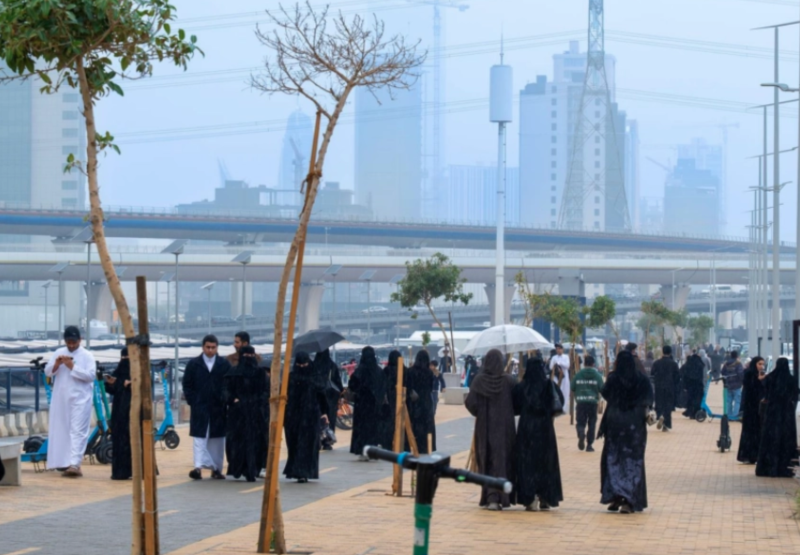

Saudi Arabia is bracing for a potentially unusual weather pattern in early 2026, with forecasts predicting above-average rainfall in several regions, particularly during January, coupled with generally warmer temperatures throughout the first quarter. The National Center for Meteorology (NCM) issued these seasonal climate forecasts, prompting advisories for residents to prepare for varied conditions. These predictions are crucial for infrastructure planning and public safety in the Kingdom.
The anticipated weather shifts will affect a broad geographical area, spanning from the northern reaches to the eastern and western provinces. While January is expected to be significantly wetter than usual, the NCM indicates a return to more typical precipitation levels in February and March, though some areas may continue to experience deviations from the norm. The warmer temperatures are projected to be widespread across the country.
Detailed 2026 Rainfall Forecast for Saudi Arabia
The NCM’s analysis suggests a strong likelihood of increased precipitation in northern and eastern Saudi Arabia during January. Specifically, regions like Tabuk, Al-Jawf, and the Northern Borders are expected to receive above-average rainfall. Parts of Hail and sections of the Eastern Province are also included in this forecast, with potential for localized heavy downpours.
Regional Variations in January Precipitation
The intensity of the rainfall is not expected to be uniform across these regions. Some locations within the Eastern Province, for example, may experience more substantial increases in precipitation than others. The NCM advises continuous monitoring of localized weather updates.
However, the forecast shifts in February, with rainfall levels predicted to normalize across much of the country. Near-average precipitation is expected in Tabuk, Al-Jawf, the Northern Borders, Hail, Qassim, Riyadh, and the northern parts of the Eastern Province. There is a possibility of slightly below-average rainfall in some of these areas, according to the NCM.
March is projected to continue this trend of normalization, with precipitation levels remaining around average, particularly in the southwestern and western regions. This includes Jazan (excluding coastal areas), Asir, Al-Baha, Makkah, southern Madinah, northern Najran, and parts of the southern Eastern Province. Jazan, in particular, may see moderate rainfall with occasional heavier showers.
Alongside the rainfall predictions, the NCM has also issued a warning regarding rising temperatures. The forecast indicates a noticeable increase in average temperatures across all regions of Saudi Arabia during the first quarter of 2026. This warming trend is a significant factor to consider alongside the anticipated precipitation.
The most substantial warming is expected in central regions, as well as the southern and eastern parts of the Eastern Province, eastern Najran, Sharurah, and southern Riyadh. Temperature increases of up to 1.5 degrees Celsius above long-term averages are anticipated in these areas. This could have implications for energy demand and agricultural practices.
These forecasts are based on complex climate modeling and analysis of historical weather data. The NCM utilizes a range of meteorological tools and techniques to produce its seasonal outlooks. Understanding seasonal climate patterns is vital for effective resource management in a country with a diverse landscape and climate zones.
The potential for increased rainfall raises concerns about flash floods, particularly in areas with limited drainage infrastructure. The NCM emphasizes the importance of preparedness and encourages residents to stay informed about local weather conditions. This is especially critical in mountainous regions and wadis, which are prone to rapid water accumulation.
The warmer temperatures, coupled with potential rainfall, could also influence agricultural cycles and water availability. Farmers and agricultural stakeholders are advised to adjust their planting and irrigation strategies accordingly. Efficient water management will be crucial to mitigate the impacts of these changing climate conditions. The impact on weather patterns could also affect tourism.
The NCM urges all residents to closely follow official weather updates and take necessary precautions as conditions evolve. This includes securing property, avoiding low-lying areas during heavy rainfall, and staying hydrated during periods of elevated temperatures. Staying informed is the best defense against the potential hazards associated with these predicted climate changes.
Looking ahead, the NCM will continue to monitor weather systems and refine its forecasts as the target period approaches. More detailed and localized predictions will be issued in the coming months, providing residents with a clearer understanding of the expected conditions. The accuracy of these forecasts will be evaluated throughout the first quarter of 2026, contributing to improvements in future seasonal outlooks. Further analysis of seasonal forecasts will be released as data becomes available, and the potential impact on water resources will be a key area of observation.
The long-term implications of these trends, and whether they represent a shift in broader climate patterns for the region, remain to be seen. Ongoing research and monitoring are essential to understand the evolving climate and its potential effects on Saudi Arabia.