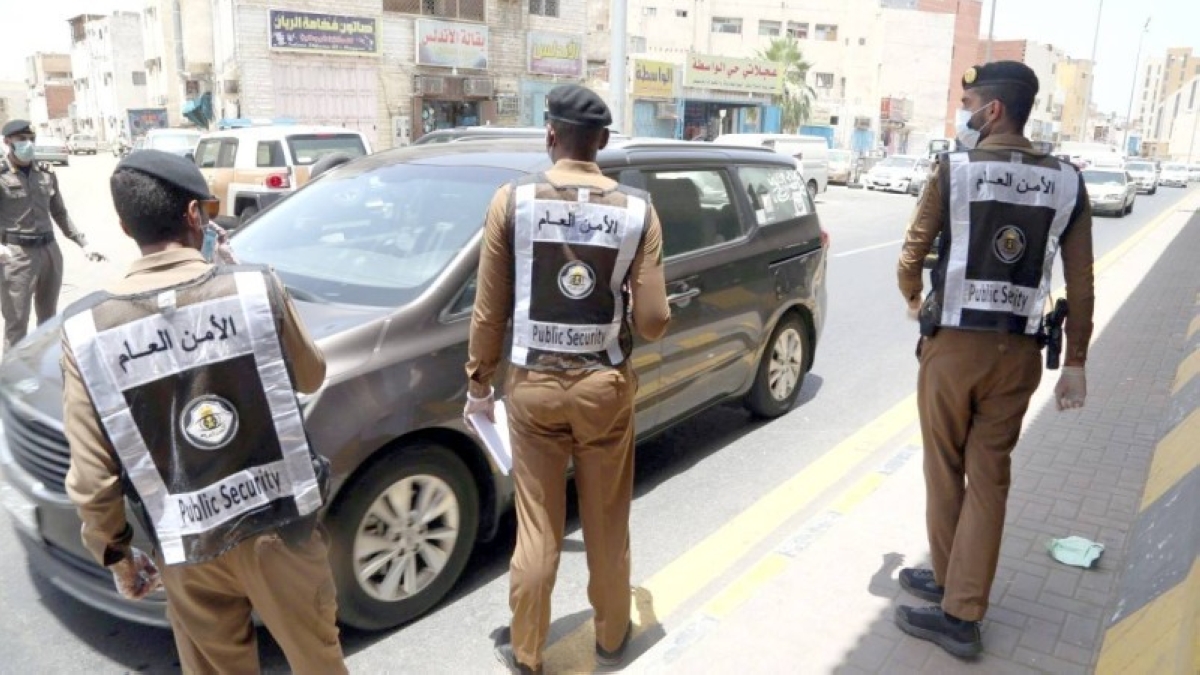

Saudi Arabia has intensified its crackdown on illegal residents, arresting over 22,000 individuals during a week-long nationwide campaign. The Ministry of Interior announced the arrests, which took place between November 13th and 19th, as part of ongoing efforts to enforce residency, border security, and labor laws. This latest operation highlights the Kingdom’s commitment to regulating its expatriate workforce and maintaining national security.
The sweeping operation resulted in the apprehension of 22,094 individuals across the country, according to the Ministry of Interior. Of those arrested, 13,750 violated the Residency Law, 4,781 violated the Border Security Law, and 3,624 violated the Labor Law. The arrests underscore the scale of unauthorized migration and employment within Saudi Arabia.
Saudi Arabia’s Crackdown on Illegal Residents: A Detailed Look
The Ministry of Interior’s statement detailed the subsequent actions taken with those apprehended. A significant 14,206 individuals were deported, while 21,856 were referred to their respective diplomatic missions to arrange travel documents. An additional 4,555 are being assisted in completing their travel reservations. These measures aim to expedite the removal of individuals lacking legal status.
Border Security and Nationalities Involved
Efforts to prevent illegal entry into the Kingdom were also a key focus. The report indicates that 1,867 people were arrested while attempting to cross the border. A substantial majority, 65 percent, were Ethiopian nationals, followed by 34 percent who were Yemeni. The remaining 1 percent comprised other nationalities. Additionally, 29 individuals were apprehended attempting to leave the Kingdom illegally.
The Ministry of Interior has consistently emphasized the challenges posed by illegal border crossings, particularly given the Kingdom’s extensive and often difficult-to-monitor frontiers. The high proportion of Ethiopian and Yemeni nationals reflects ongoing regional instability and economic hardship in those countries, driving migration flows.
Combating Facilitation of Illegal Activity
Beyond arresting those in violation of the law, Saudi authorities are also targeting individuals who assist in illegal activities. According to the Ministry, 32 people were arrested for providing transportation, shelter, or employment to those residing in the country unlawfully. This demonstrates a broader strategy to disrupt the networks that enable and profit from irregular migration.
The penalties for assisting illegal residents are severe. The ministry warned that anyone found to be facilitating illegal entry, transport, shelter, or any other form of assistance faces up to 15 years in prison and a fine of up to SR1 million (approximately $266,000 USD). Vehicles used for transportation and properties used for shelter are also subject to confiscation. This strong deterrent is intended to discourage individuals from engaging in such practices.
Implications of Increased Enforcement of Residency Laws
The recent surge in arrests is part of a broader trend of increased enforcement of Saudi Arabia’s visa regulations and labor laws. The Kingdom is undergoing significant economic diversification under its Vision 2030 plan, which includes efforts to “Saudize” the workforce – increasing the proportion of Saudi nationals employed in various sectors. This has led to stricter scrutiny of expatriate workers and a push to ensure compliance with labor laws.
However, the crackdown also raises concerns about the potential impact on certain sectors of the economy that heavily rely on foreign labor, such as construction and domestic work. The Ministry of Interior has not commented on specific measures to mitigate potential labor shortages.
The Ministry of Interior encourages the public to report any suspected violations by calling 911 in the regions of Makkah, Riyadh, and the Eastern Province, or 999 and 996 in other regions of the Kingdom. This public reporting mechanism is a key component of the enforcement strategy.
Currently, 30,055 expatriates – 28,469 men and 1,586 women – are undergoing procedures to enforce legal measures against them. The Ministry has not specified a timeline for the completion of these procedures. Looking ahead, continued monitoring of enforcement activities and their impact on the labor market will be crucial. Further announcements regarding policy adjustments or amnesty programs related to foreign workers are anticipated, though no specific dates have been announced.