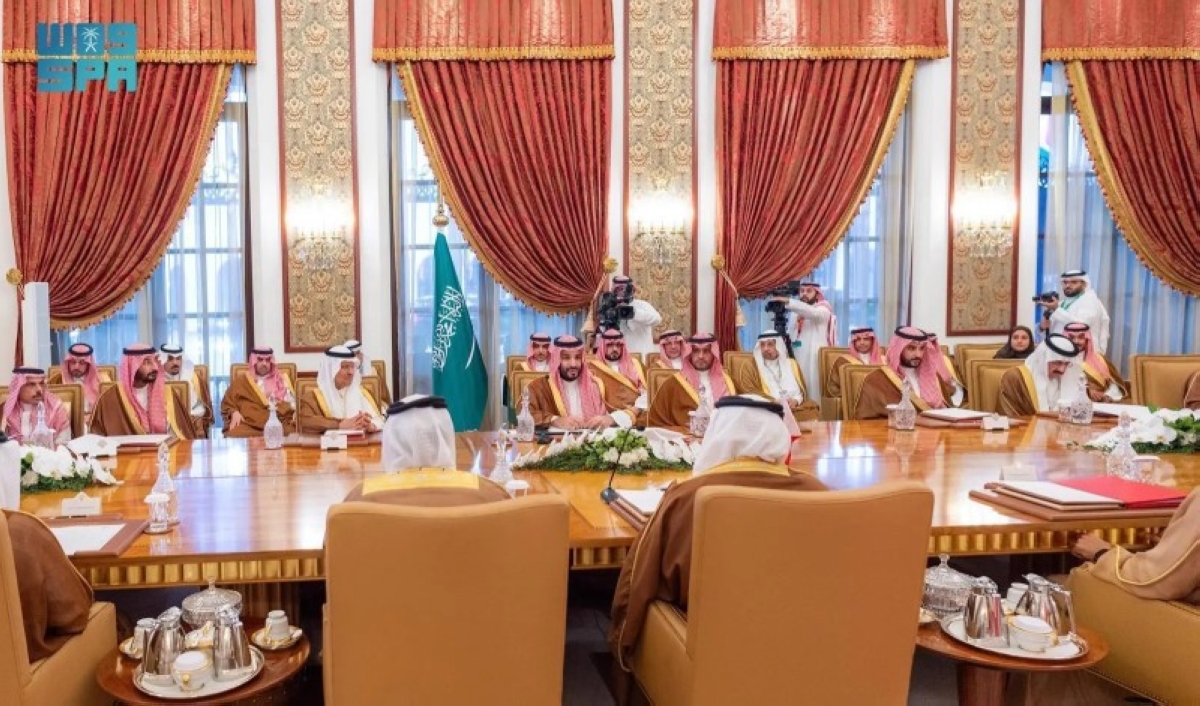

Manama, Bahrain – Saudi Crown Prince and Prime Minister Mohammed bin Salman and Bahrain’s Crown Prince and Prime Minister Prince Salman bin Hamad Al Khalifa convened the fourth meeting of the Saudi-Bahraini Coordination Council on Wednesday, solidifying bilateral relations between the two Gulf nations. The meeting focused on enhancing cooperation across multiple sectors, culminating in the signing of nine memoranda of understanding and agreements. This latest dialogue underscores the ongoing efforts to strengthen ties amidst regional geopolitical shifts and economic diversification initiatives.
The summit, held in Manama, Bahrain, followed directives from Saudi King Salman and Bahraini King Hamad bin Isa bin Salman Al Khalifa. Senior officials from both countries attended, highlighting the importance placed on continued collaboration. The meeting’s atmosphere was described as positive, with both Crown Princes expressing commitment to a robust partnership.
Strengthening Saudi-Bahraini Cooperation
The core objective of the Coordination Council is to synchronize national strategies and deepen integration between Saudi Arabia and Bahrain. This initiative stems from a shared vision for regional stability and economic prosperity. According to statements released following the meeting, discussions encompassed a broad range of topics, including security, economic development, and social collaboration.
This latest meeting builds upon previous sessions and a history of close ties, dating back to Bahrain’s independence in 1971. Both nations are members of the Gulf Cooperation Council (GCC) and share a commitment to maintaining the GCC’s unity and effectiveness. Recent initiatives have aimed to move beyond simply coordinating policies to actively implementing joint projects.
Key Agreements Reached
The nine agreements signed during the meeting represent concrete steps toward greater cooperation. A key memorandum of understanding (MoU) focused on nuclear safety and radiation protection, signed between the Saudi Nuclear and Radiological Regulatory Commission and Bahrain’s Supreme Council for Environment. This highlights a growing interest in the peaceful applications of nuclear technology within the region, alongside a commitment to responsible regulation.
Further strengthening diplomatic ties, an agreement was signed between the Prince Saud Al-Faisal Institute for Diplomatic Studies and the Mohammed bin Mubarak Al Khalifa Academy for Diplomatic Studies. This initiative aims to enhance the training and professional development of diplomats from both nations.
Economic cooperation was also a central theme. An agreement for the avoidance of double taxation, signed by the respective ministers of investment and finance, is expected to facilitate greater cross-border investment. Several other MoUs focused on promoting direct investment and fostering a more competitive business environment through enhanced competition protection, signaling a drive toward diversified economies.
Additionally, agreements were reached regarding collaboration in railway technology, between the Saudi Railway Polytechnic and Bahrain’s Ministry of Transportation and Telecommunications, and in higher education, linking King Saud University and the University of Bahrain. The partnership extends between the National Center for Non-Profit Sector Development of Saudi Arabia and Bahrain’s Ministry of Social Development to support civil society development.
Implications for Regional Stability and Economic Growth
The enhanced bilateral relations are expected to contribute to greater stability within the Gulf region. Close coordination on security matters is seen as crucial in addressing shared challenges. Experts suggest that a unified approach to regional issues allows both countries to project a stronger and more consistent foreign policy. This collaboration is occurring amidst ongoing tensions and negotiations involving Iran and other regional actors.
Economically, the agreements are anticipated to stimulate investment and trade, aligning with both nations’ Vision 2030 plans—Saudi Arabia’s ambitious diversification program and Bahrain’s own economic reform strategy. Increased investment and reduced bureaucratic hurdles, particularly through the double taxation agreement, should spur economic activity. The focus on sustainable development, as evidenced by the related MoU, also reflects a commitment to long-term economic and environmental well-being.
The development of joint projects in sectors like transportation and education is also likely to create new opportunities for businesses and citizens in both countries. A coordinated approach to developing the non-profit sector could lead to increased social impact and improved services. These initiatives contribute to a broader push for economic diversification away from reliance on oil revenues. The strengthening of diplomatic ties will likely support these partnerships.
Looking ahead, the fifth meeting of the Saudi-Bahraini Coordination Council is scheduled to be held in Saudi Arabia, although a specific date has not yet been announced. Observers will be watching for further details on the implementation of the agreements reached in Manama and any new initiatives designed to deepen the strategic partnership between the two kingdoms. The effectiveness of these collaborations in driving economic diversification and promoting regional security remains a key area of interest.
The ongoing dialogue between Saudi Arabia and Bahrain signals a continued commitment to a strong, mutually beneficial relationship, underpinning regional stability and fostering economic cooperation in the face of evolving global challenges.