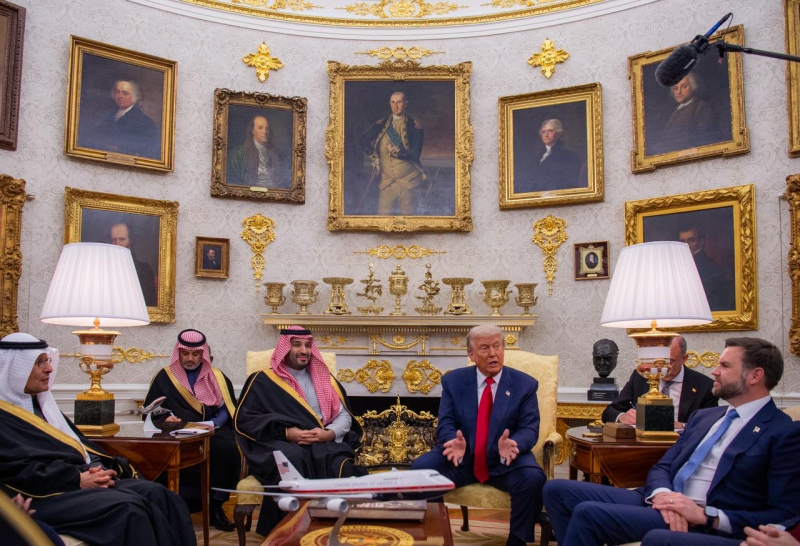

WASHINGTON — Saudi Arabia and the United States have formalized a series of substantial agreements aimed at deepening their strategic partnership, with a particular focus on artificial intelligence. The accords, signed Tuesday in Washington, D.C., also include a landmark deal on civil nuclear cooperation and expanded collaboration across several key sectors. These developments signal a renewed commitment to bolstering ties between the two nations amidst evolving geopolitical and economic landscapes.
The agreements, reached during a summit attended by Crown Prince Mohammed bin Salman and President Donald Trump, encompass advancements in energy security, critical mineral supply chains, and increased investment flows. Officials from both countries characterized the talks as highly productive and underscored the mutual benefits of strengthened cooperation. The event featured a formal welcoming ceremony at the White House, highlighting the significance of the visit.
A New Era of US-Saudi Collaboration in Artificial Intelligence
The cornerstone of the agreements is a strategic partnership in artificial intelligence. This initiative will likely involve joint research and development projects, technology transfer, and collaborative efforts to build AI infrastructure within Saudi Arabia. The partnership is part of Saudi Arabia’s ambitious “Vision 2030” plan, which aims to diversify its economy away from oil and develop a robust technology sector.
Impact on Saudi Vision 2030
According to the Saudi Ministry of Investment, the AI partnership is expected to contribute significantly to the Kingdom’s efforts in creating new jobs and fostering innovation. The agreements are premised on sharing expertise and best practices between US and Saudi entities. This will permit Saudi Arabia to swiftly integrate advanced AI technologies into its public and private sectors.
Beyond AI, the agreement finalizing negotiations on civil nuclear cooperation is a major development. The deal, which has been under discussion for years, allows for the potential transfer of nuclear technology to Saudi Arabia under strict safeguards. The US State Department emphasized the importance of adhering to international standards regarding nuclear non-proliferation.
This commitment to nuclear collaboration follows a review of existing agreements and evolving international regulations. Both countries signaled a shared understanding of responsible nuclear energy development.
Strengthening Supply Chain Resilience
Recognizing the importance of secure supply chains, new arrangements were established to fortify the availability of crucial resources like uranium, critical minerals, and permanent magnets. These materials are essential for various industries, including energy, defense, and technology. According to US Energy Secretary Chris Wright, these agreements represent a proactive step toward mitigating potential disruptions and ensuring access to vital elements.
The initiatives extend beyond resource security. Discussions centered on accelerating Saudi investments in the United States, aiming to boost economic growth and create jobs on both sides. This expansion in financial cooperation is intended to streamline investment processes and encourage wider economic engagement.
Further, the summit addressed expanded cooperation in education and regulatory frameworks. This will facilitate greater exchange of knowledge and alignment of standards. Both governments expressed a desire to create a more conducive environment for businesses and academic institutions to collaborate.
The Saudi delegation represented a broad range of key ministries and investment entities. Prince Abdulaziz bin Salman, the Minister of Energy, and Yasir Al-Rumayyan, Governor of the Public Investment Fund, played prominent roles in the negotiations. Their presence underscores the strategic importance of energy and investment in the overall partnership.
Similarly, the US contingent included high-ranking officials from relevant departments. Vice President JD Vance, Secretary of State Marco Rubio, and Treasury Secretary Scott Bessent signaled the US government’s unified front in pursuing this deepened cooperation. This strong diplomatic showing reflects the increased attention being paid to the relationship.
The agreements build upon decades of close ties between the US and Saudi Arabia, primarily centered on energy and security. However, the current focus on technology and economic diversification marks a significant shift in the nature of the partnership. Analysts suggest the move reflects a changing global landscape and a growing recognition of the need for broader collaboration to address shared challenges, including economic volatility and climate change. These new areas of collaboration could lead to new economic opportunities for both countries.
While the specifics of the AI and nuclear agreements remain subject to further technical discussions and regulatory approvals, the signing of these frameworks represents a critical milestone. The next step involves the detailed implementation of the agreements, which will require close coordination between agencies in both countries. A timeline for full implementation has not been publicly announced, and potential hurdles related to congressional oversight and international safeguards will likely need to be navigated. The development of specific pilot projects within the AI framework and the establishment of detailed regulatory structures for nuclear cooperation will be key indicators of progress in the coming months.
Looking ahead, observers will be watching to see how these agreements impact regional dynamics and the broader international competition in the field of artificial intelligence. The degree to which these partnerships translate into tangible economic benefits and advancements in technology will be crucial in determining their long-term success, and how these collaborations evolve will be closely monitored by other global powers.