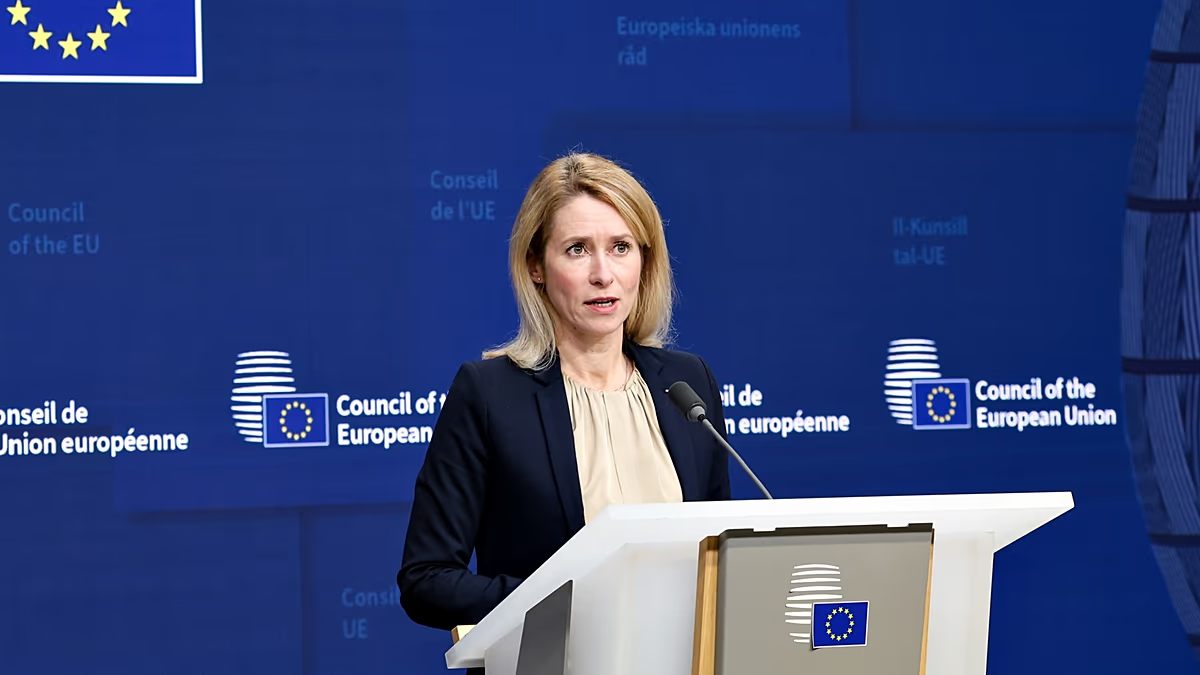

European leaders are expressing skepticism regarding a reported peace plan for Ukraine allegedly drafted by the United States and Russia, with concerns it may offer unfavorable terms to Kyiv. High Representative Kaja Kallas warned Thursday that any successful peace initiative must have the support of both Ukraine and Europe, dismissing the reported plan as potentially mere “lip service” from Russia. The development comes as discussions continue within the European Union regarding utilizing frozen Russian assets to aid Ukraine’s financial and military needs.
Concerns Mount Over Proposed Ukraine Peace Plan
Reports indicate a 28-point blueprint has been circulating, developed without direct Ukrainian input. The plan, reportedly facilitated by Russian envoy Kirill Dmitriev and U.S. envoy Steve Witkoff, allegedly includes demands for Ukraine to cede control of the Donbas region and limitations on its future military capabilities. This has sparked criticism from European officials who emphasize the necessity of Ukraine’s agency in any negotiations.
European Response and Skepticism
Kallas, speaking after a meeting of foreign affairs ministers in Brussels, stated that Russia’s willingness to pursue peace is questionable, pointing to the rejection of earlier unconditional ceasefire offers. She reiterated the EU’s two-pronged strategy: weakening Russia and bolstering support for Ukraine. Poland’s Radosław Sikorski called for clarity on the proposals, noting they currently originate only from media leaks. Sweden’s Maria Malmer Stenergard emphasized that “there can be no peace without Ukraine, and Europe has to be at the table.”
The skepticism stems from a history of diplomatic efforts that have failed to adequately consider Ukraine’s perspective. Kallas noted a “very calm” atmosphere in the meeting, attributing it to a familiarity with similar past attempts. She also cautioned against pressure on Ukrainian President Volodymyr Zelenskyy to accept disadvantageous terms, arguing the focus should remain on compelling Russia to end its invasion.
Reparations Loan and Frozen Russian Assets
Meanwhile, the EU is actively debating the feasibility of using approximately $300 billion in immobilized assets belonging to Russia’s Central Bank to provide a zero-interest reparations loan to Ukraine. This unprecedented measure aims to cover Ukraine’s military and financial requirements in the coming years. Belgium, holding the largest share of these assets, is seeking guarantees against potential Kremlin retaliation and complete solidarity from member states.
The proposal faces significant financial and legal hurdles, requiring unanimous agreement from EU leaders. If consensus isn’t reached by the end of December, the EU will need to explore alternative solutions to avoid severe budget cuts for Ukraine. Kallas believes Russia’s renewed interest in peace plans is partly motivated by the threat of losing access to these frozen assets, which would only be returned if Moscow provides compensation for the damage caused by the war.
Additionally, discussions around long-term security guarantees for Ukraine are ongoing, with various nations proposing different frameworks. These discussions are complicated by differing national interests and concerns about escalating tensions with Russia. The concept of geopolitical risk remains high, influencing the cautious approach taken by many European countries.
Kallas concluded by asserting that supporting Ukraine represents a sound investment compared to the potential consequences of a Russian victory. The coming weeks will be crucial as EU leaders weigh the risks and benefits of utilizing frozen Russian assets and navigate the complex landscape of potential peace negotiations. Observers should watch for further developments regarding the proposed reparations loan and any official statements from the United States or Russia regarding the reported peace plan.