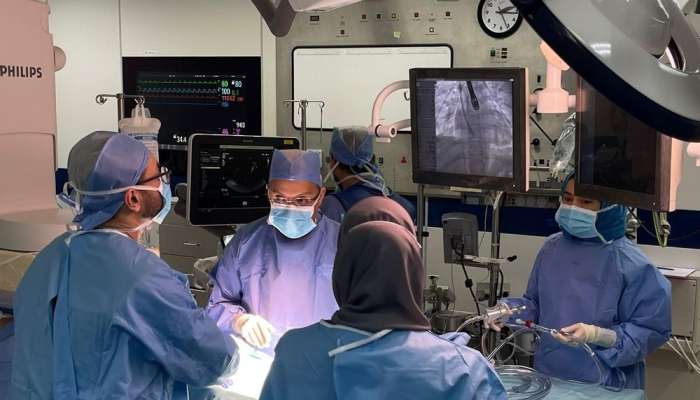

The Royal Hospital in Muscat, Oman, has firmly established itself as a cornerstone of the nation’s healthcare system, consistently pushing boundaries in medical innovation and patient care. Recent operational figures demonstrate the hospital’s significant impact, showcasing a year of unprecedented achievements and solidifying its position as a leading national reference institution. Throughout 2025, the Royal Hospital delivered exceptional results across a wide spectrum of medical services, embodying the Sultanate of Oman’s commitment to health sustainability and the goals outlined in Oman Vision 2040.
Exceptional Performance Metrics at the Royal Hospital
The past year witnessed a remarkable surge in activity at the Royal Hospital. A total of 14,446 surgical procedures were successfully completed, alongside providing care for over 213,000 outpatients and expertly handling 55,611 emergency cases. Furthermore, the hospital received 72,122 referred cases from health institutions across Oman, highlighting its crucial role in integrating the country’s healthcare network. This demonstrates a comprehensive approach to healthcare delivery, ensuring specialized care is accessible throughout the Sultanate.
Diagnostic and Therapeutic Advancements
Beyond surgical interventions, the Royal Hospital excelled in diagnostic services. An impressive 82,004 radiological examinations were performed, including 1,316 referrals from other facilities. Laboratory testing was equally robust, with 4,437,964 tests conducted, incorporating 224,621 external samples. These figures underscore the hospital’s capacity as a national support center for accurate and timely diagnoses. Endoscopy services also saw significant activity, with 7,621 procedures, complemented by 17,580 day-case procedures designed to streamline patient care and enhance the overall experience.
Pioneering Medical Firsts and Specialized Care
The Royal Hospital continues to be at the forefront of medical innovation in Oman. The hospital’s commitment to advanced medical procedures was particularly evident in 2025, with several groundbreaking “firsts” achieved. These included the nation’s first endoscopic sleeve gastrectomy, the successful separation of conjoined twins, the first human heart transplant, and the first implantation of an artificial heart. These complex procedures demonstrate the skill and dedication of the hospital’s medical teams.
Additionally, the hospital successfully live-streamed an aortic valve transplant during the GIS Valve conference in Dubai, sharing expertise with the international medical community. The introduction of locally produced 18F-PSMA molecular imaging and Thermaltake technology for endometriosis treatment further expanded the range of available therapies. The first implantation of a wireless, catheter-based dual-chamber pacemaker also marked a significant advancement in cardiac care.
Localizing Advanced Testing Capabilities
A key achievement was the localization of molecular testing for colorectal cancer (KRAS, NRAS, BRAF). Previously outsourced with lengthy wait times, these critical tests are now performed in-house, significantly reducing turnaround times and improving patient management. This initiative exemplifies the hospital’s dedication to self-sufficiency and enhanced healthcare services.
Humanitarian Achievements and Collaborative Efforts
The Royal Hospital’s impact extends beyond clinical excellence to encompass humanitarian efforts. The successful removal of a rare cancerous tumor from the liver of a three-year-old child stands as a testament to the hospital’s compassionate care. Furthermore, the hospital participated in the region’s first remote surgery (Telesurgery) between Muscat and Kuwait, showcasing the potential of technology to overcome geographical barriers. The introduction of a surgical robot further enhanced the hospital’s capabilities in advanced surgical techniques.
Collaboration is also central to the hospital’s strategy. 429 surgeries were performed as part of a joint campaign with the Medical City of the Security and Military Services. The hospital actively contributed to training medical staff and performing surgeries in hospitals across Oman, including Khasab, Sultan Qaboos University Hospital, Sur, Jalan Bani Bu Hassan, Ibra, and A’Rustaq. Initiatives to reduce pediatric surgery waiting lists, targeting 1,000 cases, resulted in a 30 percent reduction, demonstrating a commitment to equitable access to care.
Quality Accreditation and Digital Transformation
The Royal Hospital’s dedication to quality is reflected in its numerous accreditations. It achieved the highest quality standards in nuclear medicine from the International Atomic Energy Agency and received international recognition as a reference center for managing food allergies. Winning an Excellence Award at the IHF World Hospital Congress – Geneva 2025 further validated its commitment to excellence. Moreover, the hospital’s research output flourished, with 154 research papers published in internationally peer-reviewed journals.
Recognizing the importance of digital innovation, the Royal Hospital completed a 100 percent transition to digital systems for patient transfer requests. The activation of WhatsApp services for hospital residences improved communication efficiency by 90 percent, while medication tracking systems, smart waiting, and electronic prescriptions enhanced the digital patient experience. This focus on digital health is crucial for modernizing healthcare delivery.
Dr. Amed bin Khamis Al Araimi, Director General of the Royal Hospital, emphasized that these accomplishments represent a true reflection of the hospital’s vision to provide integrated, specialized care based on quality, governance, and innovation, with the patient at the center of the service system. The Royal Hospital continues to solidify its position as a leading national institution, investing in human capital and writing new chapters of achievement for Oman.