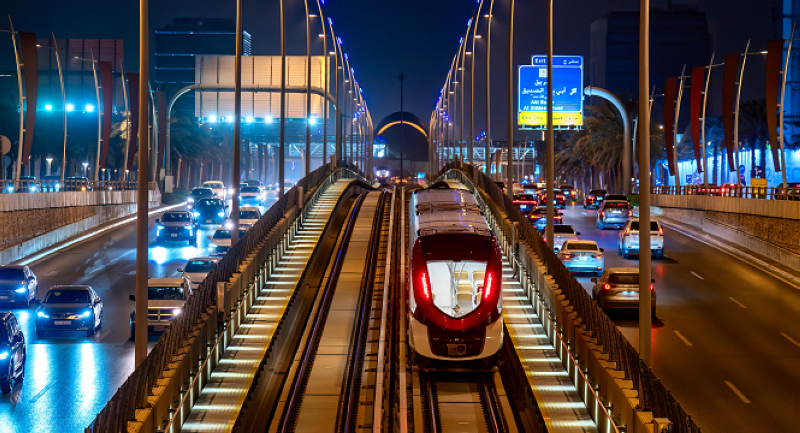

RIYADH — A landmark agreement to construct a high-speed railway connecting Saudi Arabia and Qatar was signed this week, marking a significant step towards enhanced regional integration and economic diversification. The project, witnessed by Crown Prince Mohammed bin Salman and Qatar’s Emir Sheikh Tamim bin Hamad Al Thani, aims to dramatically reduce travel times and boost trade between the two nations. The agreement was formalized during meetings of the Saudi-Qatari Coordination Council.
Saudi Minister of Transport and Logistics Saleh Al-Jasser and Qatar’s Minister of Transport Mohammed bin Abdullah Al Thani signed the accord, outlining plans for a 785-kilometer electric passenger railway. The line will link Riyadh and Doha, with key stops planned in Al-Hofuf and Dammam, and will also provide connections to King Salman International Airport and Hamad International Airport. Construction is slated to begin soon, with an anticipated completion date within six years.
The Strategic Importance of the New Railway
The development of this railway is viewed as a pivotal initiative for strengthening economic ties and fostering closer collaboration between Saudi Arabia and Qatar. According to statements released by both governments, the project aligns with broader regional development goals and supports the Vision 2030 initiatives of both countries, which emphasize economic diversification and infrastructure investment. This project represents a tangible outcome of improved diplomatic relations following a period of strained ties.
Economic Benefits and Projected Impact
The economic impact of the high-speed rail is projected to be substantial. Estimates suggest the railway will contribute approximately SR115 billion to the combined GDP of Saudi Arabia and Qatar upon completion. This boost is expected to come from increased tourism, facilitated trade, and the creation of over 30,000 direct and indirect employment opportunities. The project is also expected to stimulate growth in related industries, such as construction, manufacturing, and hospitality.
The railway is designed to accommodate over 10 million passengers annually, offering a faster and more convenient alternative to air travel. Currently, travel between Riyadh and Doha typically takes several hours by plane, including airport procedures. The new railway is expected to reduce this journey to approximately two hours, significantly enhancing mobility for both business and leisure travelers. This improved connectivity is anticipated to attract further investment and promote regional tourism.
Technical Specifications and Sustainability
The planned railway will operate at speeds exceeding 300 km/h, utilizing advanced railway technologies and smart engineering principles. The project will adhere to the highest global standards of quality and safety, ensuring a reliable and efficient transportation system. The use of electric trains underscores a commitment to environmental sustainability and reducing carbon emissions.
Additionally, the project incorporates features designed to minimize environmental impact. The ministry said that route planning will prioritize minimizing disruption to natural habitats, and construction practices will emphasize responsible resource management. The shift towards electric rail transport aligns with broader regional efforts to decarbonize the transportation sector and promote sustainable mobility solutions.
However, challenges remain in coordinating infrastructure development across national borders. Successful implementation will require close collaboration between Saudi and Qatari authorities, as well as careful management of logistical complexities. The project’s success also depends on integrating the new line with existing transportation networks in both countries.
Regional Connectivity and the GCC
The new railway is not viewed in isolation but as a key component of a broader vision for an integrated Gulf Cooperation Council (GCC) railway network. This network aims to connect all six GCC member states – Saudi Arabia, Qatar, the United Arab Emirates, Kuwait, Bahrain, and Oman – facilitating seamless transportation of goods and people across the region. Progress on the pan-GCC railway has been uneven, with various sections facing delays, but this project provides renewed momentum.
In contrast to previous infrastructure projects, this initiative benefits from a strengthened diplomatic environment between Saudi Arabia and Qatar. The resumption of diplomatic ties in 2021 paved the way for increased cooperation on a range of issues, including infrastructure development. This improved relationship is considered crucial for the successful completion of the railway project.
Meanwhile, the development of the Saudi-Qatar railway is expected to spur further investment in transportation infrastructure throughout the region. The UAE is also pursuing ambitious rail projects, including a national railway network and connections to neighboring countries. These initiatives collectively aim to transform the GCC into a major regional transportation hub.
Looking ahead, the next steps involve detailed engineering designs, land acquisition, and the tendering process for construction contracts. While the six-year completion timeline is ambitious, both governments have expressed strong commitment to delivering the project on schedule. Observers will be watching closely for updates on financing arrangements and the progress of key construction milestones. Potential delays related to supply chain disruptions or geopolitical factors remain a possibility.