
Tensions are escalating in Iran as protests over the country’s economic struggles continue, and authorities vow a firm response to what they deem “rioting.” The demonstrations, sparked by the falling value of the Iranian rial, have reportedly spread to over 100 locations across the country, resulting in at least 10 deaths, according to state media. These Iran protests represent the largest unrest since the 2022 demonstrations following the death of Mahsa Amini.
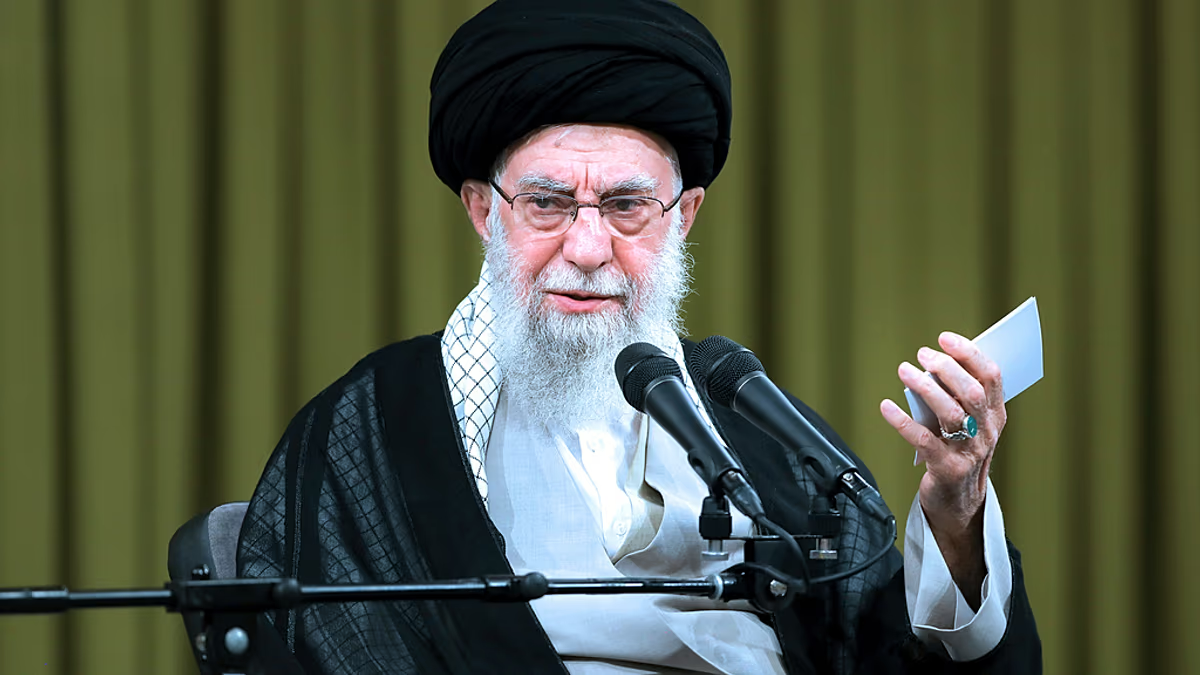
Supreme Leader Ayatollah Ali Khamenei addressed the situation Saturday, drawing a distinction between legitimate protesters and “rioters,” stating the latter “must be put in their place.” His comments followed former US President Donald Trump’s offer of support to the protesters, prompting a threat from Tehran regarding US troops in the Middle East. Reports also surfaced of the US allegedly capturing Venezuelan President Nicolás Maduro, a close Iranian ally, further complicating the geopolitical landscape.
Understanding the Current Iran Protests
The immediate trigger for the recent unrest is the dramatic decline of the Iranian rial, which reached a record low against the US dollar in late December. This economic downturn is fueling public frustration over inflation, unemployment, and limited opportunities. However, the protests tap into deeper grievances related to political restrictions and social issues that have simmered for years.
Khamenei attributed the economic woes and demonstrations to external interference, specifically citing Israel and the United States, without providing supporting evidence. Iranian officials often point to foreign adversaries as the root cause of domestic instability. This narrative echoes previous government responses to large-scale public demonstrations.
Escalating Violence and Government Response
Reports indicate rising violence on both sides. State-owned IRAN newspaper reported two additional deaths overnight, including a man in Qom allegedly killed while attempting to attack civilians with a grenade and a member of the Basij, Iran’s paramilitary volunteer force, in Harsin. These reports, if verified, suggest a growing escalation beyond peaceful demonstration.
The government’s response has been predictably harsh. Historically, Iran has suppressed dissent with force, as evidenced by the 2019 protests over fuel price hikes, which resulted in approximately 300 deaths. Similarly, the 2022 protests, ignited by the death of Mahsa Amini while in morality police custody, led to over 500 deaths and more than 22,000 arrests, according to Human Rights Watch.
While Khamenei indicated a willingness to engage with “protesters,” he firmly rejected dialogue with “rioters,” signaling a potentially severe crackdown on those perceived as actively disrupting order. This distinction allows the government to potentially address some grievances while simultaneously suppressing dissent.
Further compounding the complexities, Trump’s offer of “rescue” to the Iranian people has been viewed by Tehran as a provocation. Iranian officials issued a statement threatening to retaliate against US interests in the Middle East if further intervention occurs. The alleged capture of Nicolás Maduro adds another layer of tension, given Venezuela’s longstanding alliance with Iran.
The demonstrations extend across a significant portion of the country, with the US-based Human Rights Activists News Agency reporting activity in 22 of Iran’s 31 provinces. This widespread geographic reach underscores the depth and breadth of discontent within Iranian society, going beyond localized economic hardship. Related issues include Iran’s nuclear program, which continues to be a point of contention with the international community, and broader regional Middle East Stability.
Looking ahead, the situation remains highly volatile. The coming days will be crucial in determining whether the protests will continue to escalate, prompting a more brutal crackdown, or whether there will be any attempt at dialogue between the government and those expressing genuine grievances. Monitoring the government’s response, international reactions, and potential shifts in the economic situation will be key to understanding the evolving dynamics of these Iran protests and their potential long-term consequences.