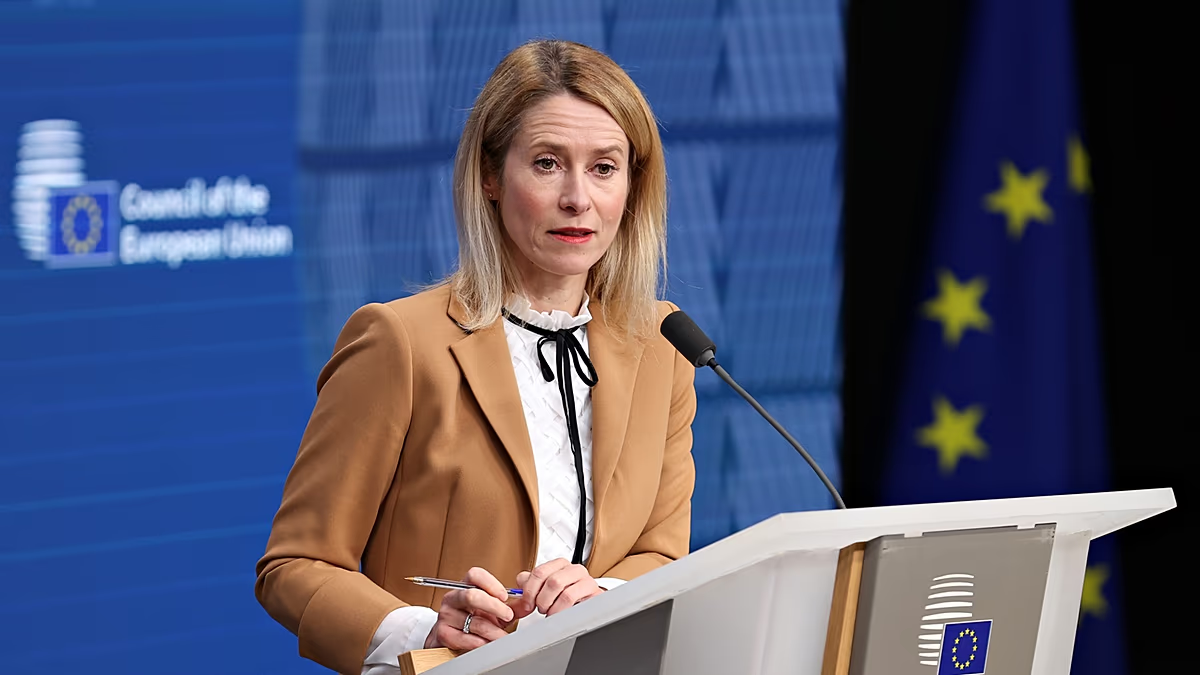

The European Union is facing a critical juncture in its financial support for Ukraine, as debate intensifies over a proposed reparations loan utilizing frozen Russian assets. High Representative Kaja Kallas has strongly advocated for the loan’s approval, arguing it would bolster the EU’s negotiating position with Moscow and demonstrate unwavering commitment to Kyiv. This comes amid strong opposition from Belgium, where the bulk of the assets are held, raising concerns about potential financial risks.
The dispute centers on a European Commission proposal to leverage approximately €185 billion in immobilized Russian Central Bank assets, held largely at Euroclear in Belgium, as a zero-interest line of credit for Ukraine. Kyiv would only be obligated to repay the loan if Russia were to provide compensation for the damages caused by its ongoing war. The plan is one of three options being considered to secure Ukraine’s financial and military needs for the next two years.
The Case for a Reparations Loan
Kallas emphasized that approving the reparations loan would send a powerful message on multiple fronts. According to her statements following an EU defence ministers meeting, it would reassure Ukraine of continued EU support, signal to Russia that the bloc will not yield, and demonstrate to the United States that Europe is taking decisive action. She stated that Russia actively opposes the loan, making its approval even more crucial.
Several other EU defense ministers voiced similar support. The Netherlands’ Ruben Brekelmans highlighted the importance of increasing pressure on Russia, suggesting the use of frozen assets as a key tactic. Sweden’s Pål Jonson added that the current economic climate in Europe, characterized by high debt and slow growth, makes direct financial contributions from member states increasingly difficult.
Belgian Concerns and Potential Roadblocks
However, Belgian Prime Minister Bart De Wever has vehemently opposed the scheme, sending a letter to the European Commission labeling it “fundamentally wrong” and fraught with “multifold dangers.” De Wever fears that Belgium and Euroclear could face substantial losses in court if the loan is pursued. He has demanded written guarantees from EU leaders to cover these potential risks, a commitment that could exceed the €185 billion in frozen assets.
De Wever also expressed concern that pushing forward with the reparations loan could hinder ongoing efforts to negotiate a peace deal between Ukraine and Russia. He suggested that common EU borrowing might be a more cost-effective solution, although this option faces resistance from some member states.
Searching for Alternatives and a Path Forward
With a crucial EU leaders’ meeting scheduled for December 18th, officials are actively exploring alternative financial solutions for Ukraine. The deadlock over the reparations loan has prompted consideration of an emergency financial package to address Kyiv’s immediate needs.
The situation is further complicated by the pending approval of an $8.1 billion loan from the International Monetary Fund (IMF). The IMF requires firm commitments from European allies regarding Ukraine’s macroeconomic stability before finalizing its decision.
French President Emmanuel Macron, after hosting Ukrainian President Volodymyr Zelenskyy, acknowledged De Wever’s “legitimate” concerns and expressed hope for a resolution before the end of the year. He indicated a willingness to find an “adequate solution” that addresses the concerns of all parties involved. The European Commission is expected to present the legal texts for the reparations loan this week, potentially alongside details of the contingency plan.
The debate underscores the complexities of utilizing frozen Russian assets to support Ukraine. As discussions continue, the EU faces the challenge of balancing its commitment to Kyiv with the potential financial and legal risks associated with the proposed loan. The outcome of these negotiations will significantly impact Ukraine’s ability to sustain its defense and recovery efforts, and will be closely watched by international partners. For further information on the EU’s support for Ukraine, you can visit the European Council website.
Analysts suggest that the coming weeks will be crucial in determining whether a compromise can be reached, or if the EU will be forced to rely on less optimal funding mechanisms. The situation remains fluid, and continued diplomatic efforts will be essential to ensure Ukraine receives the financial assistance it needs.