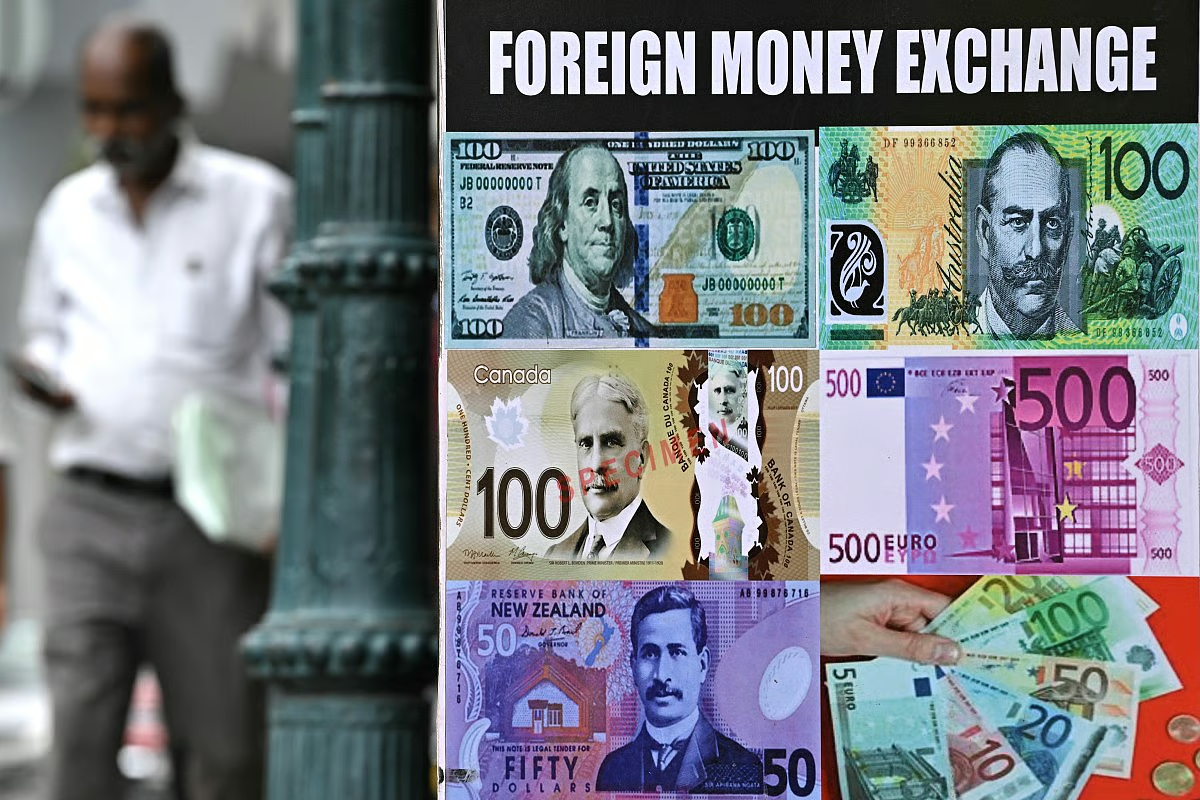

The Philippine peso experienced a slight decline in value against the US dollar on December 9th, closing at 16.04 compared to 15.98 the previous day. This modest weakening comes as the Philippines navigates a period of both domestic political adjustments and broader global economic pressures. The movement reflects ongoing volatility in the foreign exchange market, impacting businesses and consumers alike.
The peso’s performance is being closely watched by economists and investors, particularly following recent pronouncements from the Bangko Sentral ng Pilipinas (BSP), the country’s central bank. While the depreciation is currently minor, it signifies a shift in sentiment following a period of relative stability. Other Asian currencies, like the Indian rupee and Pakistani rupee, remained unchanged on the same day, presenting a contrast to the peso’s slight movement.
Factors Influencing the Philippine Peso Exchange Rate
Several interconnected factors are contributing to the current strain on the Philippine peso. Political uncertainties related to ongoing investigations and shifting alliances are creating headwinds for investor confidence. However, underlying economic fundamentals also play a significant role.
Economic Headwinds
The Philippines, like many economies worldwide, is grappling with elevated inflation rates. According to the Philippine Statistics Authority, inflation hit 6.0% in November, prompting concerns about potential further increases in interest rates. This pressure on consumer purchasing power can decrease demand for the peso.
Additionally, the country’s trade deficit has widened in recent months. Increased imports, driven by reconstruction efforts following recent typhoons and capital goods for infrastructure projects, are outpacing export growth. This imbalance puts downward pressure on the local currency.
Political Landscape
Recent developments in the Philippine political arena have added another layer of complexity. Ongoing scrutiny of certain government officials and shifts in legislative priorities are generating some market nervousness. This is especially true for foreign investors who favor predictability and stability.
The BSP has been actively intervening in the foreign exchange market to manage volatility, but the efficacy of these interventions is limited by external pressures. Maintaining a stable Philippine peso requires a holistic approach addressing both economic and political concerns.
Global Context
The strength of the US dollar globally is also impacting the peso. Rising US interest rates and safe-haven demand are driving capital flows towards the United States, weakening currencies in emerging markets like the Philippines. This trend is not unique to the Philippines, but exacerbates existing challenges.
Furthermore, global economic slowdown could negatively impact remittances from overseas Filipino workers (OFWs), a crucial source of foreign exchange for the country. Reduced global employment opportunities could lead to a decrease in remittance inflows, potentially weakening the Philippine peso further.
Impact on Businesses and Consumers
A weaker Philippine peso has immediate and widespread implications for both businesses and consumers. Import costs increase, leading to potential price hikes for goods reliant on imported materials or components. This impacts a wide range of industries, from manufacturing to retail.
Companies with US dollar-denominated debt also face higher repayment costs when the peso depreciates. This can squeeze profit margins and potentially lead to reduced investment. However, exporters may benefit from a weaker peso as their products become more competitive in international markets.
For consumers, the increasing cost of imports can translate to higher prices for everyday goods, including fuel, food, and manufactured products. This contributes to inflationary pressures and erodes purchasing power. Many Filipino households are now reassessing their financial strategies, considering whether to lock in current exchange rates for future transactions or wait for a potential shift.
Businesses engaged in international trade are also adjusting their strategies. Some may choose to hedge their currency risk through financial instruments, while others might explore alternative sourcing options to reduce reliance on US dollar transactions. The impact on the overall economy, however, depends on the extent of these adjustments.
Central Bank Response and Future Outlook
The Bangko Sentral ng Pilipinas (BSP) has consistently stated its commitment to maintaining price stability and managing excessive volatility in the foreign exchange market. They have utilized tools such as foreign exchange interventions and adjustments to policy interest rates, however, their options are constrained by global economic conditions.
The BSP’s next monetary policy meeting is scheduled for January 18, 2024. Analysts predict a cautious approach, with the BSP likely to monitor incoming economic data before making any further adjustments to interest rates. The timing and magnitude of any future rate hikes will depend heavily on the trajectory of inflation and the health of the global economy.
Looking ahead, the Philippine peso’s performance will likely remain sensitive to a confluence of factors. Continued monitoring of global interest rate trends, geopolitical developments, and domestic economic indicators is crucial. The potential for further political adjustments within the Philippines will also remain a key factor influencing investor sentiment and the value of the currency.
The forecast remains uncertain, however, the BSP will undoubtedly strive to maintain stability amidst these complex and evolving circumstances. Ongoing assessments of the Philippine economy will be essential to navigate the risks and capitalize on emerging opportunities in the foreign exchange market.