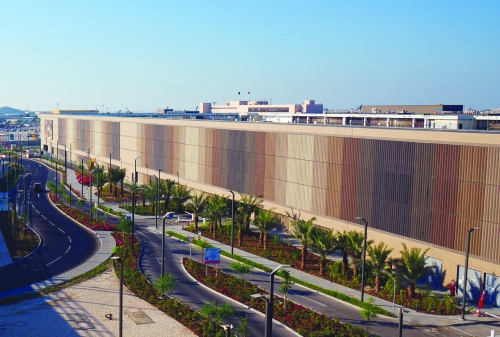

Bahrain International Airport (BIA) continues to solidify its position as a key aviation hub in the region, experiencing robust growth in passenger traffic and aircraft movements. Recent data released by the Ministry of Transportation and Telecommunications reveals that the airport welcomed an impressive eight million passengers between January and November 2025. This surge in activity highlights Bahrain’s growing appeal as a destination and a vital transit point for international travelers. The figures also demonstrate the success of recent infrastructure improvements aimed at enhancing the passenger experience and increasing operational capacity.
Bahrain Airport Traffic Soars: A Look at 2025 Performance
The latest statistics paint a clear picture of a thriving aviation sector in Bahrain. Beyond the eight million passenger milestone, BIA recorded over 97,000 aircraft movements during the same eleven-month period. This substantial number encompasses both arriving and departing flights, as well as significant overflight traffic utilizing Bahraini airspace. The consistent growth underscores the airport’s strategic importance within the global air travel network.
Peak Season and Monthly Trends
August emerged as the busiest month of the year, with a remarkable 951,795 passengers and 9,029 flights. July closely followed, registering 865,753 passengers and 8,748 aircraft movements. These peak summer months traditionally see increased travel demand, driven by holidays and business trips.
However, the year began strongly as well. January saw 812,527 passengers, with a near-equal split between arrivals (374,027) and departures (358,313). February maintained momentum with 736,625 passengers and 7,661 aircraft movements, alongside over 48,000 flights traversing Bahraini airspace.
A slight dip in passenger numbers occurred in March, reaching 594,824, with 7,395 aircraft movements. This was likely due to seasonal factors and a lull between peak travel periods. Subsequently, traffic steadily increased throughout the spring and early summer months.
Consistent Growth and Airspace Utilization
April recorded 808,793 passengers and 8,533 movements, followed by May with 744,625 passengers and 8,568 movements. June saw a further increase to 780,771 passengers and 8,011 movements. After the summer rush, September saw a slight easing to 766,394 passengers and 8,377 movements, before October rebounded to 851,981 passengers and 8,532 movements.
A particularly noteworthy aspect of BIA’s performance is the consistent utilization of its airspace. Over 500,000 aircraft transited Bahraini airspace between January and November, averaging approximately 45,000 per month. Peaks were observed in February, July, and August, demonstrating the airport’s role as a crucial route for regional and international flights. This high volume of overflights contributes significantly to Bahrain’s aviation revenue and reinforces its position as a strategic air corridor. The airport’s efficient air traffic management systems are clearly handling this increased demand effectively.
Cargo and Airmail Volumes at Bahrain Airport
Beyond passenger and aircraft statistics, Bahrain International Airport also demonstrated strong performance in cargo and airmail handling. Over 360,000 tonnes of freight were processed between January and November, encompassing inbound, outbound, and transit shipments. March, July, and October were particularly busy months for cargo operations.
Transit cargo consistently accounted for between one-third and 40% of the total volume, highlighting BIA’s importance as a logistics hub. Interestingly, inbound cargo volumes surpassed outbound shipments overall, suggesting a strong demand for goods being imported into Bahrain. This data provides valuable insights into the country’s trade patterns and economic activity. Efficient logistics and streamlined cargo handling processes are clearly contributing to this success.
Future Outlook and Airport Expansion
The impressive figures for the first eleven months of 2025 indicate a positive trajectory for Bahrain International Airport. Continued investment in infrastructure, coupled with strategic marketing initiatives, are expected to further boost passenger numbers and cargo volumes. The ongoing airport expansion project, designed to increase capacity and enhance the passenger experience, will be instrumental in accommodating future growth. This expansion will also support the Kingdom’s broader economic diversification goals, attracting more tourism and investment.
Looking ahead, BIA is poised to play an even more significant role in the regional aviation landscape. The airport’s commitment to innovation and operational excellence will be key to maintaining its competitive edge and attracting new airlines and routes. The focus on providing a seamless and efficient travel experience will undoubtedly contribute to its continued success. The airport’s ability to adapt to changing market dynamics and embrace new technologies will be crucial for long-term sustainability and growth in the aviation industry.
In conclusion, Bahrain International Airport’s performance in 2025 has been exceptionally strong, demonstrating its resilience and strategic importance. With eight million passengers and over 97,000 aircraft movements, BIA is solidifying its position as a leading aviation hub. The continued growth in cargo volumes and airspace utilization further underscores its vital role in the regional economy. For more information on travel to and from Bahrain, visit the Ministry of Transportation and Telecommunications website.