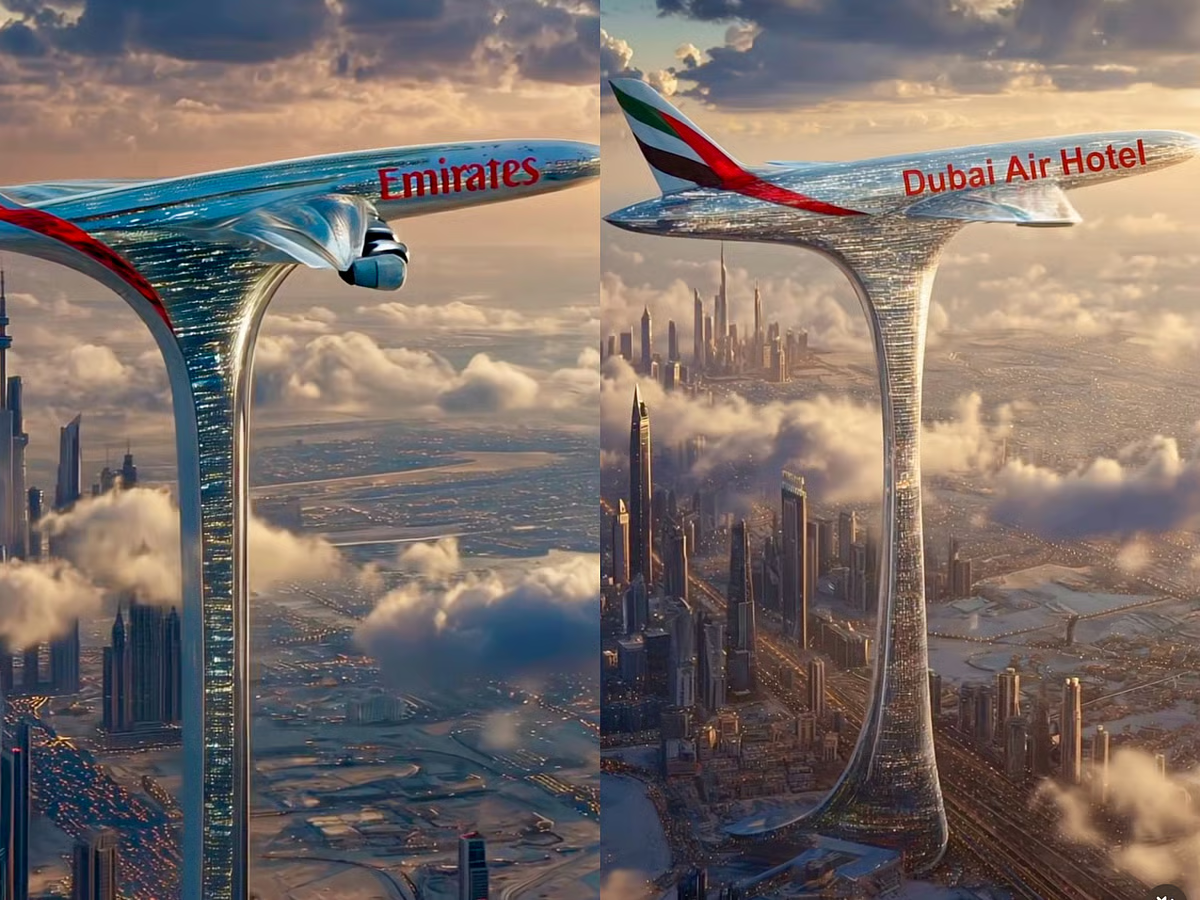

A viral video depicting a futuristic “Dubai Air Hotel” suspended above the city has been revealed as entirely artificial intelligence (AI) generated, despite widespread coverage by news outlets and millions of views. The sophisticated imagery, initially posted on Instagram, fooled many into believing that such a radical hotel project was genuinely in development. The incident highlights the growing ability of AI to create convincingly realistic content and the potential for misinformation, particularly relating to ambitious projects in a city known for innovation such as Dubai.
How the AI-Generated Dubai Hotel Fooled the World
The initial AI-created video surfaced on the Instagram account cypriot.ai on August 21st. It showcased a 7-star hotel seemingly held aloft by a massive aircraft, accompanied by the caption promising a redefinition of luxury travel. Subsequent reports expanded on the concept, detailing potential floor counts, heights, and estimated costs – details not originally present in the post.
The video initially garnered modest attention, with early mentions simply identifying the aircraft as belonging to Emirates. However, when reposted and rebranded as the “Dubai Air Hotel,” it quickly went viral, leading several online news publications to report on its potential development. This rapid spread demonstrates the power of visual media and the desire for novelty, especially when it aligns with perceptions of Dubai as a pioneering destination.
Factors Contributing to Belief
Several elements contributed to the perceived credibility of the fictional hotel. Dubai has a well-established reputation for groundbreaking architecture and large-scale tourism initiatives, making such a project seem plausible within the city’s context. The Burj Khalifa, Palm Jumeirah, and indoor ski slopes all represent achievements that push the limits of engineering and design.
Additionally, Emirates President Sir Tim Clark recently hinted at further ambitious developments for Dubai, stating in June that projects “bigger and more beautiful than Burj Khalifa” could emerge. This amplified the expectation that Dubai continues to seek out record-breaking achievements, making the AI-generated concept fit a perceived narrative according to Gulf News.
News reports also played a role, framing the concept with seemingly informed details. One architecture news website suggested that the structure, if built, would surpass existing hotel height records and strengthen Dubai’s position as a global tourism leader. These reports acted as validation for viewers, furthering the illusion of legitimacy.
The Rise of AI-Generated Visual Misinformation
The “Dubai Air Hotel” isn’t an isolated case of AI-generated misinformation. The creator of the original video has produced numerous other similar concepts linked to Dubai. These include a giant ice skating rink, a ski resort built onto the Dubai Frame, and even a hotel modeled after the Titanic vessel.
This incident underscores a growing concern surrounding the increasing sophistication of AI. As tools for generating images and videos become more accessible and refined, differentiating between authentic and fabricated content will become increasingly difficult. This poses challenges for journalism, public trust, and the overall information ecosystem. The implications extend beyond misleading reports about luxury tourism; AI could be leveraged to spread disinformation on more critical subjects.
The readily available nature of generative AI tools like Midjourney and Stable Diffusion meant that even a relatively simple prompt could be used to create compelling visuals. This accessibility lowers the barrier to entry for creating deceptive content, and facilitates rapid dissemination through social media – which has become a primary source of news for many individuals. This instance specifically exhibited the capability of AI to inspire innovation conversations, even if based on fiction.
Despite the attention garnered, neither Emirates nor Dubai authorities have confirmed any plans for constructing such a hotel. As of now, the project remains purely conceptual, existing solely within the digital realm. It’s important to note that similar AI-generated designs for unusual locations and structures could proliferate, posing increasing challenges to verification.
Looking ahead, it is expected that increased scrutiny will be placed on visual content shared online, with fact-checking organizations developing strategies for identifying AI-generated images and videos. The development of watermarking and provenance technologies may also help to establish the authenticity of travel imagery and other content. The ongoing evolution of AI content generation necessitates a vigilant and critical approach to information consumption, as the line between reality and simulation continues to blur.