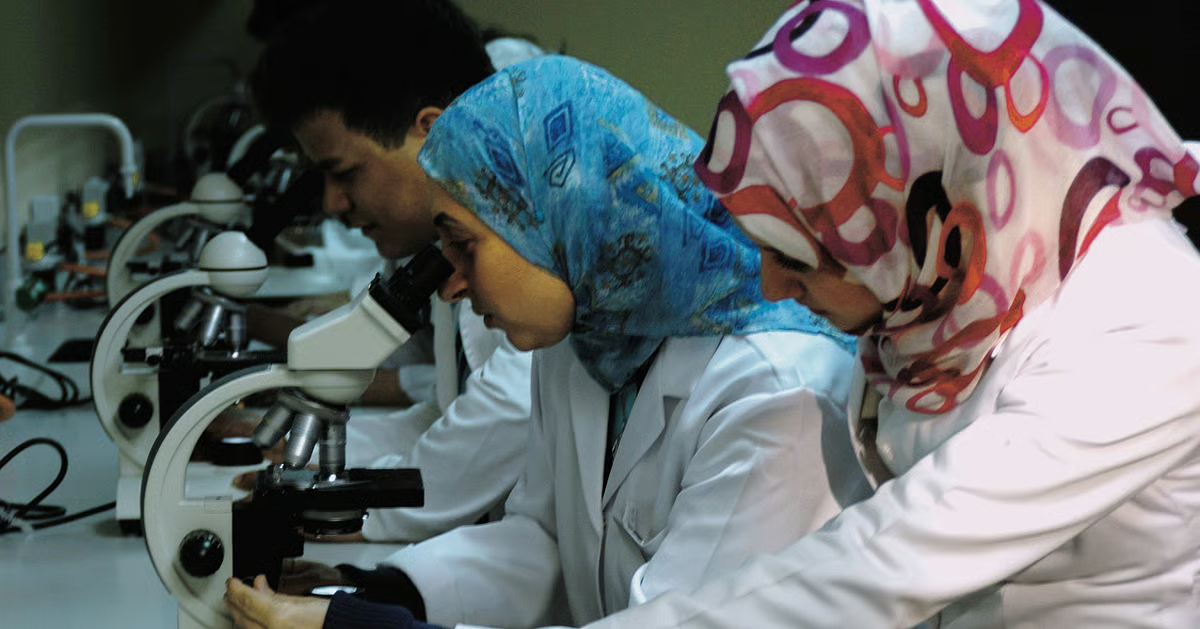

Ras Al Khaimah is intensifying its focus on academic excellence, launching several initiatives aimed at bolstering its education sector and attracting both regional and international students. The emirate announced a series of investments and partnerships in late October 2023, signaling a long-term commitment to becoming a hub for higher education in the UAE. These developments are expected to impact student enrollment, research output, and the overall knowledge economy of the northern emirate.
The push for improved educational standards comes as Ras Al Khaimah seeks to diversify its economy beyond traditional industries like tourism and manufacturing. The initiatives, spearheaded by the Ras Al Khaimah Economic Zone (RAKEZ) and local universities, are designed to create a more skilled workforce and attract foreign direct investment in knowledge-based sectors. The timing aligns with the UAE’s national strategy for innovation and economic diversification.
Investing in Academic Excellence: A Ras Al Khaimah Priority
The core of Ras Al Khaimah’s strategy revolves around attracting established international universities and supporting the growth of existing institutions. RAKEZ has been instrumental in streamlining the process for foreign universities to establish campuses within the emirate, offering incentives such as land allocation and administrative support. This is intended to reduce barriers to entry and encourage collaboration.
New University Partnerships
Several partnerships have been announced in recent weeks. The American University of Sharjah (AUS) is reportedly exploring options for expanding its presence in Ras Al Khaimah, potentially offering specialized programs focused on sustainable technologies and environmental science. Additionally, discussions are underway with institutions in Europe and Asia to establish joint research centers and student exchange programs.
Focus on STEM Fields
A significant portion of the investment is directed towards Science, Technology, Engineering, and Mathematics (STEM) fields. According to the Ras Al Khaimah government, this reflects a growing demand for skilled professionals in these areas, driven by the emirate’s expanding industrial base and its ambitions in renewable energy. The goal is to create a pipeline of talent capable of supporting future economic growth.
However, the emirate also recognizes the importance of humanities and social sciences. Programs in these areas are expected to be developed to foster critical thinking and innovation, complementing the technical skills being cultivated. This holistic approach to education is seen as crucial for long-term success.
Meanwhile, existing universities in Ras Al Khaimah, such as the University of Bolton Ras Al Khaimah, are receiving support to enhance their research capabilities and expand their program offerings. This includes funding for state-of-the-art laboratories and equipment, as well as scholarships for promising students. The ministry of education has also indicated plans to increase funding for research grants focused on areas relevant to the emirate’s development priorities.
In contrast to some other emirates that have focused heavily on attracting branch campuses of well-known universities, Ras Al Khaimah is taking a more balanced approach. It is actively seeking to develop its own homegrown institutions while also welcoming international partnerships. This strategy aims to create a more sustainable and diversified education ecosystem.
Improving K-12 Education
The pursuit of academic excellence isn’t limited to higher education. Ras Al Khaimah is also investing in improving the quality of its K-12 schools. This includes teacher training programs, curriculum development, and the adoption of new technologies in the classroom. The aim is to ensure that students are well-prepared for university-level studies.
The government is also exploring options for increasing access to quality education for all residents, regardless of their socioeconomic background. Scholarship programs and financial aid initiatives are being expanded to help students from disadvantaged families pursue their educational goals. This commitment to inclusivity is seen as essential for creating a more equitable society.
Additionally, the emirate is working to align its education system with the needs of the labor market. This involves collaborating with businesses and industry leaders to identify skills gaps and develop programs that address those needs. The goal is to ensure that graduates are equipped with the knowledge and skills that employers are looking for. This focus on employability is a key component of the emirate’s economic diversification strategy.
The development of a robust education sector is also expected to attract skilled expatriates to Ras Al Khaimah, further boosting the emirate’s knowledge economy. The availability of high-quality schools and universities is a major factor for families considering relocating to a new country. This positive feedback loop could contribute to sustained economic growth.
The impact of these initiatives on higher education in the UAE remains to be seen. However, the report indicates that Ras Al Khaimah is positioning itself as a competitive alternative to more established education hubs like Dubai and Abu Dhabi. The emirate’s lower cost of living and its focus on specialized programs could attract students seeking a more affordable and focused learning experience.
Looking ahead, the Ras Al Khaimah government is expected to announce further details about its education strategy in the first quarter of 2024. Key decisions will likely involve the selection of additional university partners and the allocation of funding for specific research projects. The success of these initiatives will depend on effective implementation and ongoing collaboration between government, universities, and the private sector. Monitoring student enrollment figures and research output will be crucial for assessing the impact of these investments.