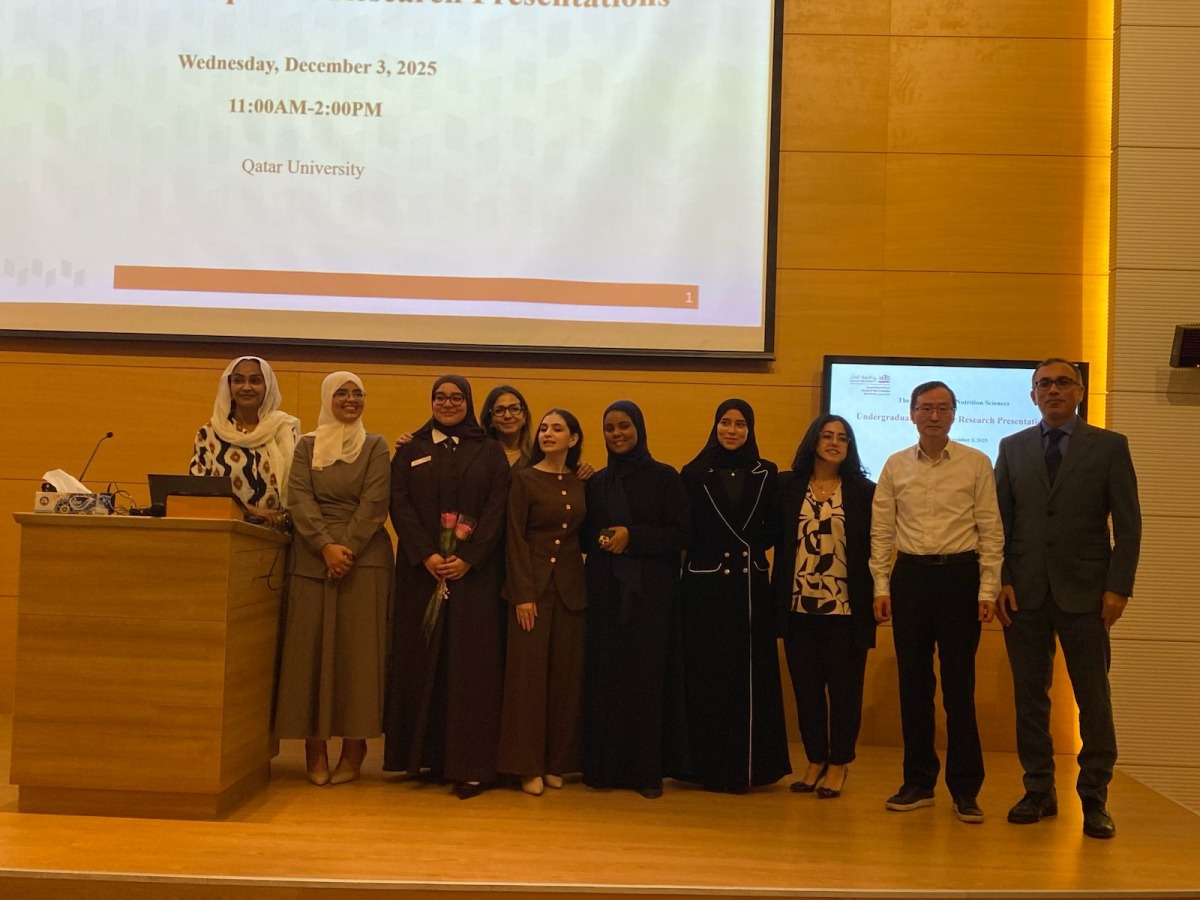

Doha, Qatar – Qatar University’s College of Health Sciences recently showcased the research of its graduating Bachelor of Science in Nutrition and Dietetics students. The event highlighted nine capstone projects focused on critical areas within nutrition, including public health, food safety, and sustainable practices. These projects, completed under the guidance of department faculty, offer new insights into dietary habits and potential interventions relevant to the Qatari population and beyond.
The presentations, held at the university, featured studies analyzing diverse topics from the impact of dietary patterns on cardiometabolic health to innovative food preservation techniques. Researchers utilized data from the Qatar Population Health and Wellbeing Survey (QPHI-QBB) and conducted laboratory experiments to arrive at their findings. The work underscores Qatar University’s commitment to advancing knowledge in health sciences and preparing future dietitians and nutrition professionals.
Understanding Dietary Patterns and Cardiometabolic Disease
One significant study examined the relationship between dietary patterns and cardiometabolic diseases, a leading cause of mortality globally and a growing concern in Qatar. Researchers Latifa Al-Sulaiti, Lolwa Al-Mulla, and Shaima Al-Mahmoud, supervised by Dr. Reema Tayyem and Ms. Hiba Chatila, analyzed data to identify correlations.
Their findings indicated that diets high in fast food and red meat were associated with increased central obesity and unfavorable lipid profiles. Conversely, dietary patterns rich in fruits and vegetables appeared to have a protective effect against these conditions, reinforcing existing public health recommendations. This research highlights the importance of promoting healthy eating habits to mitigate the risk of heart disease and related metabolic disorders.
Food Safety and Sustainable Preservation
Beyond dietary patterns, the students also investigated innovative approaches to food safety. A project led by Najah Aldwamneh and Shahad Dergham, under the supervision of Dr. Layal Karam, explored the antimicrobial properties of essential oils in camel meat.
The study demonstrated that compounds like eugenol and linalool effectively inhibited the growth of Listeria monocytogenes, a bacterium that can cause foodborne illness. This supports the use of essential oils as a sustainable and “clean-label” alternative to traditional food preservation methods, aligning with growing consumer demand for natural ingredients. Similar research by Reem Al-Yazidi, Reem Al-Mohanadi, and Amina Al-Marzooqi showed coriander essential oil and microencapsulated linalool were effective against Staphylococcus aureus in sheep meat.
The Impact of Ramadan Fasting on Health
Several projects focused on the unique nutritional considerations during Ramadan. Aisha Nasser Al-Emadi, Niama Ali, and Manal Hassiba, supervised by Dr. Maya Bassil and Ms. Hiba Chatila, investigated the effects of Ramadan fasting on body composition and dietary quality.
The research revealed that Ramadan fasting was associated with improvements in dietary quality and modest reductions in body weight and fat mass, while importantly, muscle mass was preserved. This suggests that, when combined with mindful eating during non-fasting hours, Ramadan can be a period of positive health changes. This area of dietetics is particularly relevant in the region.
Meanwhile, other studies explored the long-term effects of weight loss interventions, such as bariatric surgery. Research by Al-Dana Al-Ghamdi, Ghezayel Al-Marri, and Shahad Mohamed, supervised by Dr. Ala Rajabi, found no independent link between regular fast-food consumption and dyslipidemia in individuals who had undergone bariatric surgery, after accounting for other risk factors. Age, smoking, diabetes, abdominal obesity, and hypertension were identified as key contributors to dyslipidemia, while bariatric surgery showed a protective effect.
Further investigation by Lolwa Shams, Haya Buhazza, and Sara Al-Nasser, under the guidance of Dr. Zumin Shi and Joyce Moawad, confirmed that greater weight loss following bariatric surgery correlated with significant reductions in fat mass and preservation of lean tissue. Prudent dietary patterns were also linked to more favorable body composition outcomes, emphasizing the importance of healthy eating post-surgery.
The findings from these capstone projects are expected to inform future research and public health initiatives in Qatar. The Department of Nutrition Sciences plans to submit the research for publication in peer-reviewed journals in the coming months. Continued monitoring of dietary trends and the effectiveness of interventions will be crucial to addressing the evolving nutritional needs of the population and promoting overall well-being. The long-term impact of these studies on food and nutrition policy remains to be seen.