
Qatar Red Crescent Society (QRCS) is actively working to improve the livelihoods of vulnerable families in Afghanistan, launching a new initiative targeting communities impacted by ongoing conflict and natural disasters. The project, valued at over $288,000, will focus on skills development and income generation for over 500 families across Kabul, Nangarhar, and Balkh provinces. This effort demonstrates Qatar’s commitment to humanitarian aid within the region, focusing on sustainable solutions.
The humanitarian effort began in late December 2023 and is being carried out in collaboration with Afghanistan’s Ministry of Labour and Social Affairs and local authorities. QRCS intends to bolster the resilience of Afghan communities facing significant hardship and promote long-term stability through economic empowerment. The initiative represents a continuation of Qatar’s support for Afghanistan, which has been ongoing despite considerable political and economic challenges.
Strengthening Afghan Livelihoods Through Vocational Training
A core component of the QRCS project involves extensive vocational training programs. These programs are designed to equip individuals with marketable skills, allowing them to secure employment or start their own businesses. The selection of skills focuses on areas with demonstrated demand and opportunity within the Afghan economy.
Specifically, 260 women from vulnerable households will participate in a six-month sewing and embroidery training program. Three training centers in Kabul will provide the necessary equipment and resources. This training aims to empower women financially and contribute to household income stability, a key factor in community resilience.
Expanding Skills for Young Afghans
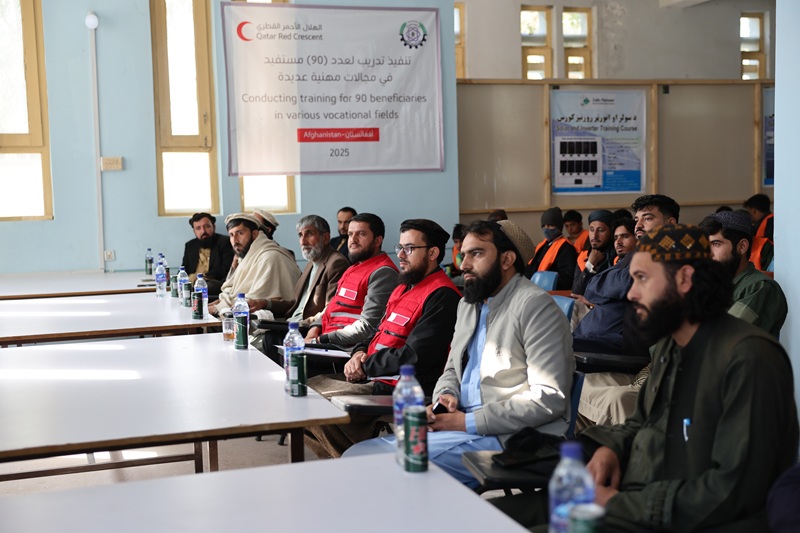
Recognizing the importance of youth employment, the project also includes a vocational training component for 90 young people. This program, taking place in Nangarhar and Balkh provinces, will focus on renewable energy and electrical work. The increasing demand for these skills in Afghanistan makes this a particularly strategic investment, according to industry reports.
Furthermore, QRCS is offering direct financial support to 90 families to launch or expand small businesses. This will be coupled with assistance for 77 families in livestock breeding through the provision of cows, providing a pathway to self-sufficiency. These financial interventions are intended to provide immediate relief and foster entrepreneurial spirit.
The ongoing instability in Afghanistan has led to widespread poverty and displacement. According to the United Nations Development Programme (UNDP), a significant portion of the Afghan population requires humanitarian assistance. Efforts like these, focused on building self-reliance, are seen as crucial for long-term recovery.
The selection of Kabul, Nangarhar, and Balkh provinces reflects a strategic assessment of need and accessibility for the QRCS team. Nangarhar and Balkh have faced recent economic shocks and ongoing insecurity, while Kabul, though relatively more stable, hosts a large population of internally displaced persons. These provinces represent diverse regions and challenges within Afghanistan.
While the initial phase focuses on these specific training programs and financial support mechanisms, QRCS has indicated plans for expansion. They aim to include more trainees and diversify the range of vocational skills offered in future phases of the project. This adaptive approach will allow the program to respond effectively to evolving needs and opportunities.
The Ministry of Labour and Social Affairs of Afghanistan has lauded the QRCS initiative, emphasizing its alignment with national priorities for economic development and poverty reduction. The success of the project will depend on continued collaboration between QRCS, the Afghan government, and local communities.
Looking ahead, QRCS is expected to monitor the impact of the initial programs closely. Data on employment rates, income levels, and business sustainability will be collected to inform future program design and expansion. The sustainability of these gains, however, remains contingent on the broader political and economic context in Afghanistan.
Continued assessment of the security situation and access to targeted communities will be vital. The long-term success of QRCS’s efforts to improve livelihoods will also rely on addressing systemic issues such as access to finance and market opportunities for small businesses within Afghanistan’s complex economic landscape. Further programming in economic empowerment and humanitarian aid is expected to be shaped by the findings of this initial six-month endeavor.