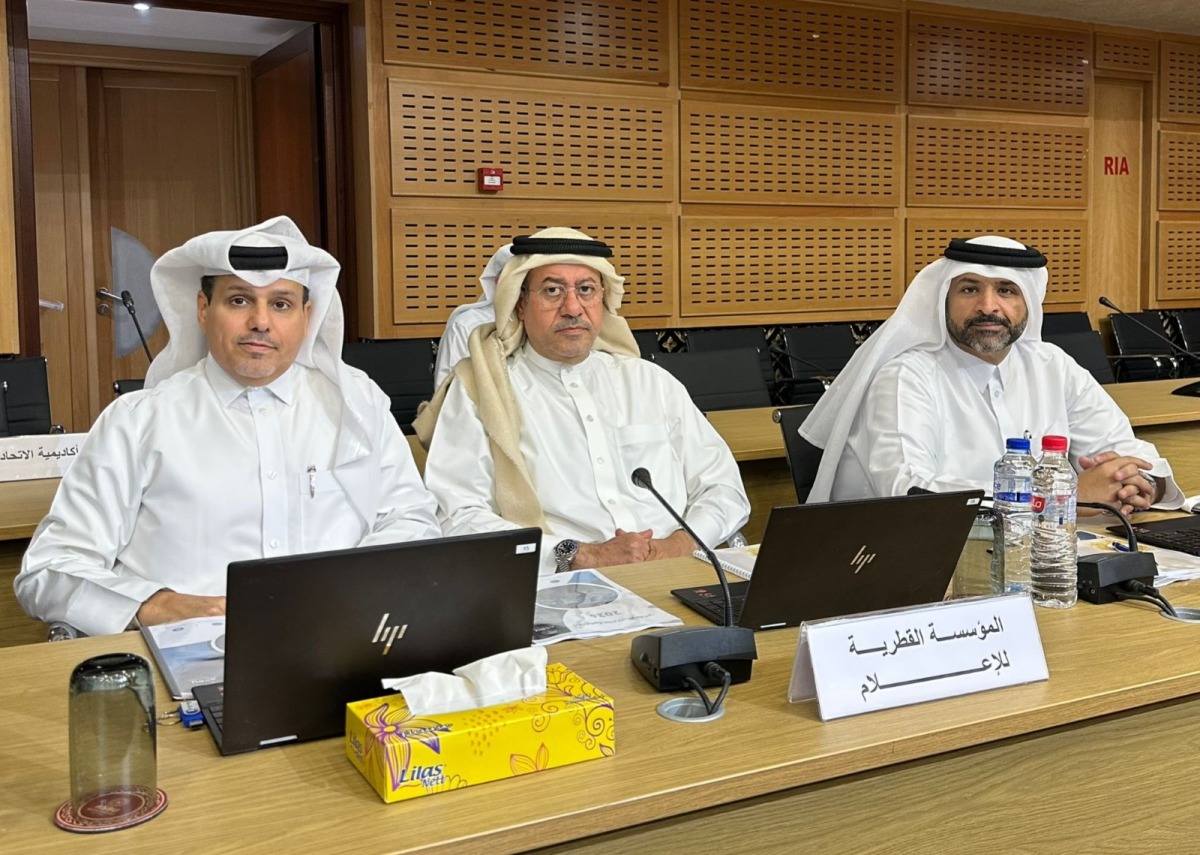

The Qatar Media Corporation (QMC) actively participated in key discussions surrounding Arab media cooperation at the 114th meeting of the Executive Council of the Arab States Broadcasting Union and the Union’s 45th General Assembly, held in Tunis, Tunisia from December 14th to 17th. The meetings convened representatives from official broadcasting organizations across the Arab world to address evolving challenges and opportunities within the regional media landscape. This participation underscores Qatar’s ongoing commitment to strengthening collaborative efforts in content creation and technological advancement.
The event, hosted by the Republic of Tunisia, brought together leaders from various national broadcasters to focus on enhancing the exchange of radio and television programming and adapting to the rapid pace of change in media technology. The Qatari delegation, led by media advisor Abdulrahman Al Obaidan, included Abdullah Ghanem Al Binali Al Muhannadi, director of the QMC International Cooperation Office, and Ali Saleh Al Sada, director of Qatar Television. Discussions centered on strategies for improved regional content sharing and professional development.
Strengthening Arab Media Cooperation
The primary goal of the QMC’s involvement was to reinforce existing frameworks for joint Arab media cooperation and foster new partnerships. According to a statement released by the QMC, these collaborations are vital for the development of high-quality Arab media content and the modernization of the industry’s technical capabilities. This aligns with broader regional efforts to promote a unified and impactful Arab media presence on the global stage.
Key Discussion Points
Several key areas were addressed during the meetings. These included exploring opportunities for co-productions, streamlining content distribution processes, and addressing the challenges posed by new media platforms. Participants also discussed strategies for combating misinformation and promoting media literacy across the Arab world. The rise of digital media and social networks was a recurring theme, prompting conversations about adapting to changing audience consumption habits.
Additionally, the assembly focused on the importance of preserving Arab cultural identity within media content. Delegates explored ways to balance the adoption of international media standards with the need to reflect and promote unique Arab values and perspectives. This discussion highlighted the delicate balance between globalization and cultural preservation in the media sector.
Meanwhile, technological advancements in broadcasting were a significant topic. The transition to digital broadcasting, the implementation of new production techniques, and the exploration of artificial intelligence applications in media were all examined. The need for ongoing training and capacity building for media professionals was also emphasized to ensure the Arab media industry remains competitive.
In contrast to previous meetings, this year’s assembly placed a greater emphasis on sustainable funding models for public service broadcasting. Delegates explored various revenue generation strategies and discussed the importance of securing long-term financial stability for national broadcasters. This is particularly crucial in light of the increasing financial pressures facing media organizations globally.
The Arab States Broadcasting Union plays a critical role in facilitating media exchange and collaboration among its member states. Established in 1975, the Union serves as a platform for addressing common challenges and promoting best practices in broadcasting. Its initiatives contribute to the overall development of the Arab media landscape and enhance the region’s voice in international media forums. Regional content is a key focus of the Union’s work.
Looking ahead, the QMC is expected to implement the agreements reached during the Tunis meetings. The corporation will likely prioritize strengthening bilateral partnerships with other Arab broadcasters and exploring opportunities for joint content production. The specific timeline for these initiatives remains uncertain, dependent on budgetary allocations and logistical considerations. Further details regarding the outcomes of the assembly and the QMC’s action plan are anticipated in the coming weeks, and observers will be watching for concrete steps towards greater media development in the region.