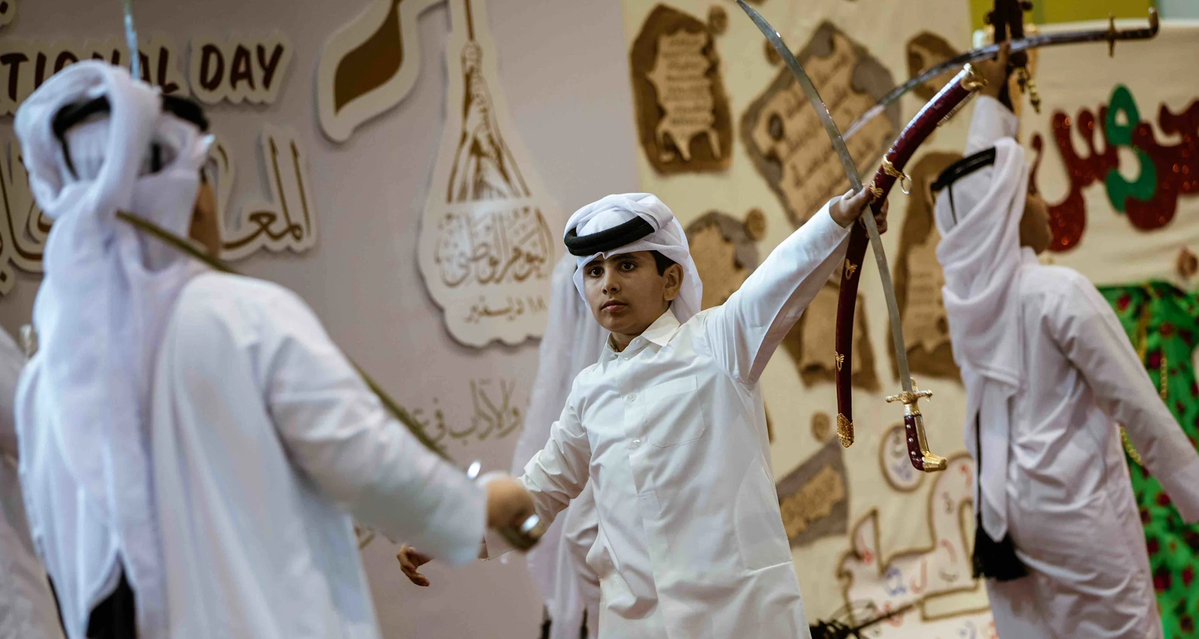

Qatar Foundation’s Pre-University Education is set to launch “Qatar Jannah,” a national operetta celebrating Qatari identity and national pride. The production, featuring students from across Qatar Foundation schools, will be performed on December 11th and 13th at the Qatar National Convention Centre. This initiative aims to foster a sense of unity and belonging among students while showcasing the nation’s rich heritage through artistic expression.
The operetta will feature two shows daily, at 3pm-4pm and 5pm-6pm, each preceded by pre-show activities including traditional Qatari “Ardah” performances and entertainment provided by Siraj, Qatar Foundation’s educational program. Rashid and Noora, popular characters from Siraj, will engage with children attending the event. The event is part of the broader Qatar National Day celebrations.
Celebrating Qatari Identity Through the Arts
The “Qatar Jannah” operetta represents a significant effort by Qatar Foundation to integrate arts and culture into its educational framework. According to Buthina Al Derham, Director of Communications and Outreach at QF’s Pre-University Education, the production is designed to create a shared experience that unites students under a common identity. This year’s operetta specifically focuses on connecting students with their national values and strengthening their sense of belonging.
A Collaborative Production
The operetta’s development involved a collaborative process, with each Qatar Foundation school contributing ideas and creative perspectives. These diverse contributions were then synthesized into a unified script, preserving the unique character of each school while fostering a cohesive narrative. Azlaa Hamad Al Qahtani, Head of Culture and Identity at QF’s Pre-University Education, emphasized that this approach reflects the foundation’s commitment to shared learning and teamwork.
Additionally, the production provides students with valuable life skills beyond artistic expression. Students involved are developing teamwork, responsibility, discipline, and confidence through their participation and performance. The operetta also prioritizes the use of the Arabic language, aligning with Qatar Foundation’s commitment to nurturing Arabic language and cultural programs.
The operetta’s artistic scenes are inspired by Qatari heritage and the stories of ancestors, blended with modern elements and technologies. Al Qahtani explained that the goal is to demonstrate that national identity is not simply a historical concept, but a living aspect of students’ daily lives. This approach aims to instill a sense of belonging that is actively practiced through values and interactions.
However, integrating cultural preservation with modern artistic techniques presents ongoing challenges. Balancing tradition with innovation requires careful consideration to ensure authenticity while remaining relevant to contemporary audiences. Qatar Foundation’s approach to this cultural identity is seen as a model for other educational institutions in the region.
The enthusiastic participation from students and schools underscores the initiative’s success in connecting with young people. Al Qahtani noted that the strong engagement reaffirms the power of the arts in strengthening national awareness and pride. The operetta’s success is expected to encourage further integration of arts-based learning within Qatar Foundation’s curriculum.
Looking ahead, Qatar Foundation will likely assess the impact of “Qatar Jannah” through student feedback and audience engagement metrics. Future iterations of the operetta may incorporate new themes and technologies, continuing to evolve as a platform for celebrating Qatari identity. The long-term effects on student engagement with national heritage and the Arabic language will be key areas to monitor in the coming years.