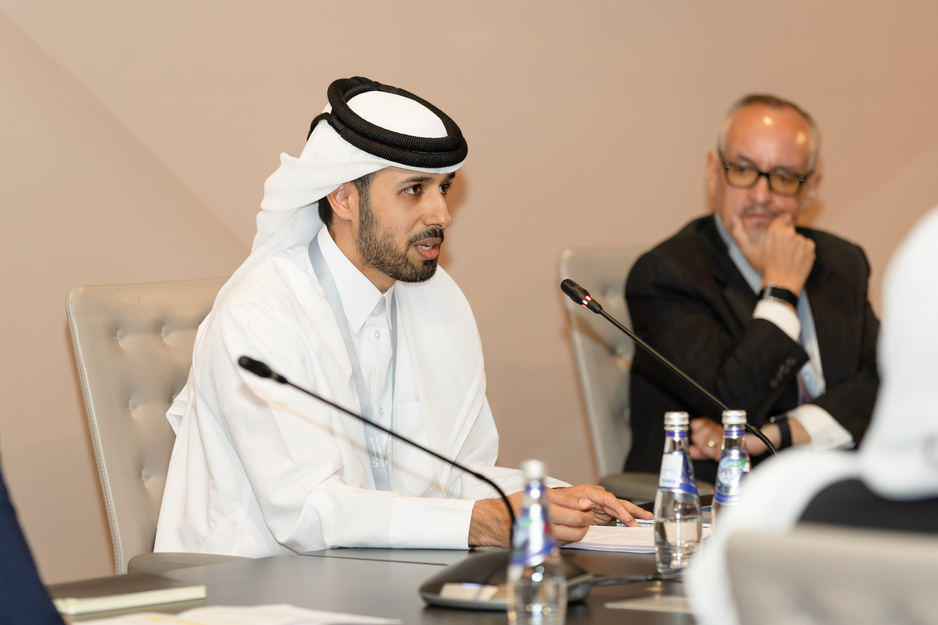

Doha, Qatar – Qatar Foundation (QF) and Boston College’s Center for International Higher Education (CIHE) have launched Ta’leem: The Arabic and English Higher Education Periodic Review, a groundbreaking bilingual journal aimed at fostering inclusive academic dialogue and advancing higher education research. The journal’s debut took place during the WISE 12 Summit, bringing together global leaders to discuss values-driven approaches to academic inquiry. This initiative seeks to position the Arab region as a key contributor to the global higher education landscape.
The launch event, held at the biennial WISE summit, underscored the journal’s commitment to cross-linguistic collaboration and the exploration of culturally grounded perspectives in academic research. Participants included higher education leaders, scholars, and practitioners eager to contribute to a more inclusive and globally engaged academic community. The journal’s inaugural issue focuses on critical challenges facing higher education systems worldwide.
Advancing Multilingualism in Higher Education
Ta’leem represents a significant step towards diversifying the sources and languages of scholarly discourse in higher education. According to QF President of Higher Education and Education Advisor, Francisco Marmolejo, the journal aims to shift the narrative, allowing scholarship to originate from and speak to the Arab region, and then extend outwards to the world. This approach challenges traditional hierarchies within global academic publishing.
The bilingual format is not merely a translation exercise, but a deliberate “policy intervention,” explained Dr. Samah Gamar, Associate Editor and Director of Academic Affairs at QF’s Higher Education division. It provides a platform for institutions, policies, and innovations within the Arab region to be rigorously examined and contribute to global knowledge production. Previously, the region was often the subject of study; now, it becomes an active producer of knowledge.
A Collaborative Effort
The partnership between QF and CIHE builds on a 30-year history of collaboration. Dr. Philip G. Altbach, Professor Emeritus and Founding Director of CIHE, highlighted the journal’s mission to examine emerging models, policy innovations, and education challenges with global applicability, despite their regional roots. This collaboration leverages the strengths of both institutions to create a truly international platform.
The launch event also facilitated the formation of themed collaboration groups, designed to foster future joint efforts in advancing higher education. These groups will focus on specific areas of research and policy, encouraging ongoing dialogue and partnership. Interest from potential reviewers, contributors, and partners was strong, signaling a broad appetite for this new resource.
Additionally, the initiative aligns with broader efforts to promote inclusivity and diversity within the global academic community. By valuing and incorporating perspectives from different linguistic and cultural backgrounds, Ta’leem aims to enrich the quality and relevance of educational policy.
Implications for Global Academic Dialogue
The introduction of Ta’leem is expected to catalyze a broader movement towards values-centered, multilingual scholarship. The journal’s commitment to rigorous peer review and high-quality research will ensure its credibility and impact within the field of international education. It also demonstrates QF’s ongoing commitment to shaping the future of higher education on a global scale.
However, the long-term success of the journal will depend on attracting a consistent stream of high-quality submissions and building a robust network of reviewers and contributors. The editorial team is currently soliciting articles for future issues, with a focus on topics relevant to both regional and international audiences. The next steps involve establishing a clear editorial calendar and expanding the journal’s reach to a wider network of scholars and institutions. The impact of Ta’leem on the field of higher education will be closely watched in the coming years.
Qatar Foundation continues to invest in initiatives that promote innovation and excellence in education.
Boston College’s Center for International Higher Education is a leading research center in the field.
WISE (World Innovation Summit for Education) provides a global platform for dialogue and collaboration in education.