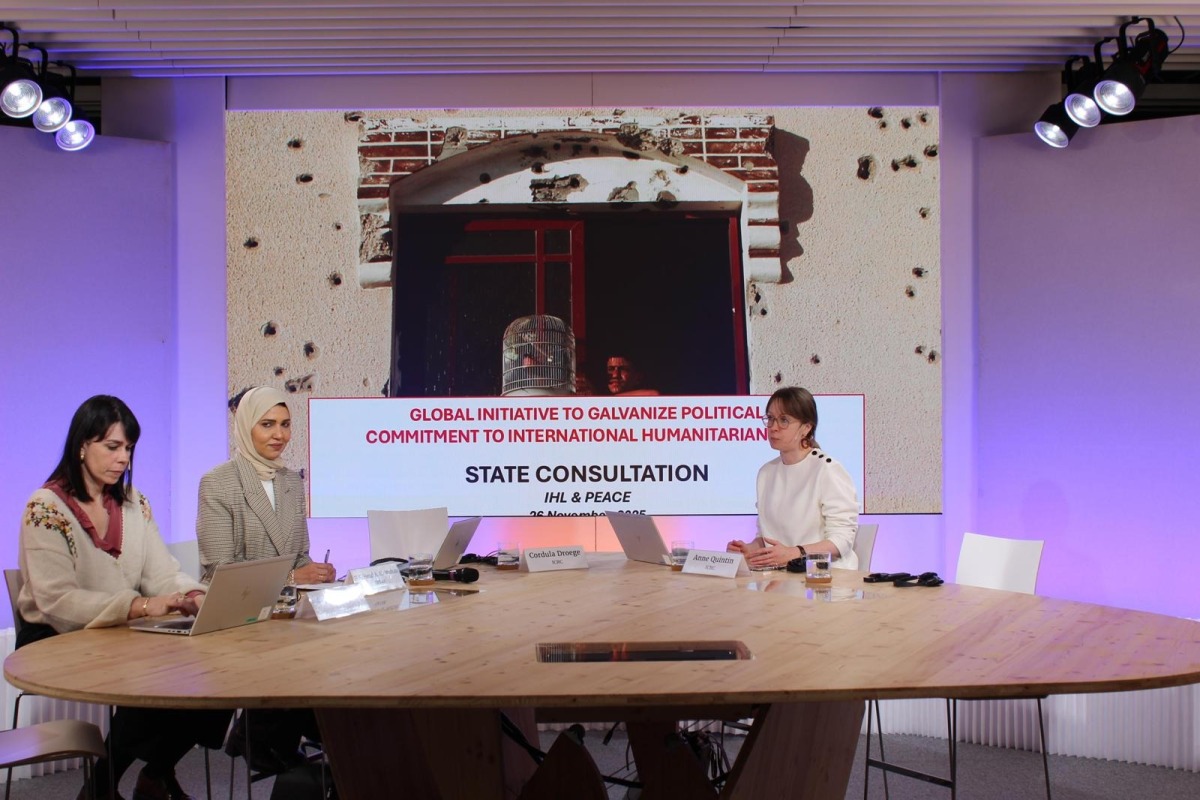

Geneva played host to crucial discussions this week regarding the implementation of international humanitarian law in the aftermath of armed conflict. Dr. Hind Abdalrahman Al Muftah, the Permanent Representative of the State of Qatar to the United Nations Office in Geneva, led consultations on behalf of Qatar, Saudi Arabia, Bangladesh, Colombia, and Ethiopia. The meetings, held at the International Committee of the Red Cross (ICRC) headquarters on Wednesday, focused on strengthening protections for civilians and ensuring accountability during post-conflict transitions.
The consultations brought together representatives from various nations to address the complex challenges of applying humanitarian principles when active fighting has ceased. These challenges include the treatment of prisoners, locating missing persons, identifying remains, and facilitating the safe return of those displaced by war. These discussions are part of the ongoing Global Initiative on International Humanitarian Law and peace, with Qatar currently serving as a co-chair of Track III.
The Importance of International Humanitarian Law in Post-Conflict Scenarios
The core principle guiding these discussions is that international humanitarian law doesn’t simply end with a ceasefire. According to Dr. Al Muftah, its obligations are continuous and vital to achieving lasting peace. The transitional period following conflict is particularly sensitive, requiring a concerted effort to rebuild societies while addressing the lingering consequences of war.
Indeed, the application of humanitarian law extends far beyond the battlefield. It includes provisions for the humane treatment of those detained during conflict, regardless of their status. Furthermore, respecting the rights of victims to know the fate of missing loved ones is considered a fundamental tenet of post-conflict recovery.
Qatar’s Role and Experience
Qatar has been actively promoting international humanitarian law and peacebuilding efforts through its mediation initiatives. Dr. Al Muftah highlighted Qatar’s experience in post-conflict dialogue, emphasizing the interconnectedness of humanitarian principles and sustainable peace. The nation believes that integrating humanitarian considerations into negotiations—such as prisoner swaps and guarantees for safe passage—can significantly improve the prospects for a lasting resolution.
Additionally, Qatar advocates for the formal integration of international humanitarian law into national legal frameworks, policies, and everyday practices within countries undergoing transitional phases. This includes developing domestic legislation that reflects humanitarian standards and training relevant officials on their obligations under international humanitarian law.
Beyond Legal Frameworks: Policy and Implementation
While legal frameworks are essential, the discussions also centered on the practicalities of implementing humanitarian norms on the ground. The ICRC emphasized the need for continued engagement with local communities and a focus on addressing the specific needs of vulnerable populations. This engagement is considered crucial for building trust and fostering reconciliation.
The participants explored ways to enhance policy development and resource allocation to support these efforts. Discussions included the potential for increased international assistance to help countries fulfill their humanitarian obligations and the importance of monitoring and reporting on compliance with these laws. Relatedly, some attendees raised the importance of addressing transitional justice mechanisms during post-conflict recovery.
One observation during the consultation pointed towards the need for a holistic approach that combines legal, political, and socio-economic measures. Discussions connected the discussions to broader concepts of sustainable development, as durable peace invariably requires addressing the root causes of conflict like poverty and inequality.
Dr. Al Muftah concluded by stating that peace founded on principles of justice, dignity, and compassion is the most enduring kind. She expressed gratitude to the ICRC for facilitating the dialogue and consistently reminding the international community of the imperative to protect humanity even after hostilities have ceased.
Looking ahead, the outcomes of these consultations will be used to inform future initiatives aimed at strengthening the application of international humanitarian law in post-conflict settings. A report summarizing the key discussions and recommendations is expected to be circulated among member states in the coming months, potentially influencing the agenda of the next Global Initiative meeting. The timing and scope of any subsequent meetings remain uncertain, contingent upon evolving geopolitical conditions and the ongoing need for dialogue on these critical issues.