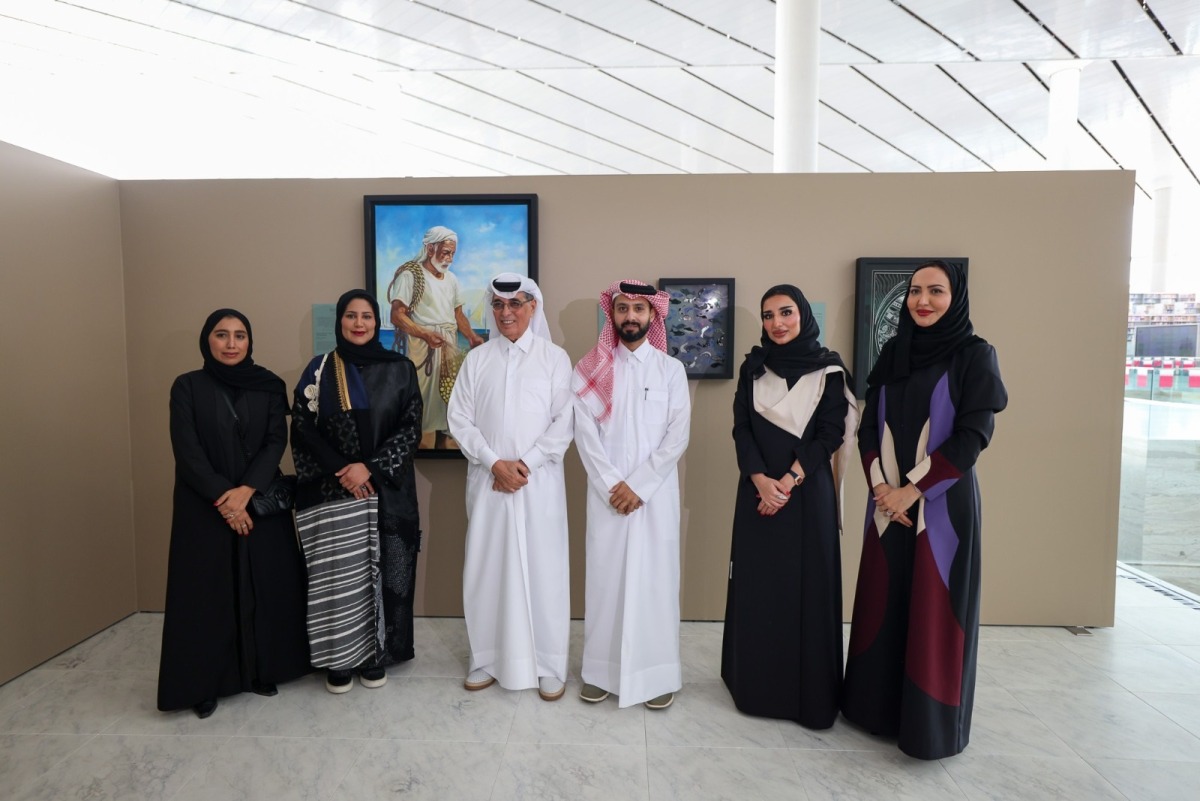

Doha, Qatar – The Qatar National Library unveiled “Heritage in Art: Reflections by Qatari Artists” on December 15th, a groundbreaking exhibition showcasing the work of seven local artists inspired by the Library’s extensive Heritage Library collection. The opening was attended by Minister of State and President of Qatar National Library, H.E. Dr. Hamad bin Abdulaziz Al Kawari, marking a significant cultural event coinciding with Qatar National Day. The exhibition aims to foster a deeper connection between Qatar’s rich past and its vibrant contemporary art scene.
The exhibition, located at the Qatar National Library in Doha, is open to the public until the end of April 2026. It features a diverse range of artistic mediums and interpretations, all stemming from historical materials housed within the Library. This initiative underscores the Library’s role as a custodian of national memory and a catalyst for creative expression.
Celebrating Qatar’s Heritage Through Contemporary Art
“Heritage in Art” is the first exhibition of its kind hosted by the Qatar National Library, according to Communications and Digital Marketing Specialist Noof Al Heidous. The project highlights the Library’s commitment to making Qatar’s heritage a dynamic element in ongoing cultural conversations. By pairing historical artifacts with modern artwork, the Library seeks to demonstrate the enduring relevance of the past.
The featured artists – Abdullah Al-Mutawah, Muna Al-Bader, Muneera Al-Obaidli, Sharefa Al-Mannai, Jaber Henzab, Mubarak Nasser Al-Thani, and Zainab Al-Shibani – each explored different facets of the Heritage Library’s holdings. These included rare maps, manuscripts, illustrations, and photographs, selecting elements that resonated with their individual artistic visions. The resulting works offer unique perspectives on Qatar’s history and identity.
Exploring Themes of Memory and Place
The artworks delve into universal themes of memory, place, and personal reflection, all filtered through the lens of Qatari history and culture. Many pieces explore the relationship between the traditional and the modern, a key aspect of Qatar’s national narrative. The exhibition demonstrates how artists can reinterpret historical sources to create new meaning and spark dialogue.
Abdullah Al-Mutawah’s painting, “Qatar Through Time,” depicts the palace of Sheikh Abdullah bin Jassim Al Thani, a landmark representing both a historical residence and a center of governance. The artwork incorporates symbols from the National Museum of Qatar, visually connecting the architectural past with the nation’s present identity. Al-Mutawah explained that his work focuses on traditional design elements, such as gypsum carvings, and was directly informed by his research at the Library.
Muneera Al-Obaidli’s photography explores Qatar’s longstanding connection to the sea. Her work portrays the sea as a source of livelihood, cultural memory, and national identity, juxtaposing images of fishermen and pearls with the modern Doha skyline. Al-Obaidli emphasized her desire to express Qatari culture and identity through her art, highlighting the balance between tradition and progress.
The selection of artists prioritized diversity in both medium and approach, fostering a rich and multifaceted exploration of heritage in art. This deliberate curation aims to create a meaningful dialogue between artistic expression, cultural preservation, and historical understanding.
The Qatar National Library’s initiative represents a growing trend in cultural institutions worldwide to engage with artists in innovative ways to interpret and present historical collections. This approach not only attracts new audiences but also encourages a more dynamic and inclusive understanding of the past.
Looking ahead, the Library plans to host a series of workshops and lectures related to the exhibition, further expanding its reach and impact. The long duration of the exhibition, extending until April 2026, suggests a sustained commitment to showcasing Qatari art and heritage. Observers will be watching to see how visitor engagement and critical response shape future collaborations between the Library and the nation’s artistic community.