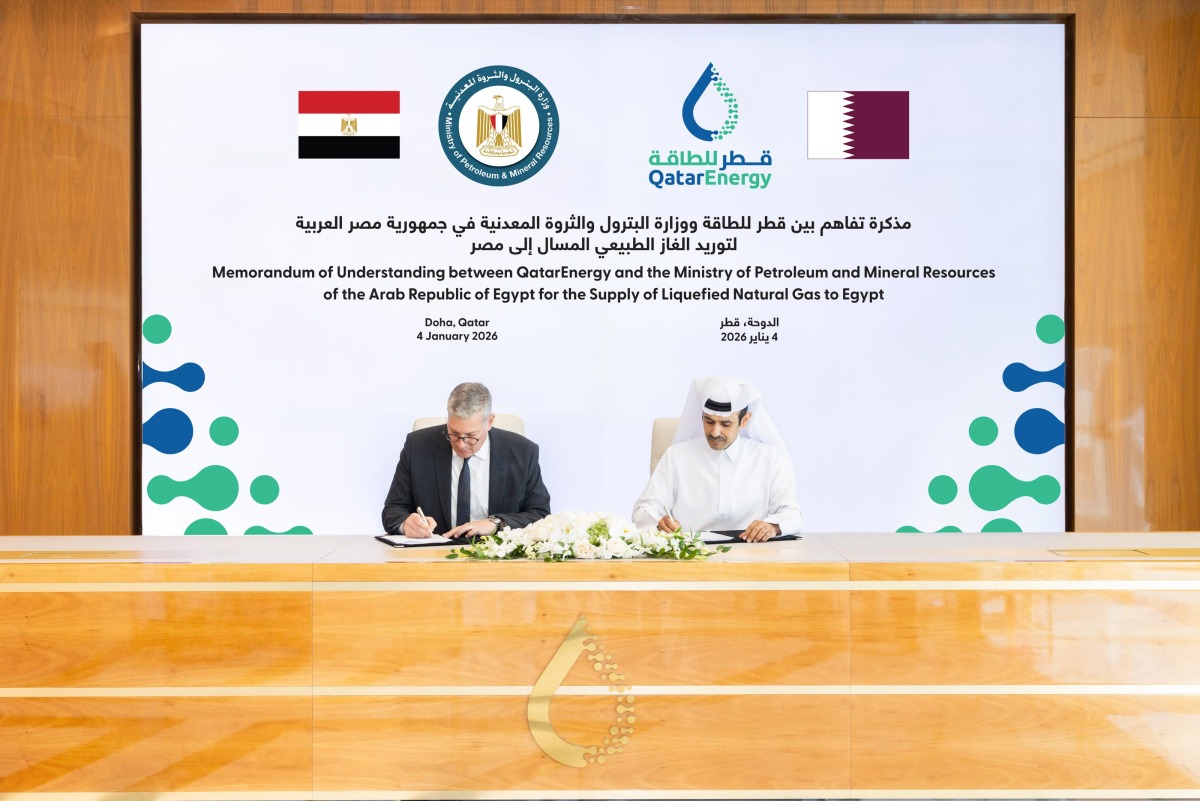

QatarEnergy and the Egyptian Ministry of Petroleum and Mineral Resources have signed a Memorandum of Understanding (MoU) to bolster cooperation in the energy sector, primarily focusing on increased LNG deliveries from Qatar to Egypt. The agreement, formalized in Doha on January 4, 2024, builds upon existing efforts to supply Egypt with liquefied natural gas, addressing the nation’s growing energy demands. This collaboration underscores Qatar’s role as a key global energy player and Egypt’s strategy to diversify its energy sources.
The signing ceremony was led by HE Saad Sherida Al-Kaabi, Qatar’s Minister of State for Energy Affairs and President & CEO of QatarEnergy, and HE Karim Badawi, Egypt’s Minister of Petroleum and Mineral Resources. The MoU aims to facilitate long-term LNG supplies to support Egypt’s economic expansion and industrial development, according to a statement released by QatarEnergy.
Strengthening Qatar’s LNG Position in the Eastern Mediterranean
This agreement is part of a broader trend of increasing energy cooperation between Qatar and Egypt. QatarEnergy has already committed to supplying Egypt with up to 24 LNG cargoes during the summer of 2026, a crucial period for meeting peak demand in the country. However, the signed MoU signals a move towards a more sustained, long-term partnership.
Egypt’s increasing energy needs are fueled by both population growth and ambitious industrial projects. The country is actively working to establish itself as a regional energy hub, importing natural gas for domestic consumption and re-exporting it to Europe via its liquefaction facilities. This initiative is supported by substantial investments in infrastructure, including pipeline networks and import terminals.
Recent LNG Developments in Egypt
Egypt experienced increased demand for LNG in 2022 and 2023, particularly as Europe sought alternative suppliers to Russian gas following the invasion of Ukraine. Egypt’s ability to import and re-export gas positioned it as a critical link in the global energy supply chain. The government has been exploring various options to secure reliable gas supplies, including expanding import agreements and boosting domestic production.
The agreement with QatarEnergy comes amidst efforts by Egypt to attract foreign investment into its energy sector. Recent discoveries of natural gas in the Eastern Mediterranean have enhanced Egypt’s potential as a producer, but continued imports will likely be necessary to meet ongoing demand. Diversification of import sources is a key component of Egypt’s energy security strategy.
Additionally, the partnership considers potential collaboration in other areas of the energy sector, beyond just the supply of LNG. These could include joint exploration and production projects, technology transfer and the development of human capital within the Egyptian energy industry. Detailed discussions are expected to clarify the scope of these future initiatives.
QatarEnergy’s commitment to Egypt reflects the company’s strategy to expand its global market presence and strengthen its relationships with key energy consumers. Qatar holds the world’s third-largest proven natural gas reserves and is a leading exporter of LNG, competing with major players like Australia and the United States. Maintaining strong ties with nations like Egypt—a significant regional market—is vital for sustaining Qatar’s role in global energy markets.
The next phase involves detailed negotiations between QatarEnergy and the Egyptian Natural Gas Holding Company (EGAS) to determine the specific terms of long-term LNG supply contracts. While the MoU outlines the intent for increased cooperation, actual supply volumes and pricing will be subject to further agreement. Experts will be watching closely to see how these negotiations unfold and how quickly Egypt can integrate additional Qatari gas into its energy mix. The timeline for finalizing these contracts remains uncertain, but the commitment signals a long-term partnership with mutually beneficial goals.
The International Energy Agency (IEA) provides regular updates on global LNG trends and market analysis. QatarEnergy’s website also offers detailed information about its projects and partnerships. Egypt Oil & Gas is a key publication for developments within the Egyptian energy sector.