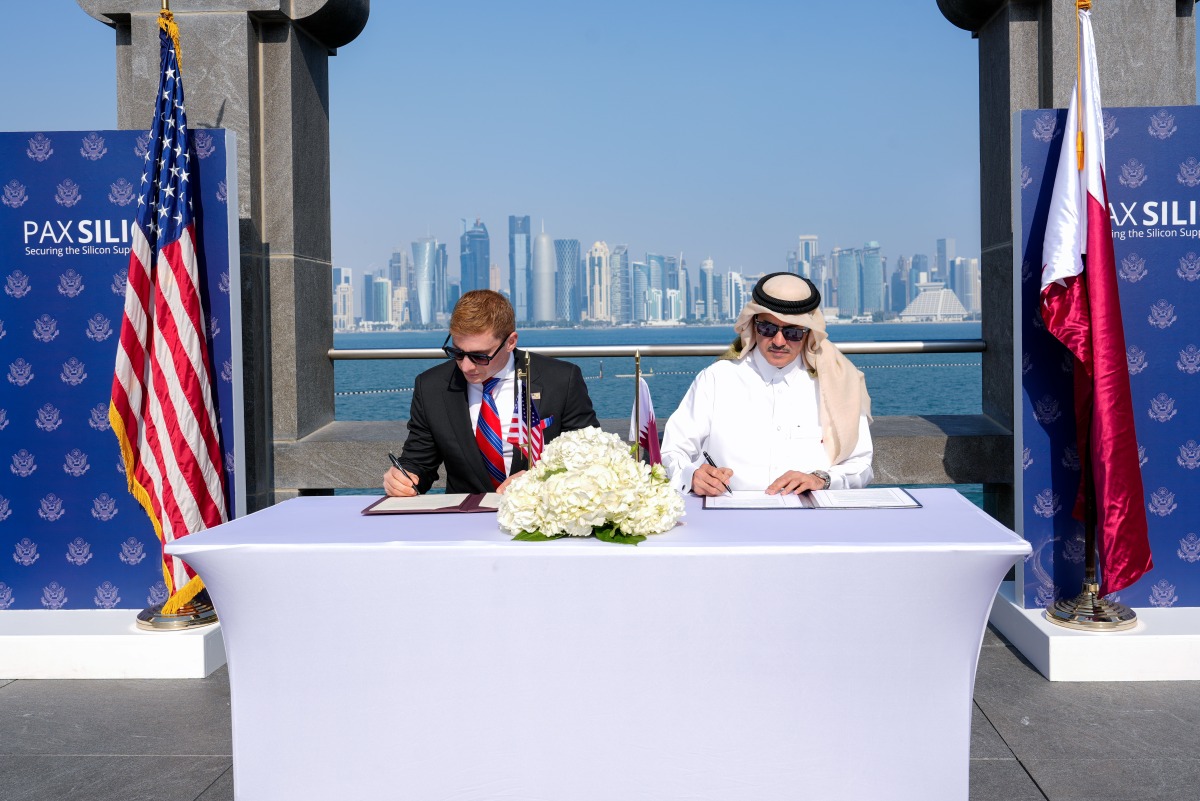

Doha, Qatar – Qatar and the United States officially signed the “Pax Silica” declaration on January 12, 2026, marking a significant step towards bolstering cooperation in advanced technology and securing critical supply chains. The agreement aims to enhance the resilience of the global economy and promote stability in the rapidly evolving landscape of artificial intelligence. This collaboration underscores Qatar’s ambition to become a regional technology hub and the US’s commitment to building international partnerships in key sectors.
The declaration was signed by Qatar’s Minister of State for International Trade Affairs, HE Dr. Ahmed bin Mohammed Al-Sayed, and US Under Secretary of State for Economic Growth, Energy, and the Environment, HE Jacob Heilbrunn. According to a statement released by the Qatari Ministry of Commerce and Industry, the partnership will focus on building secure and reliable supply chains, protecting vital resources, and ensuring long-term sustainability.
Strengthening Global Supply Chains with Pax Silica
“Pax Silica,” launched by the US Department of State, is an international initiative gaining momentum as nations recognize the strategic importance of secure technology supply chains. The initiative gained prominence throughout 2024 and 2025, responding to growing concerns about vulnerabilities in the production and distribution of semiconductors and other advanced technologies. It seeks to foster innovation while safeguarding critical technologies from disruption or misuse.
Qatar’s participation in “Pax Silica” aligns with its National Vision 2030 and the Third National Development Strategy, both of which prioritize the development of a competitive and sustainable digital economy. The country has been actively investing in infrastructure and talent to position itself as a leader in areas like artificial intelligence and cybersecurity. This agreement is expected to accelerate those efforts.
Expanding Technological Capabilities
The partnership is anticipated to broaden Qatar’s international collaborations in crucial areas such as semiconductors, advanced computing, and digital technologies. This expansion of partnerships will likely lead to increased technical expertise within Qatar and support its ongoing economic diversification initiatives. The Ministry of Commerce and Industry indicated that the agreement will facilitate knowledge transfer and joint research projects.
However, the specifics of these collaborations remain to be detailed. The success of “Pax Silica” will depend on the ability of participating nations to navigate complex geopolitical challenges and maintain a consistent commitment to shared goals. Supply chain security is a multifaceted issue, requiring ongoing investment and adaptation.
Meanwhile, discussions between Qatari and US officials extended beyond the “Pax Silica” declaration. Minister Al-Sayed also met with Binh Black, Chief Executive Officer of the US International Development Finance Corporation (DFC), to review existing cooperation and explore new avenues for commercial and investment partnerships. The meeting focused on identifying joint investment opportunities and strengthening institutional coordination between the two countries.
The DFC plays a key role in supporting private sector investment in developing countries, and Qatar is seeking to leverage this relationship to attract further investment in its technology sector. The discussions reportedly covered potential projects in renewable energy and infrastructure, in addition to advanced technology.
This move comes amid increasing global competition for dominance in advanced technologies. The US has been actively seeking to build alliances with countries that share its values and its commitment to a secure and open technological ecosystem. Qatar’s inclusion in “Pax Silica” signals a deepening of the strategic relationship between the two nations and a shared vision for the future of technology. The initiative also reflects a broader trend towards regionalization and diversification of supply chains, as countries seek to reduce their reliance on single sources.
Looking ahead, the next phase will involve the establishment of working groups to define specific areas of cooperation and develop implementation plans. A timeline for these plans has not yet been announced, and the long-term impact of the “Pax Silica” declaration will depend on sustained commitment and effective execution. Observers will be watching for concrete projects and investments that demonstrate the tangible benefits of this new partnership, as well as any potential challenges to its implementation in the context of evolving global dynamics and semiconductor industry trends.
Image: Signing of the Pax Silica declaration in Doha, Qatar. (Source: The Peninsula Qatar)
Further developments regarding economic growth and critical technologies are expected in the coming months as both countries work to solidify their collaboration.