


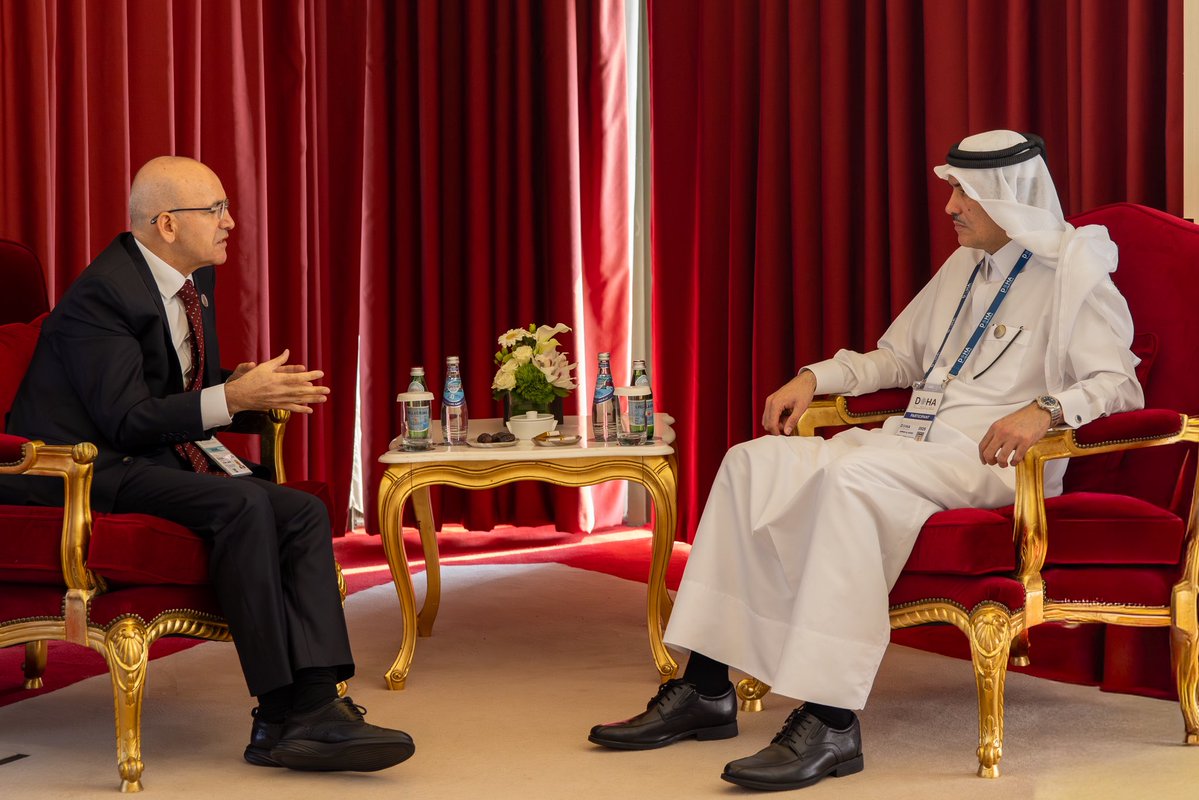

Doha, Qatar – Discussions aimed at bolstering Qatar-Turkey economic relations were held Sunday between Qatari and Turkish officials on the sidelines of the Doha Forum 2025. Minister of State for Foreign Trade HE Dr. Ahmed bin Mohammed Al Sayed met with HE Mehmet Simsek, Minister of Treasury and Finance of the Republic of Turkiye, to explore expanded trade and investment opportunities. The meeting underscores the growing strategic partnership between the two nations amid a backdrop of global economic uncertainty.
The talks took place in Doha, Qatar, during the annual Doha Forum, a platform for international dialogue on pressing global issues. Both ministers reviewed current bilateral cooperation and identified potential areas for growth, focusing on strengthening commercial ties. This engagement signals a continued commitment to deepening economic collaboration between Qatar and Turkey.
Strengthening Qatar-Turkey Economic Ties
Qatar and Turkey have experienced a significant increase in economic cooperation in recent years, particularly in sectors like finance, defense, and trade. According to the Ministry of Commerce and Industry of Qatar, trade volume between the two countries has steadily risen, reaching approximately $2.3 billion in 2023. This growth is driven by diversifying economies and a shared interest in regional stability.
The meeting between Al Sayed and Simsek specifically addressed ways to enhance investment flows. Qatar’s sovereign wealth fund, the Qatar Investment Authority (QIA), has made substantial investments in Turkey, while Turkish companies are increasingly active in Qatar’s infrastructure and construction projects. Further facilitating these investments was a key topic of discussion.
Focus on Global Economic Challenges
Beyond bilateral issues, the officials also exchanged perspectives on the broader themes of the Doha Forum. This year’s forum agenda centers on global economic stability, sustainable development, and geopolitical challenges. These discussions are particularly relevant given the current volatile international landscape and the need for coordinated economic policies.
The ministers reportedly discussed the impact of global inflation, supply chain disruptions, and the ongoing conflicts in various regions on their respective economies. Finding collaborative solutions to these shared challenges is seen as crucial for maintaining economic growth and stability. The forum provides a valuable opportunity to align strategies and address common concerns.
Recent years have seen Qatar and Turkey forge closer alliances, including a currency swap agreement designed to bolster financial stability and trade. This agreement, signed in 2018 and renewed in 2022, allows both countries to access each other’s currencies, mitigating the risks associated with exchange rate fluctuations. This type of financial cooperation is expected to continue as a cornerstone of the relationship.
Additionally, collaboration in the energy sector is a growing area of interest. Qatar is a major exporter of liquefied natural gas (LNG), and Turkey is a significant energy consumer. Exploring opportunities for increased LNG trade and potential joint ventures in energy infrastructure were likely discussed during the meeting. Enhanced energy security is a priority for both countries.
However, navigating potential obstacles will be key to the continued success of the bilateral trade relationship. Geopolitical tensions in the region and fluctuations in global commodity prices could impact trade flows and investment decisions. Careful monitoring of these factors and proactive risk management will be essential.
Looking ahead, the two countries are expected to continue high-level dialogues to identify and implement new initiatives to deepen their economic partnership. A joint economic commission meeting is tentatively scheduled for late 2025, where concrete plans for future collaboration will likely be unveiled. The outcome of these discussions and the broader geopolitical context will determine the pace and scope of future economic integration between Qatar and Turkey.
The development of a more robust investment climate in both nations remains a central goal. Further streamlining of regulations and promoting transparency are expected to attract more foreign direct investment and stimulate economic growth. The long-term impact of these efforts will be closely watched by regional and international observers.