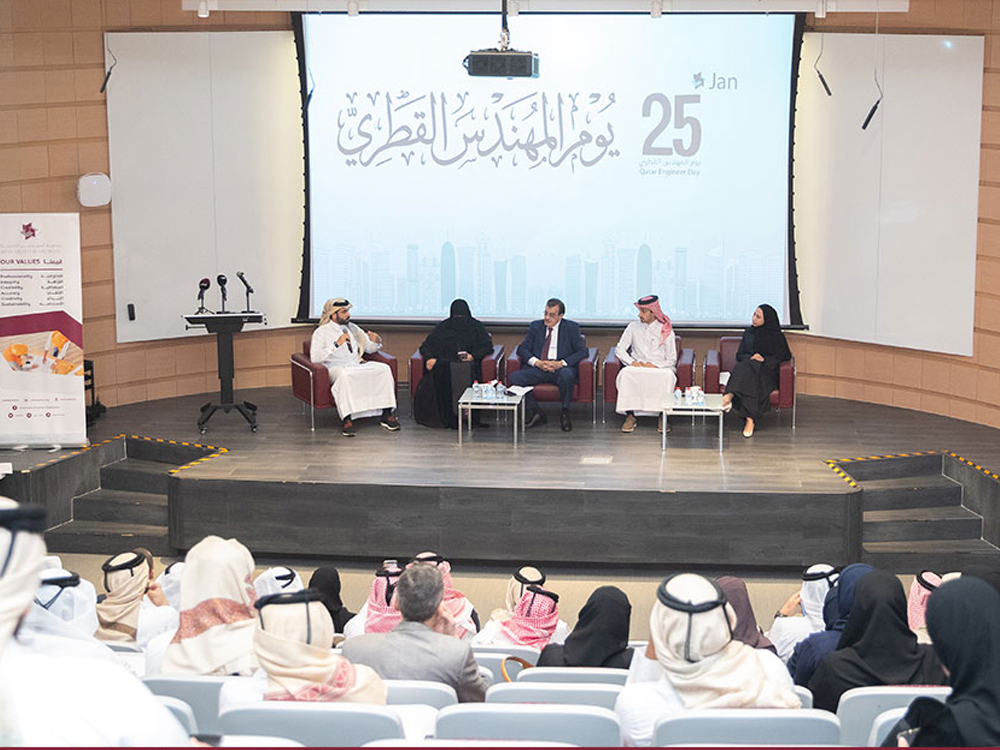

Doha, Qatar – The Qatar Society of Engineers (QSE) celebrated Qatari Engineers Day on Sunday, reaffirming the crucial role engineers play in the nation’s development and its progress toward Qatar National Vision 2030. The event, supported by the Ministry of Social Development and Family Affairs and in collaboration with Qatar University’s College of Engineering, focused on the challenges and opportunities facing the engineering profession in a rapidly evolving technological landscape. This annual observance highlights the achievements of Qatari engineers and fosters dialogue between industry, academia, and government.
The celebration took place at Qatar University and included speeches from key figures and panel discussions addressing critical issues within the engineering sector. Representatives from the Ministry of Social Development and Family Affairs and the College of Engineering emphasized the importance of empowering national talent and aligning education with the demands of the labor market. The QSE used the occasion to showcase its initiatives aimed at professional development and national capacity building.
The Vital Role of Qatari Engineers in National Development
According to Eng. Amna Mohammed Al Naama, Chairperson of the QSE, the day also commemorates the Society’s founding anniversary on January 25, 2007. The QSE has consistently worked to elevate the engineering profession in Qatar, acting as a bridge between educational institutions and the practical needs of various industries. This year’s event specifically addressed the integration of artificial intelligence, new technologies, and cybersecurity into the engineering field.
The Ministry of Social Development and Family Affairs underscored the importance of professional associations like the QSE in driving national development. Fahad Mohammed Al Khayarin, Assistant Undersecretary for Social Development Affairs, stated the ministry views these associations as strategic partners in enhancing the skills of Qatari professionals and supporting innovation. He praised the QSE as a “distinguished model” of an effective professional organization.
Focus on Emerging Technologies and Workforce Needs
Panel discussions centered on the evolving job market and the skills required for success in the modern engineering landscape. Participants explored the impact of digital technologies and artificial intelligence on both education and employment within the industrial sector. The discussions also touched upon the need for continuous professional development to keep pace with these advancements.
Dr. Mohammed Hussein Farouk, Dean of the College of Engineering at Qatar University, highlighted the significant contributions of engineering graduates to Qatar’s progress. He emphasized the importance of collaboration between academic institutions and industry to ensure that curricula remain relevant and prepare students for the challenges they will face in their careers. This collaboration is seen as essential for achieving the goals outlined in Qatar National Vision 2030.
The QSE highlighted several recent achievements, including the launch of the “Engineers Without Borders” program and website, designed to facilitate knowledge sharing and collaboration. Additionally, the Society successfully organized the Qatar International Facilities Management Conference and Exhibition and the LED Technology and Renewable Energy Exhibition last October, demonstrating its commitment to fostering industry events and showcasing technological advancements. These events are part of a broader effort to promote sustainable development in Qatar.
The Ministry affirmed its commitment to supporting the QSE and other professional associations through supervision, regulation, and the promotion of good governance. This support aims to ensure the long-term stability and impact of these organizations, enabling them to continue contributing to the nation’s growth and prosperity. The focus on career paths for engineers is a key component of this strategy.
Looking ahead, the QSE plans to continue its focus on training and development programs, as well as organizing events that bring together key stakeholders in the engineering sector. The Society will likely play a key role in addressing the ongoing challenges related to technology integration and workforce planning. Further details regarding specific initiatives and timelines are expected to be announced in the coming months, and the impact of these programs on the national labor market will be closely monitored.