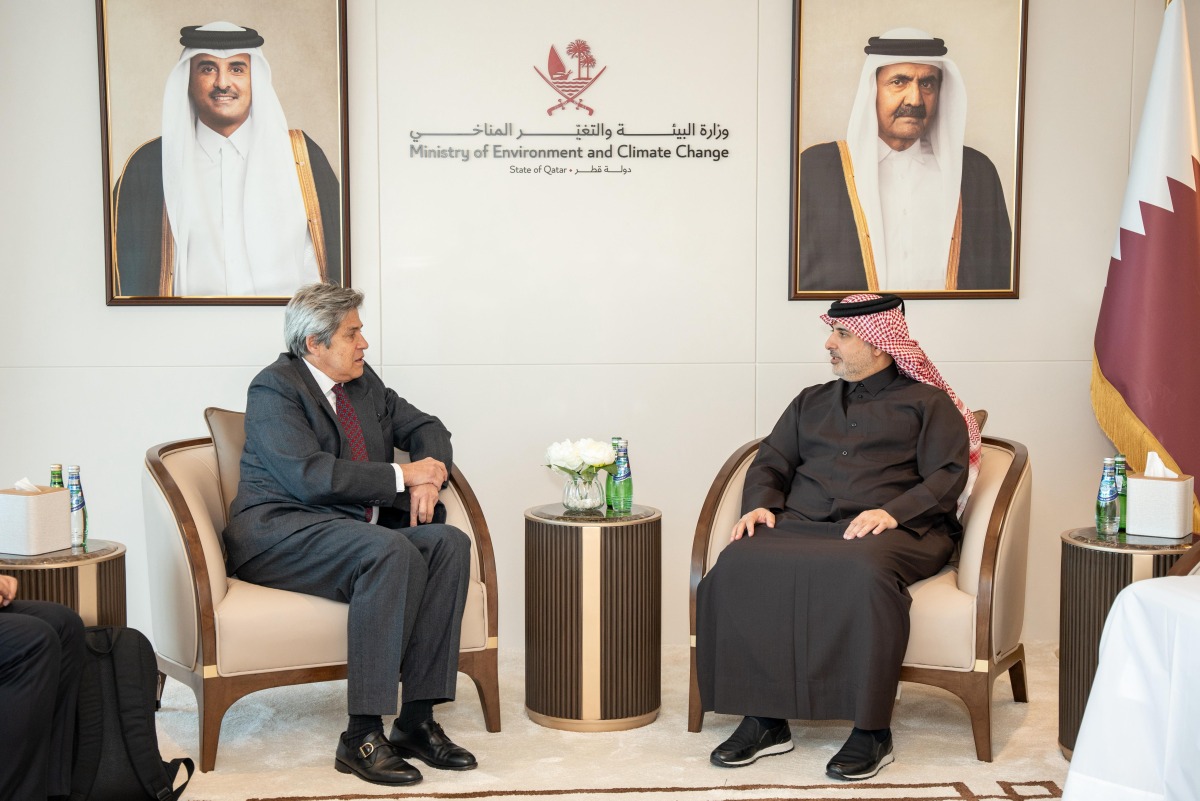

Qatar and Peru are exploring increased collaboration on environmental cooperation, following a meeting between Qatar’s Minister of Environment and Climate Change and the Peruvian Ambassador. The discussion, held yesterday in Doha, focused on shared interests and potential joint initiatives to address pressing environmental challenges. This development signals a growing emphasis on international partnerships as both nations navigate the complexities of climate change and sustainable development.
The meeting took place between H.E. Dr. Abdullah bin Abdulaziz bin Turki Al Subaie, Minister of Environment and Climate Change, and H.E. Gonzalo Voto Bernares, Ambassador of Peru to Qatar. According to the Ministry of Environment and Climate Change, the officials discussed a range of topics of mutual concern, with a particular focus on strengthening ties in the fields of environmental protection and climate action. The precise details of the proposed collaborations were not immediately disclosed.
Boosting Environmental Cooperation Between Qatar and Peru
This initiative comes as both Qatar and Peru face unique environmental pressures. Qatar, a desert nation, is heavily focused on water security, carbon reduction strategies, and adapting to rising temperatures. Peru, with its Amazon rainforest and diverse ecosystems, is grappling with deforestation, biodiversity loss, and the impacts of climate change on its natural resources. Finding common ground for collaboration could yield mutually beneficial solutions.
Areas for Potential Collaboration
Several areas could benefit from increased cooperation between the two countries. These include:
Sustainable Resource Management: Both nations could share expertise in managing scarce resources, such as water and energy, and promoting sustainable agricultural practices. Qatar’s advancements in desalination technology, for example, might be of interest to Peru.
Climate Change Mitigation: Sharing best practices in reducing greenhouse gas emissions and transitioning to renewable energy sources is another potential avenue for collaboration. Qatar’s National Environment and Climate Change Strategy (NECCS) could provide a framework for discussion.
Biodiversity Conservation: Peru’s rich biodiversity and Qatar’s commitment to environmental preservation could lead to joint research projects and conservation efforts. This could involve knowledge exchange on protecting endangered species and restoring degraded ecosystems.
However, significant logistical and political considerations will need to be addressed to translate these potential areas into concrete projects. Differences in national priorities and regulatory frameworks could present challenges.
Meanwhile, Qatar has been actively pursuing international partnerships to address climate change. The country recently hosted the COP28 climate summit, demonstrating its commitment to global climate action. This meeting with the Peruvian ambassador aligns with Qatar’s broader strategy of fostering international collaboration on environmental issues. The nation is also investing heavily in renewable energy and sustainable infrastructure projects.
Additionally, Peru has been actively seeking to strengthen its diplomatic and economic ties with countries in the Middle East. Increased climate diplomacy is a key component of this strategy, as Peru seeks to leverage international support for its conservation efforts. The country is a major player in Amazon rainforest conservation and is seeking funding and technical assistance to combat deforestation.
In contrast to some regional approaches, this bilateral engagement focuses on specific areas of shared interest. This targeted approach may prove more effective than broader, multi-lateral agreements in achieving tangible results. The focus on sustainable development is also a key element of the discussion.
The Ministry of Environment and Climate Change has not yet announced a timeline for follow-up discussions or the establishment of any joint working groups. The next step is likely to involve detailed consultations between officials from both countries to identify specific projects and develop a framework for cooperation. The success of this initiative will depend on continued political will and the allocation of sufficient resources. Observers will be watching for concrete outcomes in the coming months, particularly regarding potential joint research initiatives or technology transfer agreements.
Further developments regarding this environmental partnership are expected to be announced in the coming quarter, though the specifics remain uncertain.