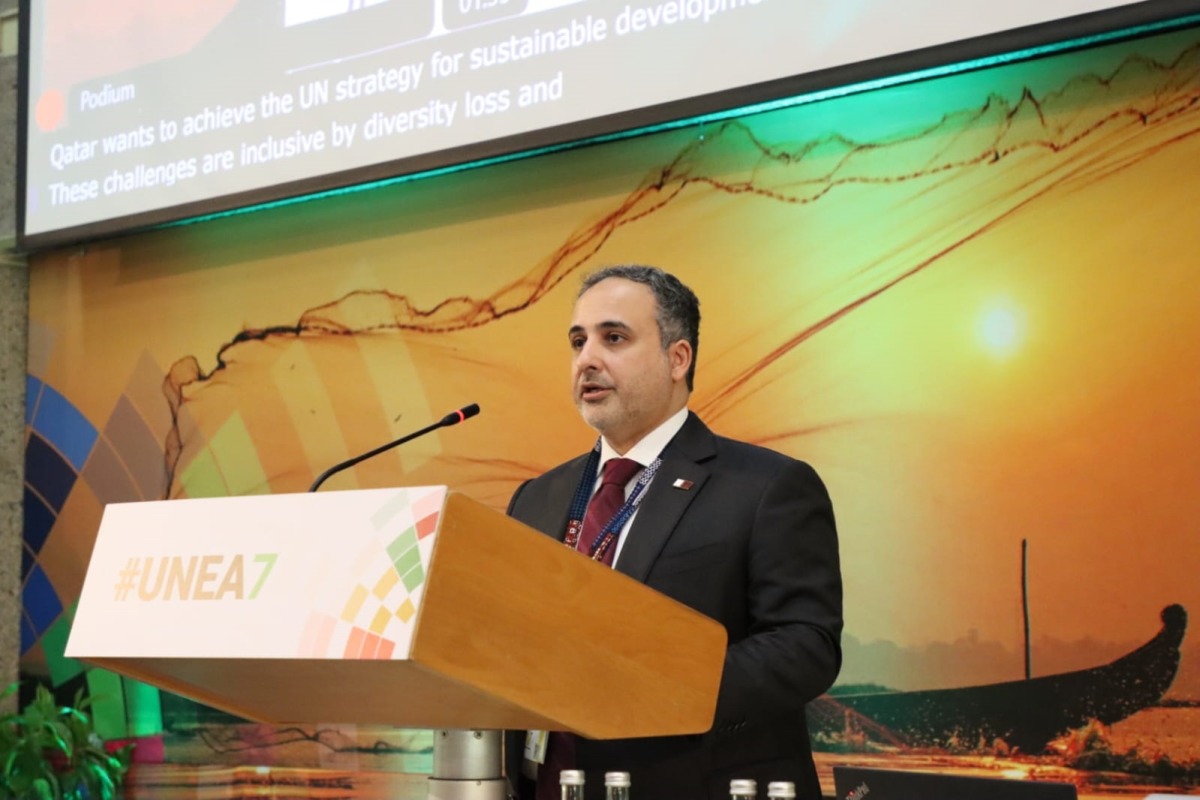

Qatar’s Minister of Environment and Climate Change, H.E. Dr. Abdullah bin Abdulaziz bin Turki Al Subaie, participated in the high-level segment of the seventh session of the UN Environment Assembly (UNEA-7) in Nairobi, Kenya. The assembly, focused on “Advancing sustainable solutions for a resilient planet,” convened representatives from numerous nations and organizations to address pressing environmental challenges. Qatar’s involvement underscores its commitment to global cooperation on issues ranging from climate change to biodiversity loss.
The UNEA-7 session, held at the headquarters of the United Nations Environment Programme (UNEP), commenced yesterday and aims to shape international environmental action for the coming years. Minister Al Subaie delivered Qatar’s national statement, addressing draft resolutions concerning climate action, pollution control, responsible waste management, and the preservation of natural resources. The assembly also adopted UNEP’s medium-term plan, outlining its strategic priorities.
Qatar’s Role in Addressing Global Environmental Challenges
Qatar’s participation in UNEA-7 reflects a broader national strategy to strengthen international partnerships in tackling escalating environmental challenges. According to the Ministry of Environment and Climate Change, the country views multilateral action as crucial for effectively addressing issues that transcend national borders. This commitment aligns with Qatar’s National Vision 2030, which prioritizes environmental sustainability.
The Minister’s statement highlighted Qatar’s support for collaborative efforts to protect ecosystems and achieve sustainable development goals. Qatar has been actively investing in renewable energy sources and implementing policies to reduce its carbon footprint, demonstrating a proactive approach to climate change mitigation. Additionally, the nation has focused on water conservation and waste recycling initiatives.
Key Discussion Points at UNEA-7
UNEA-7’s agenda encompassed a wide range of critical environmental topics. Discussions centered on strengthening international frameworks for addressing plastic pollution, promoting circular economy models, and enhancing biodiversity conservation. The assembly also explored innovative financing mechanisms to support environmental projects in developing countries.
The medium-term plan adopted by UNEP outlines key priorities for the organization over the next four years. These include scaling up efforts to combat climate change, protecting ecosystems, and promoting environmental governance. The plan emphasizes the need for increased collaboration between governments, the private sector, and civil society.
However, achieving these ambitious goals will require significant financial resources and political will. The report indicates that current levels of funding for environmental protection are insufficient to meet the scale of the challenges. Furthermore, geopolitical tensions and competing priorities could hinder progress on international environmental agreements.
Meanwhile, the assembly served as a platform for countries to share best practices and showcase innovative solutions. Several nations presented successful models for sustainable agriculture, renewable energy deployment, and waste management. These examples offer valuable lessons for other countries seeking to accelerate their transition to a more sustainable future.
Implications for International Environmental Policy
The outcomes of UNEA-7 are expected to guide international environmental action in the coming years. The adopted resolutions and the UNEP medium-term plan will provide a framework for countries to develop and implement national environmental policies. The assembly’s emphasis on collaboration and innovation is likely to foster greater cooperation between stakeholders.
The Ministry of Environment and Climate Change stated that the session’s results should contribute to bolstering joint efforts to achieve sustainability and safeguard ecosystems. Qatar intends to integrate the assembly’s recommendations into its national environmental strategies and continue to actively participate in international environmental forums. The country also plans to explore opportunities for partnerships with other nations and organizations to advance shared environmental goals.
Looking ahead, the implementation of UNEA-7’s outcomes will be closely monitored. The next major milestone will be the review of progress towards the Sustainable Development Goals in 2025. The effectiveness of international environmental action will depend on sustained commitment, adequate funding, and a willingness to address the underlying drivers of environmental degradation and sustainable solutions. The success of these efforts remains uncertain, but the urgency of the situation demands continued attention and action.
UNEP Website
Qatar’s Ministry of Environment and Climate Change
Original Article