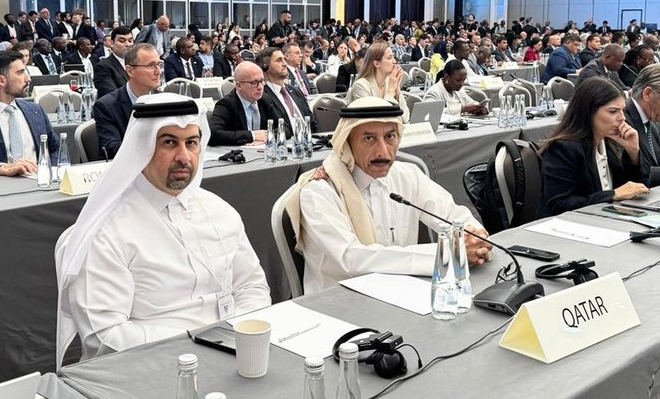

The State of Qatar actively participated in the 16th Assembly of the International Renewable Energy Agency (IRENA) held this week in Abu Dhabi, United Arab Emirates. The assembly, a critical forum for global collaboration on renewable energy, convened leaders, policymakers, and experts to discuss advancements and challenges in the sector. Qatar’s delegation highlighted the nation’s ongoing commitment to diversifying its energy sources and achieving its sustainability goals.
The Qatari delegation included HE Dr. Sultan bin Salmeen Al Mansouri, the Ambassador of the State of Qatar to the UAE, and HE Sheikh Mishal bin Jabor Al-Thani, a Senior Advisor for Energy Policy and International Relations at QatarEnergy. The assembly took place from January 11-13, 2024, bringing together representatives from over 160 member states of IRENA. Discussions focused on accelerating the global transition to a sustainable energy future.
Qatar’s Role in the Global Renewable Energy Transition
Qatar’s participation in IRENA’s assembly underscores its increasing focus on renewable energy sources despite being a major producer of oil and natural gas. The country has set ambitious targets for increasing the proportion of renewables in its energy mix, as outlined in its National Environment and Climate Change Strategy. This strategy aims to reduce greenhouse gas emissions and promote environmental sustainability across all sectors.
Qatar’s energy diversification plans are fueled by several factors. These include a desire to reduce reliance on hydrocarbons, leverage technological advancements in solar energy and other renewable technologies, and contribute to international efforts to combat climate change. The country is actively exploring opportunities for investment and collaboration in the renewable sector, both domestically and internationally.
Focus Areas and Partnerships
QatarEnergy is leading several initiatives related to sustainable energy. This includes projects focused on solar power generation, such as the Al Kharsaah Integrated Solar PV Plant, one of the largest operational solar power plants in the region. The company is also researching and developing technologies related to green hydrogen production and carbon capture, utilization, and storage (CCUS).
Additionally, Qatar is looking to establish strategic partnerships with leading international companies and organizations to accelerate the deployment of renewable energy technologies. Collaboration is a key element in Qatar’s approach, facilitating knowledge transfer and reducing the risks associated with investing in new technologies. The country also emphasizes the importance of regional cooperation to achieve shared sustainability goals.
The IRENA Assembly featured discussions on key topics such as financing renewable energy projects, fostering innovation, and ensuring a just and equitable energy transition. These discussions are particularly relevant for countries in the Middle East, where the energy landscape is undergoing significant transformation. Experts highlighted the need for supportive policies and regulatory frameworks to attract investment and drive the adoption of renewable technologies.
In contrast to some initial perceptions, the Gulf region is increasingly becoming a hub for renewable energy innovation and investment. The UAE, for example, is hosting the COP28 climate conference and has pledged significant investments in renewable energy projects. This regional momentum is likely to encourage further collaboration and accelerate the energy transition across the Middle East and North Africa (MENA) region.
While Qatar’s immediate energy needs continue to be met by fossil fuels, the commitment demonstrated at IRENA signals a long-term strategic shift toward a more diversified and sustainable energy future. The country’s active participation in international forums like the IRENA Assembly is a key indicator of this evolving policy direction. The development of a robust energy transition framework is expected to play a vital role in attracting foreign investment.
Looking ahead, Qatar is expected to announce further initiatives and investments in renewable energy projects in the coming months. The implementation of its National Environment and Climate Change Strategy and the success of projects like Al Kharsaah will be closely monitored by industry stakeholders. The country’s progress in developing green hydrogen technologies and CCUS solutions will also be a key area to watch, as these technologies could play a significant role in decarbonizing Qatar’s energy sector and contributing to global climate goals.