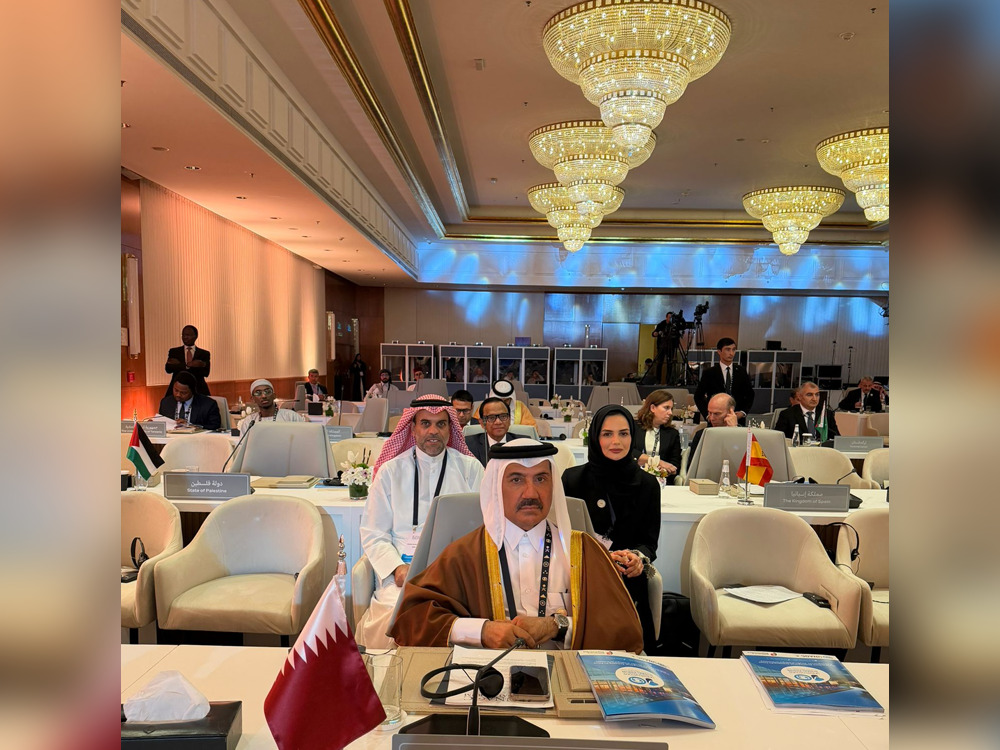

Doha, Qatar – The State of Qatar actively participated in the 11th Global Forum of the United Nations Alliance of Civilizations (UNAOC) held in Riyadh, Saudi Arabia, on Sunday. The forum, themed “UNAOC: Two Decades of Dialogue for Humanity — Advancing a New Era of Mutual Respect and Understanding in a Multipolar World,” underscored the continuing importance of dialogue in a world facing increasing polarization and conflict. Qatar’s delegation, led by the Secretary-General of the Ministry of Foreign Affairs, reaffirmed the nation’s commitment to the Alliance’s core principles.
The event brought together a diverse range of stakeholders, including political leaders, representatives from international organizations, religious figures, and civil society groups. Discussions centered on strategies to counter extremism, promote intercultural understanding, and build more inclusive societies. The forum’s timing coincides with the 20th anniversary of the UNAOC, prompting reflection on its achievements and future direction.
Qatar’s Commitment to Global Dialogue
Qatar’s participation highlighted its long-standing support for the UNAOC and its mission to bridge divides between cultures and religions. According to a statement from the Ministry of Foreign Affairs, Qatar believes that fostering mutual respect and recognizing cultural diversity are essential for achieving lasting peace. This commitment is reflected in Qatar’s own domestic policies and its active role in international mediation efforts.
His Excellency Dr. Ahmed bin Hassan Al Hammadi, addressing the forum, emphasized the urgency of the UNAOC’s work given the current global landscape. He noted the rise of extremist ideologies and the increasing frequency of humanitarian crises as significant challenges requiring collaborative solutions. The Secretary-General stressed the need to strengthen communication and build resilience against hate speech, particularly among young people.
Addressing Contemporary Challenges
The forum acknowledged that the world is becoming increasingly complex, with a shift towards a multipolar order. This transition presents both opportunities and risks, requiring a renewed focus on multilateralism and international cooperation. Participants discussed how the UNAOC can adapt its strategies to effectively address these evolving dynamics.
One key area of discussion was the role of technology in both exacerbating and mitigating conflict. While social media can be a platform for spreading misinformation and hate speech, it can also be used to promote intercultural understanding and facilitate dialogue. The forum explored ways to harness the power of technology for positive change.
Additionally, the importance of education in fostering tolerance and respect was a recurring theme. Participants emphasized the need to incorporate intercultural education into school curricula and to promote critical thinking skills among students. This is seen as a crucial step in preventing the spread of extremism and building more inclusive societies.
Qatar’s involvement in the UNAOC dates back to its founding in 2005, and the nation has consistently been a financial and intellectual contributor to the organization. The country has hosted several UNAOC events and actively participated in its various initiatives, including programs aimed at promoting peacebuilding and countering violent extremism. The Ministry of Foreign Affairs stated that Qatar views the UNAOC as a vital platform for advancing its foreign policy objectives.
However, the UNAOC has faced criticism over the years regarding its effectiveness and impact. Some observers argue that the organization has been hampered by political divisions and a lack of resources. Despite these challenges, Qatar remains optimistic about the UNAOC’s potential to make a meaningful contribution to global peace and security.
The 11th Global Forum concluded with a call for greater international coordination and a renewed commitment to the values of dialogue and coexistence. Participants agreed to work together to address shared challenges and to build a world based on justice, understanding, and peace. The forum’s outcomes will be used to inform the UNAOC’s strategic plan for the next five years.
Looking ahead, the UNAOC will focus on strengthening its partnerships with governments, civil society organizations, and the private sector. A key priority will be to develop innovative programs that address the root causes of conflict and promote intercultural understanding. The success of these efforts will depend on sustained political will and adequate financial resources, and observers will be watching to see how the UNAOC adapts to the changing geopolitical landscape in the coming months.
Learn more about the United Nations Alliance of Civilizations.