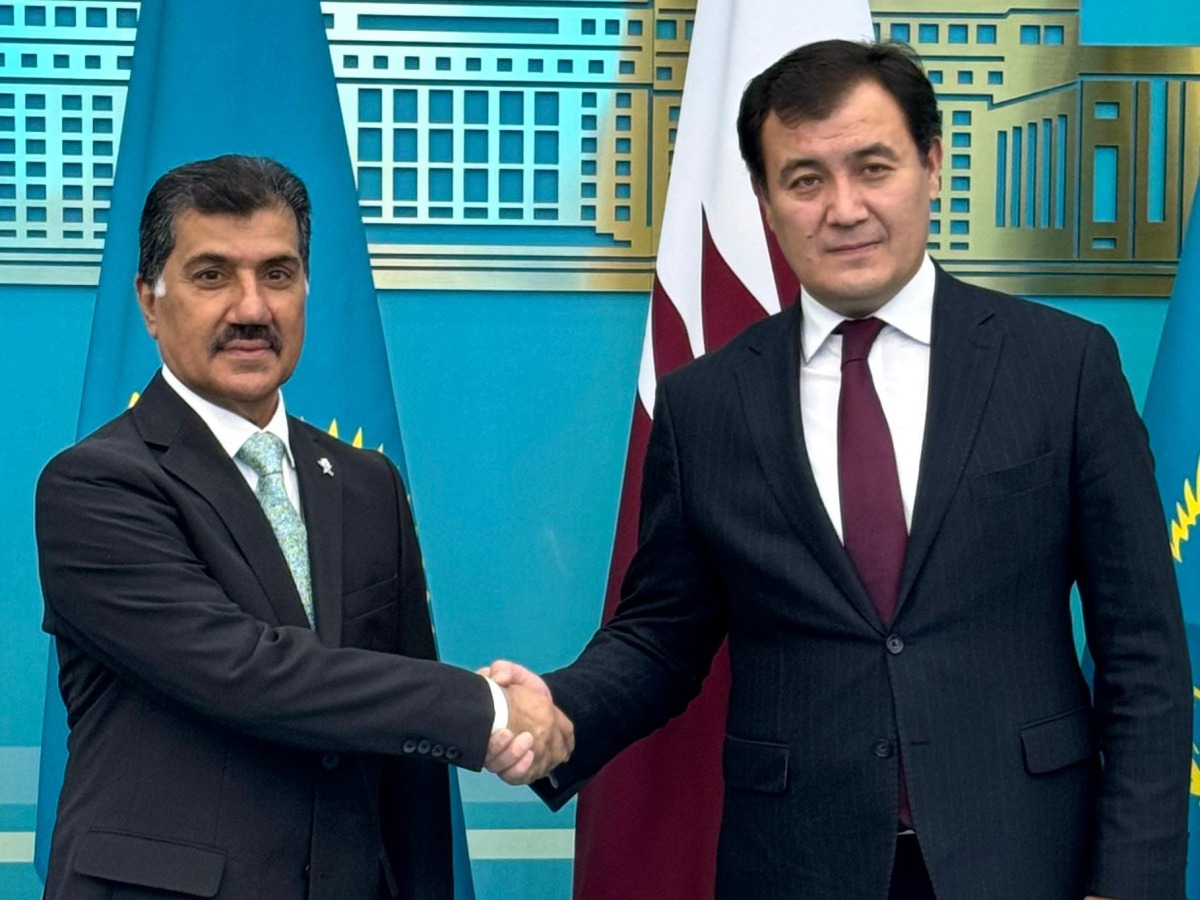

Qatar and Kazakhstan held the third round of political consultations in Astana on Thursday, reaffirming their commitment to strengthening bilateral ties. The discussions, led by senior officials from both countries’ foreign ministries, focused on expanding cooperation and addressing regional issues. This latest round of talks underscores the growing strategic partnership between Doha and Nur-Sultan, particularly in areas of economic development and regional security.
The consultations took place with Dr. Ahmed bin Hassan Al Hammadi, Secretary-General of the Ministry of Foreign Affairs of Qatar, heading the Qatari delegation, and Alibek Bakayev, Deputy Minister of Foreign Affairs of Kazakhstan, leading the Kazakh side. The meeting, held in the Kazakh capital, aimed to review progress on existing agreements and identify new avenues for collaboration. Qatar’s Ambassador to Kazakhstan, Abdullah bin Hussein Al Jaber, and Al Johara bint Yousef Al Obaidan Fakhro, Director of Asian Affairs at the Qatari Ministry of Foreign Affairs, also participated.
Strengthening Qatar-Kazakhstan Political Relations
The primary focus of these political consultations, according to statements released by both ministries, was a comprehensive review of the current state of Qatar-Kazakhstan relations. Officials discussed ways to enhance cooperation across various sectors, including trade, investment, energy, and culture. Both sides expressed satisfaction with the positive trajectory of their relationship and a shared desire to build upon existing foundations.
Economic and Investment Ties
Kazakhstan represents an important economic partner for Qatar in Central Asia. The two nations have been actively working to increase bilateral trade volume and encourage greater investment flows. Qatar’s sovereign wealth fund, the Qatar Investment Authority, has previously expressed interest in exploring investment opportunities in Kazakhstan’s infrastructure and energy sectors. The discussions likely included updates on these potential projects and strategies to overcome any obstacles to implementation.
Regional Security Cooperation
Beyond economic ties, Qatar and Kazakhstan share common interests in promoting regional stability and security. Both countries have been involved in diplomatic efforts to resolve conflicts and address challenges related to terrorism and extremism. The consultations provided a platform to exchange views on regional developments, including the situation in Afghanistan and the broader geopolitical landscape of Central Asia. Diplomatic relations between the two nations are seen as crucial for fostering a more peaceful and prosperous region.
However, challenges remain in fully realizing the potential of the Qatar-Kazakhstan partnership. Logistical hurdles and differing regulatory frameworks can sometimes impede trade and investment. Additionally, navigating the complex geopolitical dynamics of the region requires careful coordination and a shared understanding of priorities. The ministry indicated that these issues were openly discussed during the consultations.
Meanwhile, Kazakhstan is actively seeking to diversify its foreign policy and strengthen ties with countries beyond its traditional partners. Qatar, with its strong economic position and active diplomatic role, is viewed as a valuable partner in this effort. This aligns with Qatar’s own strategy of expanding its influence and forging new alliances in key regions. International cooperation is a cornerstone of both countries’ foreign policies.
In contrast to some regional relationships, Qatar and Kazakhstan have maintained a consistently positive and constructive dialogue. This is attributed to a shared commitment to mutual respect, non-interference in internal affairs, and a focus on practical cooperation. The latest round of consultations demonstrates a continued dedication to these principles.
Looking ahead, both Qatar and Kazakhstan have agreed to continue the momentum generated by these talks. A follow-up meeting is anticipated within the next year, potentially coinciding with a high-level visit. The specific agenda and timing will depend on ongoing developments and the evolving regional context. Observers will be watching to see how these political consultations translate into concrete actions and tangible benefits for both nations.
Further details regarding specific agreements reached during the consultations have not yet been publicly disclosed, and the full impact of the discussions remains to be seen.